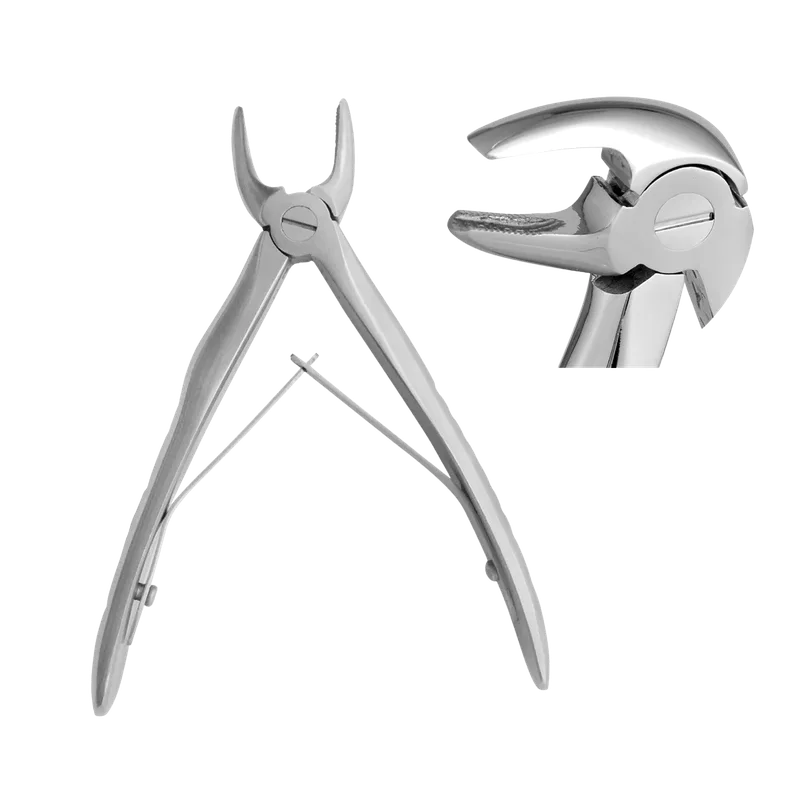
Klein Pediatric Lower Root Extracting Forceps 10cm
The Klein Pediatric Lower Root Extracting Forceps is a 10 cm paediatric extraction instrument configured for retrieving retained lower deciduous roots. Its narrow, pointed beaks are ground to reach into the shallow paediatric socket without encroaching on developing permanent tooth buds in the surrounding bone. An anatomical spring-return handle maintains consistent pinch pressure during fragment removal and helps the clinician stay controlled over short working cycles. Forged from stainless steel with a polished finish, the forcep is fully autoclavable for repeated sterilisation. Equate Instruments supplies it non-sterile for in-clinic processing before first clinical use.
Specifications
 MaterialStainless SteelRusting PreventionPassivatedUltrasonic CleanedYesUsageLeft Hand or Right HandSterileNoReusableYesTests PerformedShape Test, Boil Test and Performance TestLatex FreeYesPackingIndividually PackedQc PassedYes
Related Products
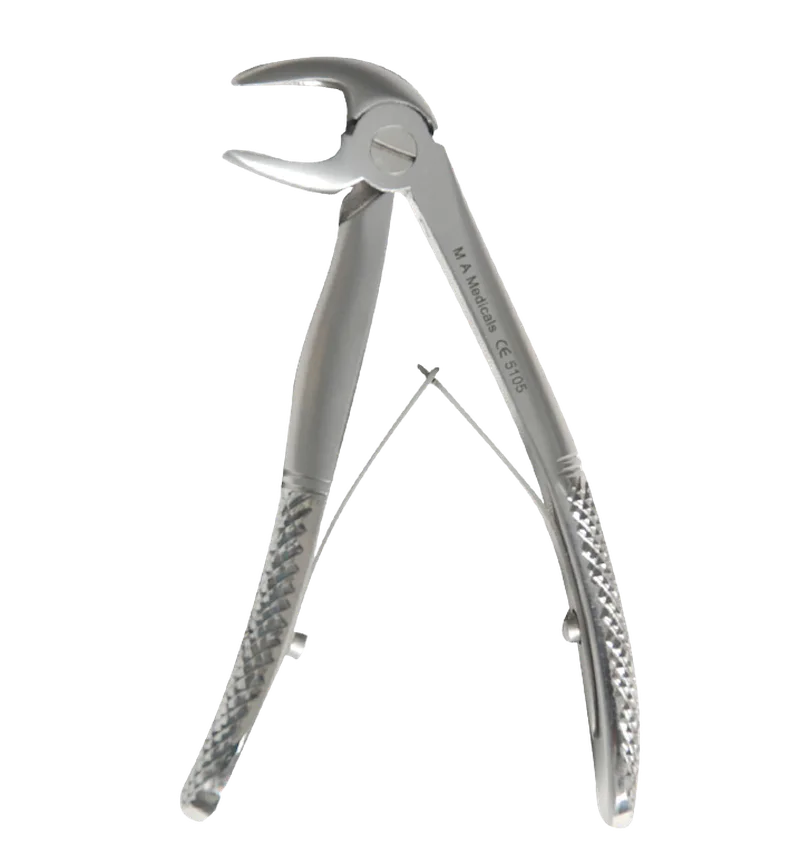
Children's Extraction Forceps - Lower Incisors 10cm (Fig. 5)
The Children's Lower Incisors Forceps (Fig. 5) is a pediatric-pattern instrument designed to remove deciduous lower central and lateral incisors from their alveolar bone. The beaks are angled at roughly ninety degrees to the handle so the tips approach the primary anterior crown perpendicularly for a square, stable grip. A 10 cm handle profile gives the shortened reach and fine control that pedo extractions require. Forged from surgical-grade stainless steel with a polished finish, the forceps is fully autoclavable and compatible with standard cassette workflows. Knurled crossover handles keep it secure under gloved, moist contact during pediatric extraction procedures. Supplied non-sterile by Equate Instruments for in-clinic pouch or cassette sterilisation.
View
Children's Extraction Forceps - Lower Molars 10cm (Fig. 6)
The Children's Lower Molars Forceps (Fig. 6) is a pediatric-pattern instrument for removing deciduous lower first and second molars from their alveoli. The paired beaks are shaped with a cow-horn style pointed profile that seats between the buccal and lingual roots at the bifurcation, supporting a controlled squeezing elevation. A 10 cm handle gives the shortened leverage and fine control pedo posterior extractions require. Forged from surgical-grade stainless steel with a polished finish, the forceps is fully autoclavable and compatible with standard cassette workflows. Knurled crossover handles keep it secure under gloved, moist contact. Supplied non-sterile by Equate Instruments for in-clinic pouch or cassette sterilisation.
View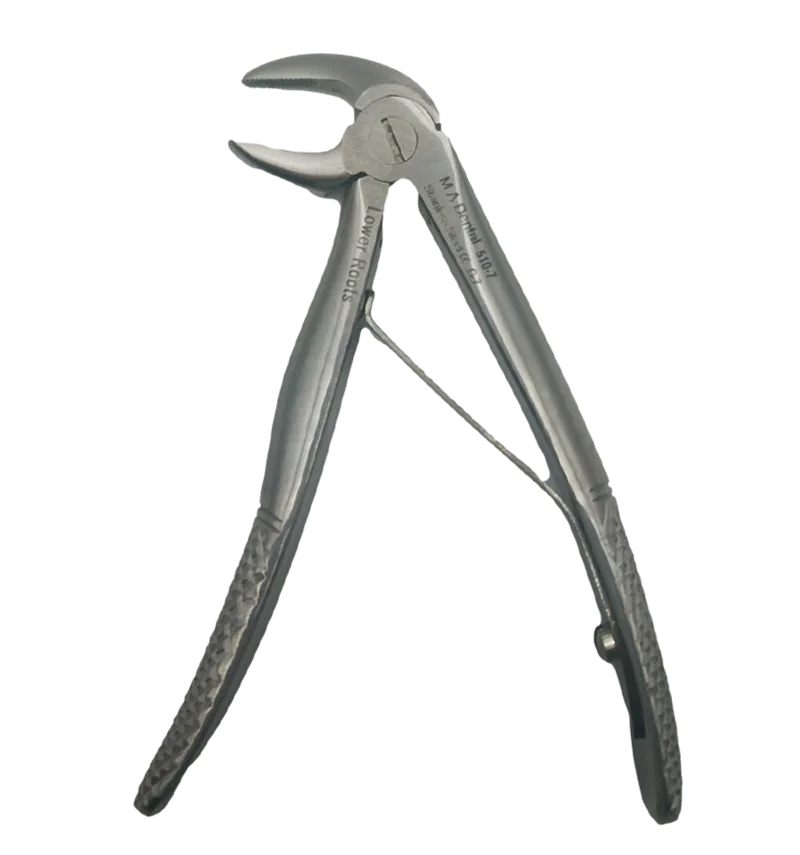
Children's Extraction Forceps - Lower Roots 10cm (Fig. 7)
The Children's Lower Roots Forceps (Fig. 7) is a pediatric-pattern instrument for retrieving retained deciduous lower roots and fractured primary root fragments from the alveolus. The narrow paired beaks are angled for a posterior lower approach and taper to a fine contact area that slips along the root surface for atraumatic delivery. A 10 cm handle gives the shortened leverage pedo extractions demand for controlled, precise work. Forged from surgical-grade stainless steel with a polished finish, the forceps is fully autoclavable and compatible with standard cassette workflows. Knurled crossover handles keep it secure under gloved, moist contact. Supplied non-sterile by Equate Instruments for in-clinic pouch or cassette sterilisation.
View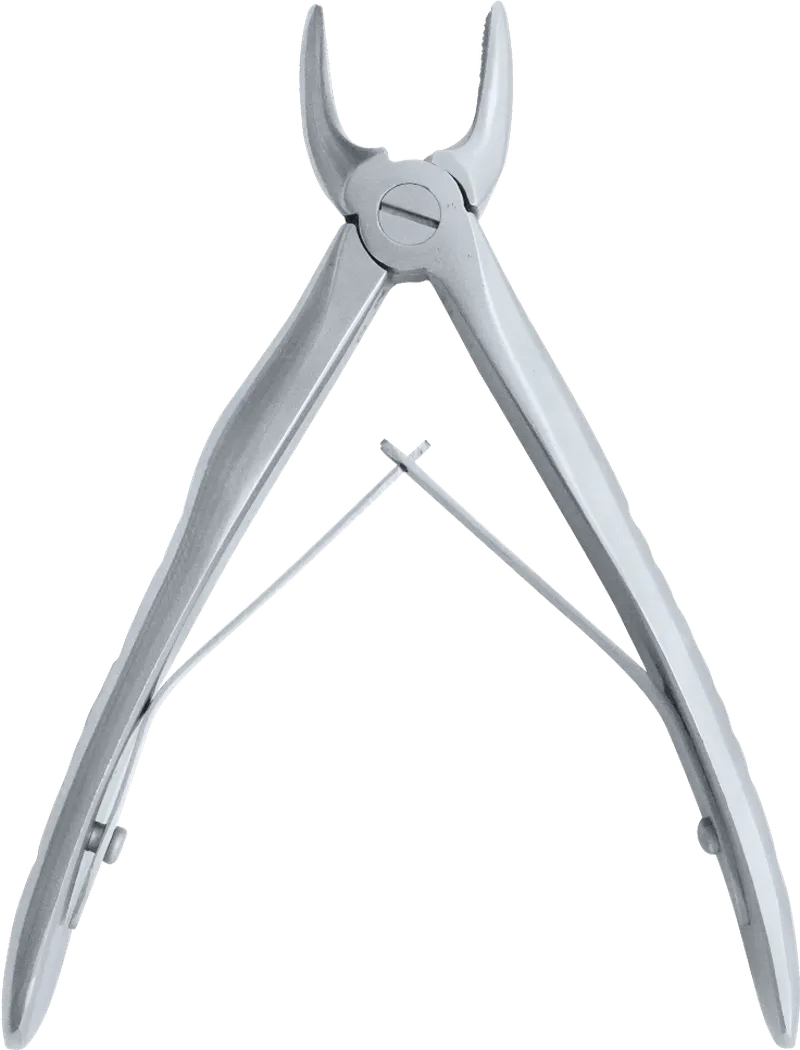
Children's Extraction Forceps - Lower Incisors 10cm Diamond Tip (Fig. 5)
The Children's Lower Incisors Diamond-Tip Forceps (Fig. 5) is a pediatric-pattern instrument with a diamond-coated working end for removing deciduous lower central and lateral incisors. The beaks are angled at roughly ninety degrees to the handle so the diamond-coated tips approach the primary anterior crown perpendicularly for a square, slip-resistant grip. A 10 cm handle gives the shortened leverage pedo anterior extractions demand. Forged from surgical-grade stainless steel with a polished shank, the forceps is fully autoclavable and compatible with standard cassette workflows. Knurled crossover handles keep it secure under gloved, moist contact. Supplied non-sterile by Equate Instruments for in-clinic pouch or cassette sterilisation.
View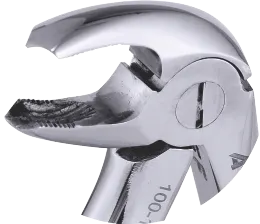
Children's Extraction Forceps - Lower Molars 10cm Diamond Tip (Fig. 6)
The Children's Lower Molars Diamond-Tip Forceps (Fig. 6) is a pediatric-pattern instrument with a diamond-coated working end for removing deciduous lower first and second molars. The paired beaks carry a cow-horn style pointed profile that seats between the buccal and lingual roots at the bifurcation, and industrial diamond particles bonded to the contact surface bite into slick primary enamel during squeezing elevation. A 10 cm handle delivers the shortened leverage pedo posterior extractions demand. Forged from surgical-grade stainless steel with a polished shank, the forceps is fully autoclavable and compatible with standard cassette workflows. Knurled crossover handles keep it secure under gloved, moist contact. Supplied non-sterile by Equate Instruments for in-clinic pouch or cassette sterilisation.
View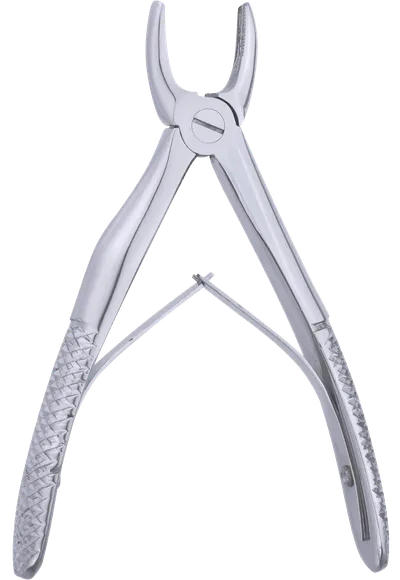
Children's Extraction Forceps - Lower Roots 10cm Diamond Tip (Fig. 7)
The Children's Lower Roots Diamond-Tip Forceps (Fig. 7) is a pediatric-pattern instrument with a diamond-coated working end for retrieving retained deciduous lower roots and fractured primary root fragments. The narrow paired beaks are angled for a posterior lower approach, and industrial diamond particles bonded to the tip bite into polished dentin and resist slip when purchase is marginal. A 10 cm handle gives the shortened leverage pedo root retrieval demands. Forged from surgical-grade stainless steel with a polished shank, the forceps is fully autoclavable and compatible with standard cassette workflows. Knurled crossover handles keep it secure under gloved, moist contact. Supplied non-sterile by Equate Instruments for in-clinic pouch or cassette sterilisation.
View
Pediatric Extracting Forceps, Fig. 13 - Lower Premolars
Equate Instruments Pediatric Extracting Forceps are purpose-sized for children's deciduous and mixed dentitions, with shorter working ends and slimmer beaks than adult forceps so clinicians can seat the jaws along the cemento-enamel junction without impinging on erupting neighbouring teeth. The Fig. 13 beak geometry is anatomically shaped for lower premolar crowns in pediatric and adolescent patients, providing a controlled, vertically aligned grip during luxation and delivery. The forceps are forged from surgical-grade stainless steel with a precision-milled box-joint hinge and cross-hatched handles for reliable torque transfer and a non-slip grip under wet conditions. Fully autoclavable, they are supplied non-sterile for in-clinic steam sterilisation in pouches or cassettes.
View
Pediatric Extracting Forceps, Fig. 22 - Lower Molars
Equate Instruments Pediatric Extracting Forceps are purpose-sized for children's deciduous and mixed dentitions, with shorter working ends and slimmer beaks than adult forceps so clinicians can seat the jaws along the cemento-enamel junction without impinging on erupting neighbouring teeth. The Fig. 22 beak geometry is anatomically shaped for lower deciduous molar crowns in pediatric patients, with angled beaks set to the mandibular plane for a direct vertical delivery path. The forceps are forged from surgical-grade stainless steel with a precision-milled box-joint hinge and cross-hatched handles for reliable torque transfer and a non-slip grip under wet conditions. Fully autoclavable, they are supplied non-sterile for in-clinic steam sterilisation in pouches or cassettes.
View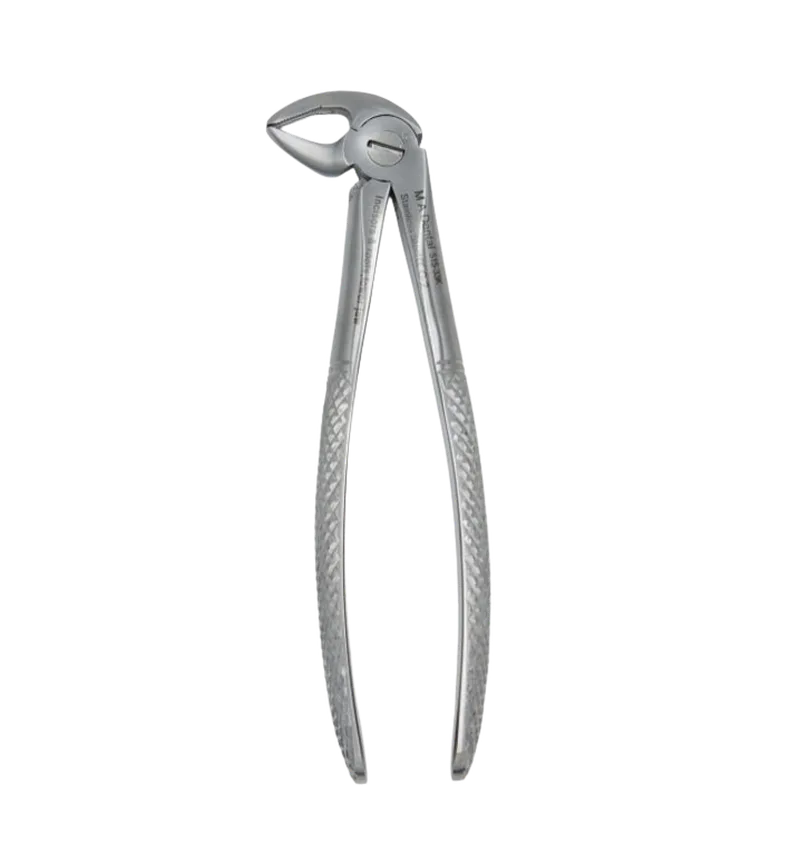
Pediatric Extracting Forceps, Fig. 33A - Lower Roots
Equate Instruments Pediatric Extracting Forceps are purpose-sized for children's deciduous and mixed dentitions, with shorter working ends and slimmer beaks than adult forceps so clinicians can seat the jaws along the cemento-enamel junction without impinging on erupting neighbouring teeth. The Fig. 33A beak geometry is angled to the mandibular plane with slim jaws designed to grip retained lower roots and root fragments on either side of the lower arch. The forceps are forged from surgical-grade stainless steel with a precision-milled box-joint hinge and cross-hatched handles for reliable torque transfer and a non-slip grip under wet conditions. Fully autoclavable, they are supplied non-sterile for in-clinic steam sterilisation in pouches or cassettes.
View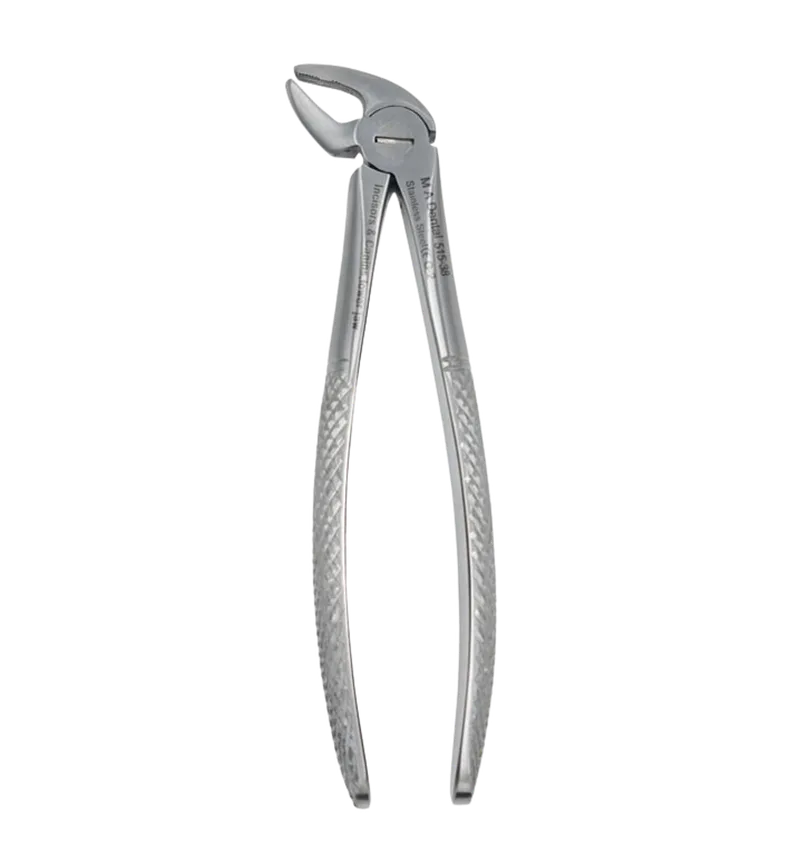
Pediatric Extracting Forceps, Fig. 4 - Lower Incisors & Canines
Equate Instruments Pediatric Extracting Forceps are purpose-sized for children's deciduous and mixed dentitions, with shorter working ends and slimmer beaks than adult forceps so clinicians can seat the jaws along the cemento-enamel junction without impinging on erupting neighbouring teeth. The Fig. 4 beak geometry features angled slim beaks aligned to the mandibular plane, shaped to grip lower deciduous incisor and canine crowns during controlled rotational luxation. The forceps are forged from surgical-grade stainless steel with a precision-milled box-joint hinge and cross-hatched handles for reliable torque transfer and a non-slip grip under wet conditions. Fully autoclavable, they are supplied non-sterile for in-clinic steam sterilisation in pouches or cassettes.
View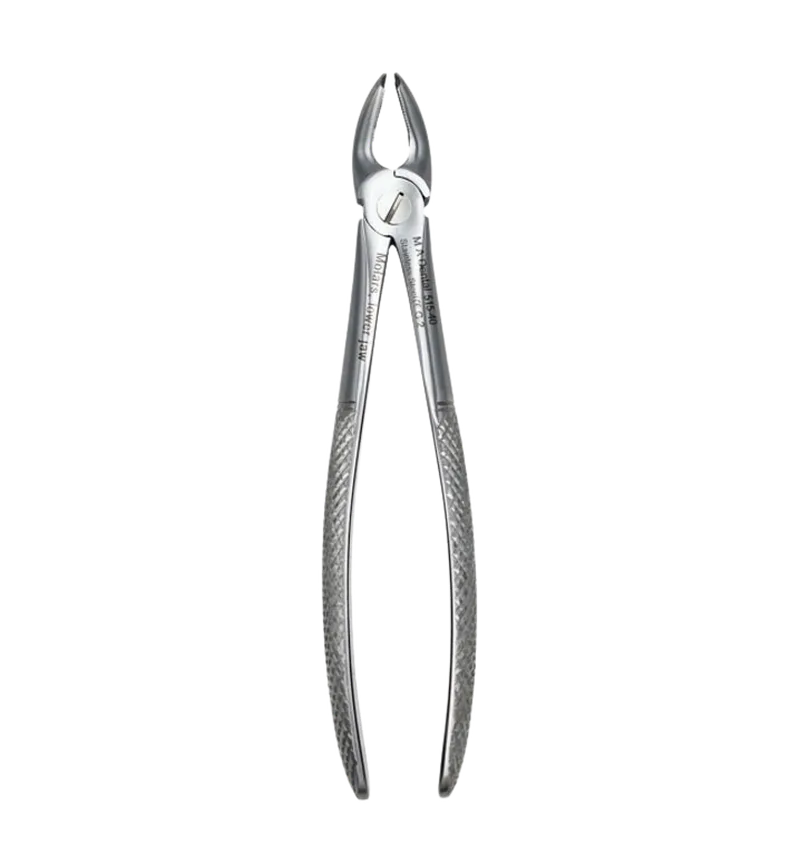
Pediatric Extracting Forceps, Fig. 21 - Lower Molars (Either Side)
Equate Instruments Pediatric Extracting Forceps are purpose-sized for children's deciduous and mixed dentitions, with shorter working ends and slimmer beaks than adult forceps so clinicians can seat the jaws along the cemento-enamel junction without impinging on erupting neighbouring teeth. The Fig. 21 beak geometry features bi-angled anatomical beaks aligned to the mandibular plane, symmetrical for use on either side of the lower arch during deciduous molar delivery. The forceps are forged from surgical-grade stainless steel with a precision-milled box-joint hinge and cross-hatched handles for reliable torque transfer and a non-slip grip under wet conditions. Fully autoclavable, they are supplied non-sterile for in-clinic steam sterilisation in pouches or cassettes.
View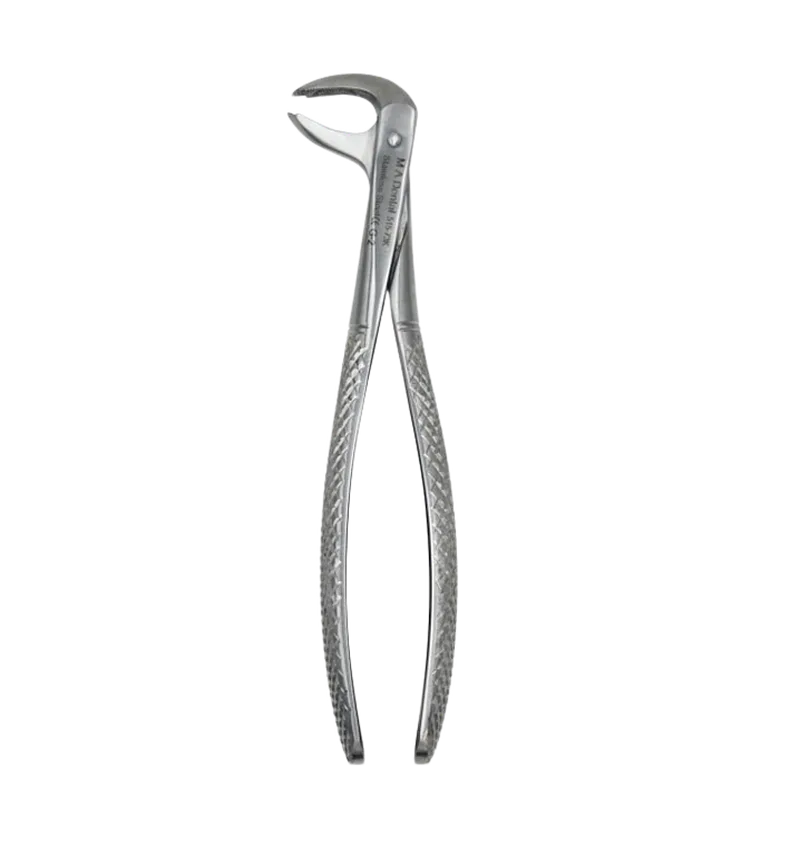
Pediatric Extracting Forceps, Fig. 73 - Lower Molars
Equate Instruments Pediatric Extracting Forceps are purpose-sized for children's deciduous and mixed dentitions, with shorter working ends and slimmer beaks than adult forceps so clinicians can seat the jaws along the cemento-enamel junction without impinging on erupting neighbouring teeth. The Fig. 73 beak geometry follows a cow-horn profile with pointed beaks that enter the bifurcation of lower deciduous molars, generating vertical delivery force through bone compression. The forceps are forged from surgical-grade stainless steel with a precision-milled box-joint hinge and cross-hatched handles for reliable torque transfer and a non-slip grip under wet conditions. Fully autoclavable, they are supplied non-sterile for in-clinic steam sterilisation in pouches or cassettes.
View