Band Seating Plier
Written & reviewed by the Equate Technical Team · Updated
A band seating plier is an orthodontic plier with small, firm tips that grip the margin of a molar or premolar band so the clinician can position and seat it on the tooth before cementation. It controls band placement without crushing the metal, and is often used with a band pusher or bite stick.
Seating versus pushing a band
Banding teaching material from the University of Toronto and the California Association of Orthodontists describes a sequence: choose a band from a graded kit, seat it first with finger pressure, then complete seating with a band pusher and a bite stick while the patient bites. A band seating plier is the alternative to pushing. The tips take hold of the band margin, so the clinician can lift, reposition and press the band without needing the patient to bite on it.
This is useful when the band must be repositioned several times during try-in, or when a seating lug or tube is awkward to reach with a pusher. The goal in all cases is the same fit criterion: below the marginal ridges, parallel to the occlusal plane and finishing at the gingival margin without extending into the sulcus.
Tips and joint design
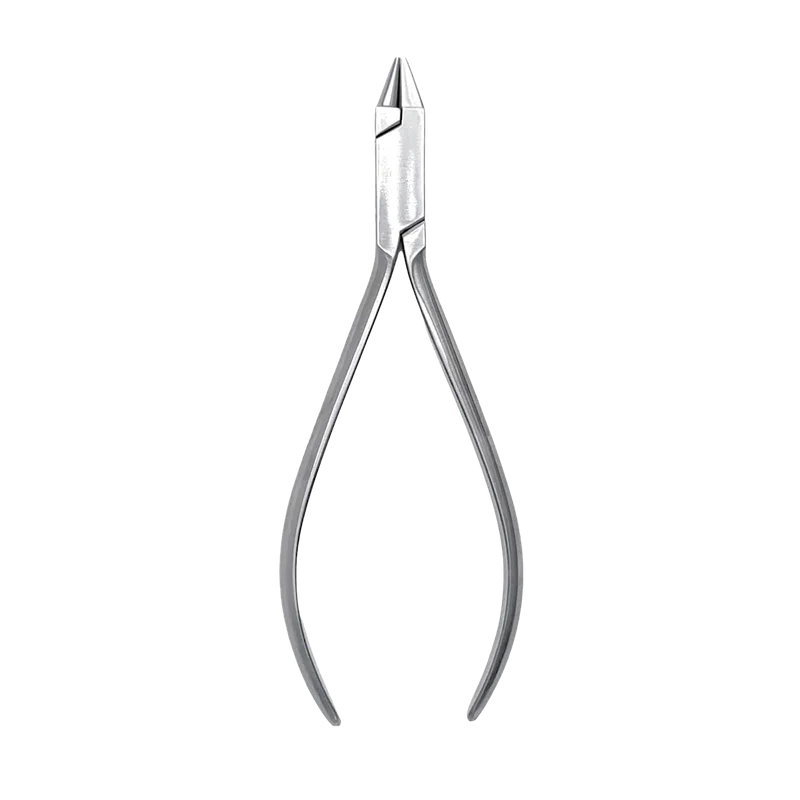
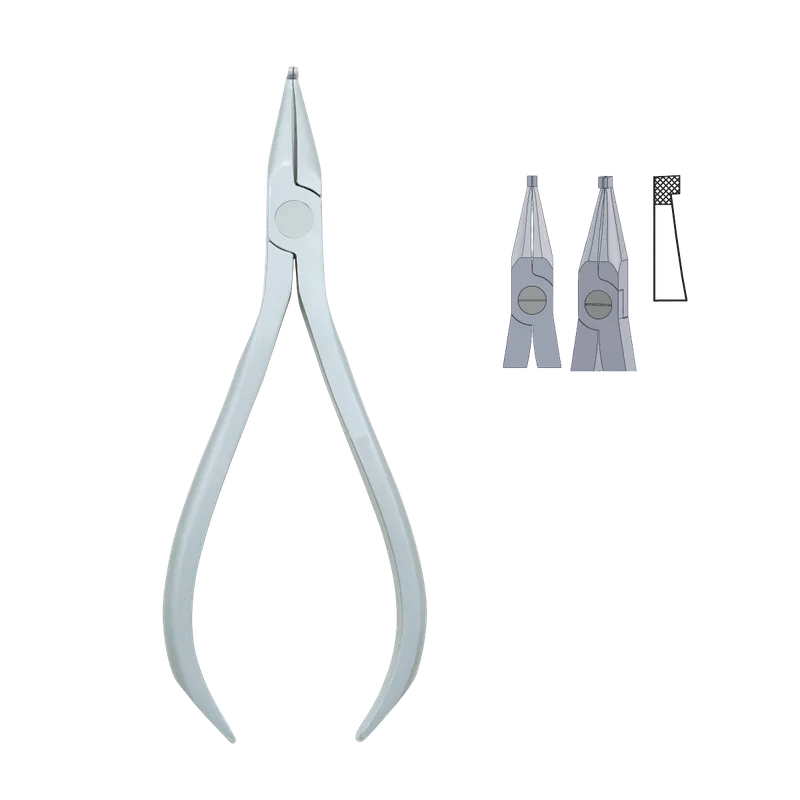
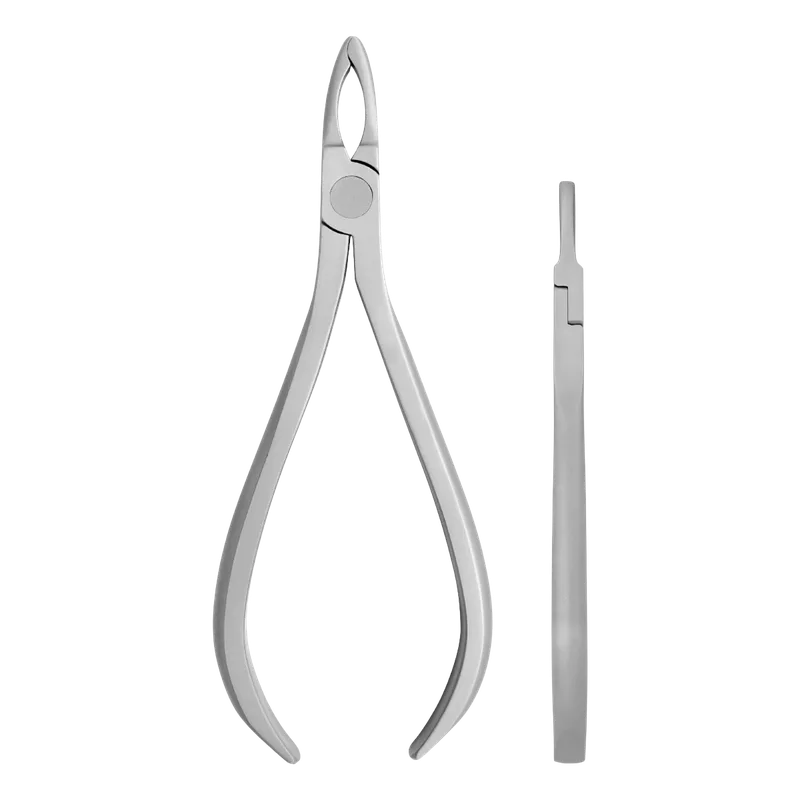
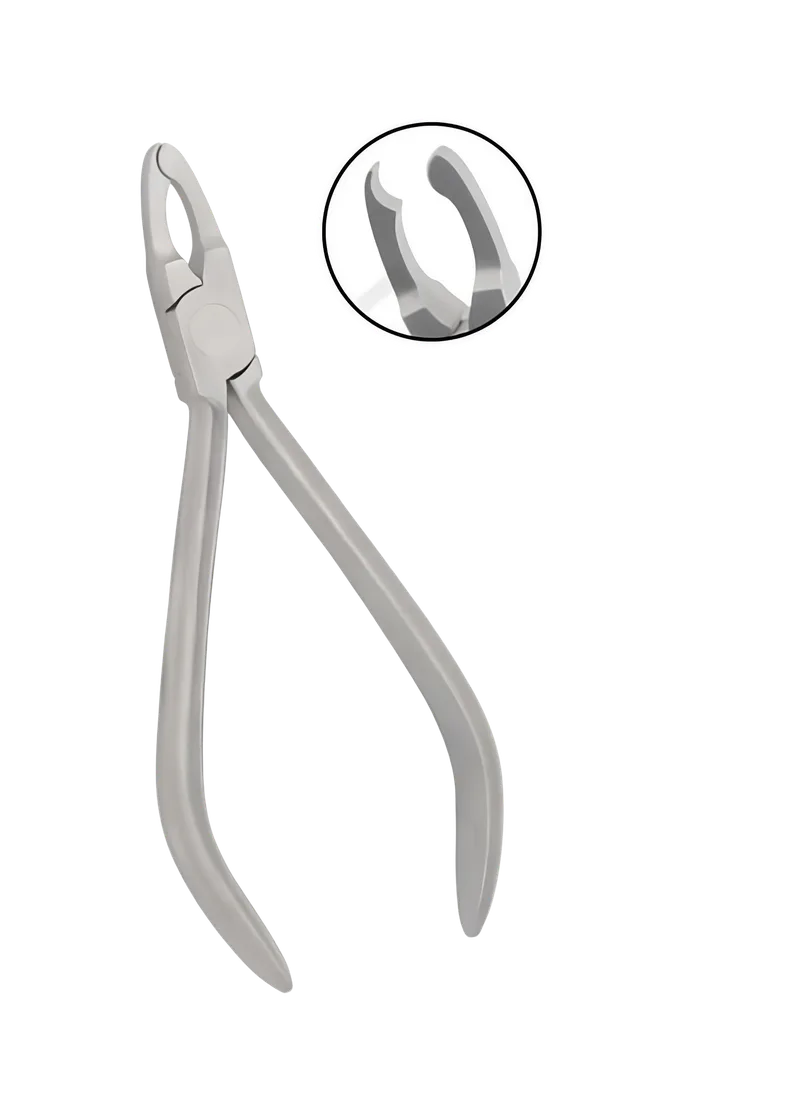
The tips decide how well the plier holds a band. Equate's Angle plier for band setting uses symmetric pyramidal tips that meet at a fine point, designed to grip the band margin without distorting the metal. The band seating plier with a 2.8 mm tip offers a slightly broader contact. Both are stainless steel with slim handles and are autoclavable. A tight hinge matters because a loose joint lets the tips rock and mark the band.
Related band-forming pliers in the range
| Instrument | Equate references | Purpose | Example |
|---|---|---|---|
| Band seating plier | 2 | Grip and seat bands on the tooth | Band seating plier, 2.8 mm tip; Angle plier for band setting |
| Crown band contouring plier | 1 | Shape cervical and occlusal margins of bands and stainless crowns | Crown band contouring pliers for 0.7 mm (.028 in) wire |
| Johnson contouring plier | 1 | Contour bands and preformed crowns with a convex and a concave beak | Johnson contouring pliers, rivet joint |
Contouring pliers: adapting the band to the tooth
Even a correctly sized band can need adaptation. The Equate crown band contouring plier uses a ball-and-socket jaw set to stretch cervical and occlusal margins outward without creasing the metal. The Johnson contouring plier has one broad convex beak and one concave beak, allowing gradual burnishing of band margins in a smooth arc. Both are listed at €64.90 Equate list (indicative, EUR ex-VAT), about 52% below the €134.80 median premium European RRP for orthodontic wire-forming pliers, which is the nearest benchmark category for these two forming pliers.
Selection and care
- Match the tip to the work: fine pointed tips for band margins, ball-and-socket or convex-concave beaks for contouring.
- Check that tips meet squarely and the joint has no side play.
- Wipe cement from the tips before it sets; ultrasonic clean, lubricate the joint and autoclave open.
- Do not use band pliers to bend wire; that spreads the tips and ruins their grip on band metal.
The Equate difference
Equate lists four band-related plier references: two band seating pliers (an Angle plier for band setting and a band seating plier with a 2.8 mm tip), a crown band contouring plier for 0.7 mm wire and a Johnson contouring plier.
Equate Band Seating Plier options
Frequently asked questions
What is a band seating plier used for?
It grips the margin of an orthodontic band to position and seat it on a molar or premolar before cementation, without relying only on the patient biting on a bite stick.
Band seating plier or band pusher: which should I use?
Teaching material describes finger pressure first, then a pusher and bite stick. A seating plier is useful when you need to reposition a band repeatedly or reach a lug the pusher cannot. Many clinicians keep both.
What is a Johnson contouring plier?
A plier with a broad convex beak and an opposing concave beak, used to contour and adapt bands and preformed crowns to tooth anatomy. Equate lists one with a rivet joint.
Can I use a band seating plier on stainless steel crowns?
Crown band contouring pliers are the better choice for shaping crown margins. Seating pliers are designed for band margins.
How do I know a band is properly seated?
Per Toronto's banding material, it should sit below the marginal ridges, parallel to the occlusal plane, following the tooth contour at the gingival margin without entering the sulcus.
Are Equate band pliers sterile?
They are supplied non-sterile, individually packed, and are autoclavable stainless steel for processing in your own sterilisation workflow.
References
- University of Toronto orthodontic band selection and placement
- California Association of Orthodontists didactic material for orthodontic banding
- ISO 13485:2016 medical devices quality management systems
I am a…