Dental Measuring Ruler
Written & reviewed by the Equate Technical Team · Updated
A dental measuring ruler is a slim stainless steel scale with millimetre graduations, used chairside to measure endodontic files, paper points, gutta-percha cones, orthodontic wire lengths and short distances in the mouth or on models. It is autoclavable, quick to use one-handed, and often has a hole for hanging.
A simple tool with a defined job
The dental ruler is the least complicated instrument in the measuring group, and that is its advantage. A rigid steel strip with etched graduations can be sterilised, handled with gloves, and read in a second. Typical jobs are setting the stop on an endodontic file to a working length, confirming the length of a paper point or gutta-percha cone, cutting a length of orthodontic wire, and checking a short distance on a cast.
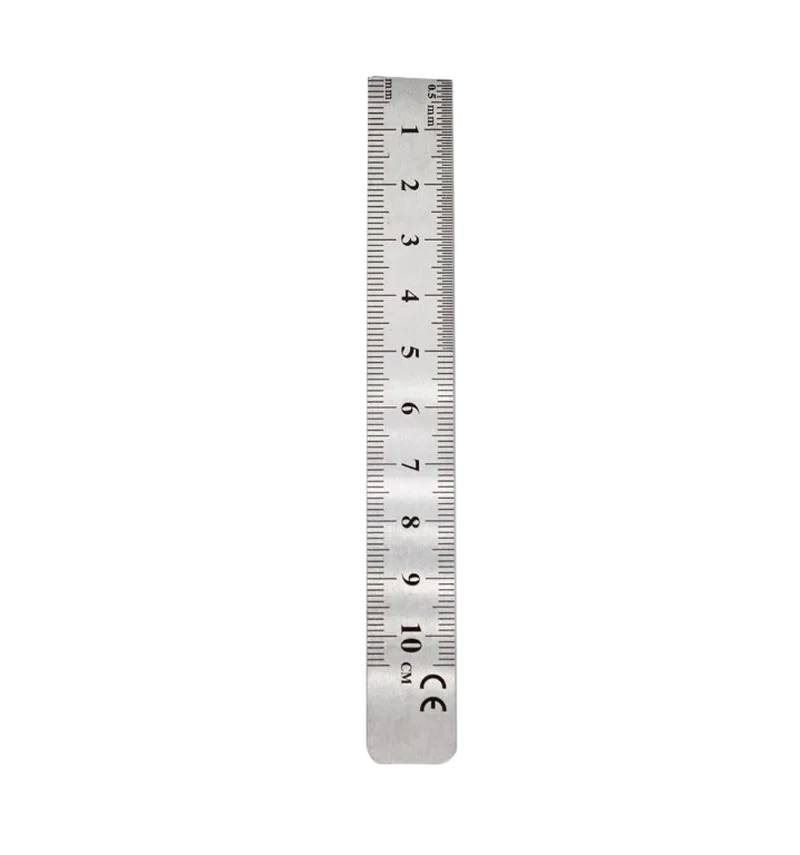
The Equate 10 cm ruler is etched with millimetre and half-millimetre graduations, the level of detail typical for this tool. That resolution suits lengths read by eye; for tooth widths or tight tolerances a caliper or Boley gauge is better.
Scale, length and edge
| Version | Scale | Typical use |
|---|---|---|
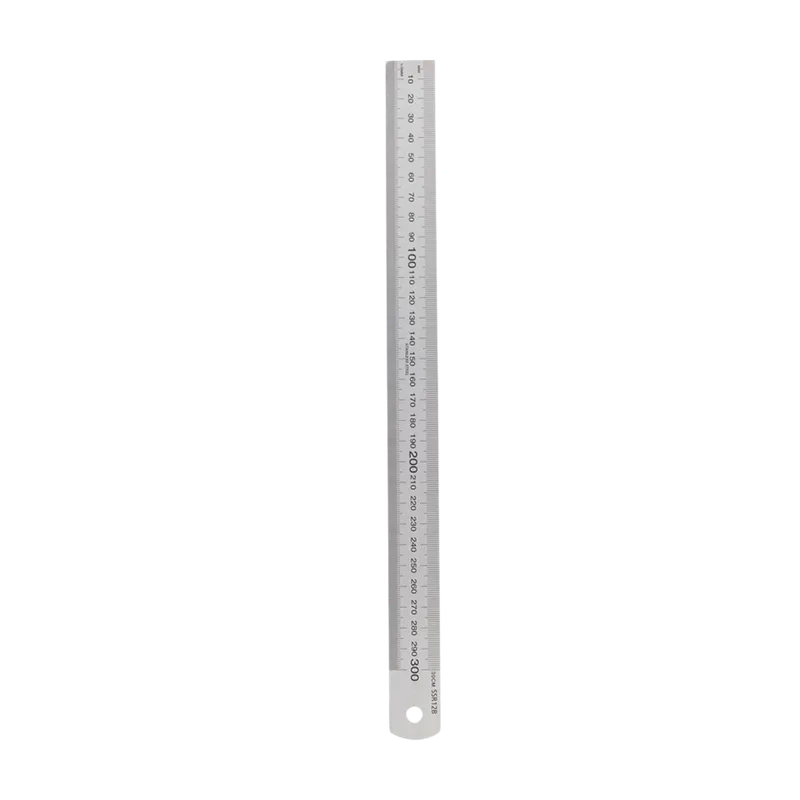
| 10 cm ruler | 0-100 mm | Paper points, gutta-percha, wire |
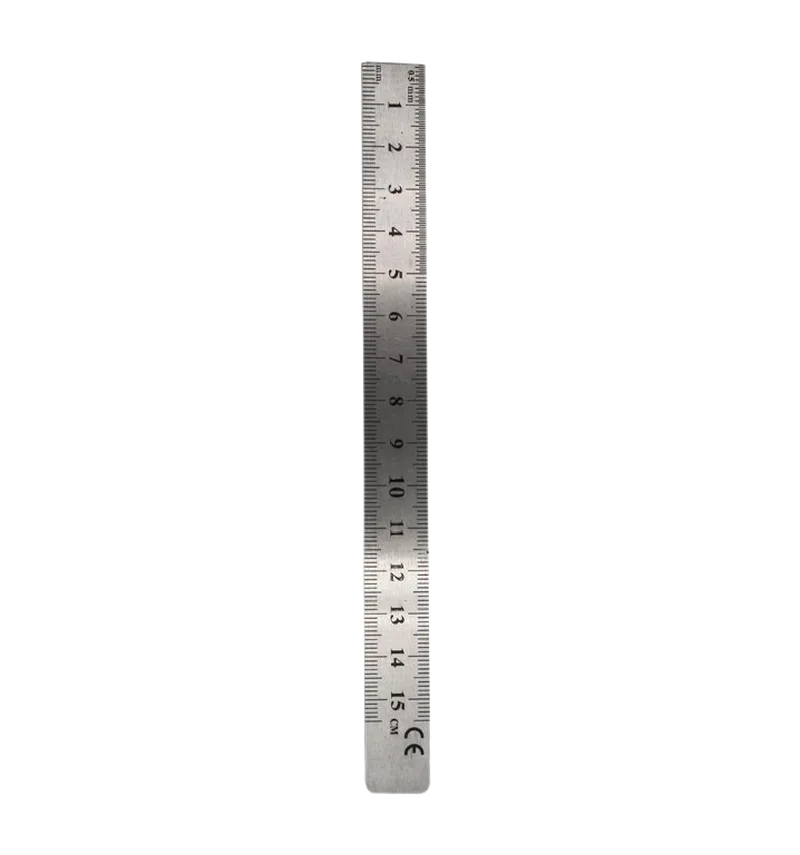
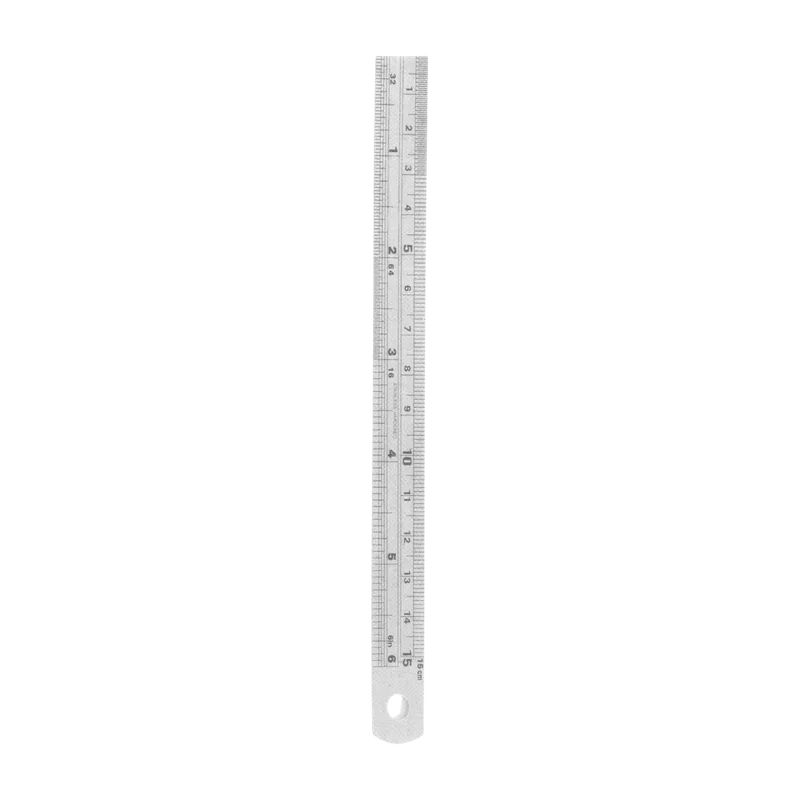
| 15 cm ruler | 0-150 mm | Longer wire segments, model distances |
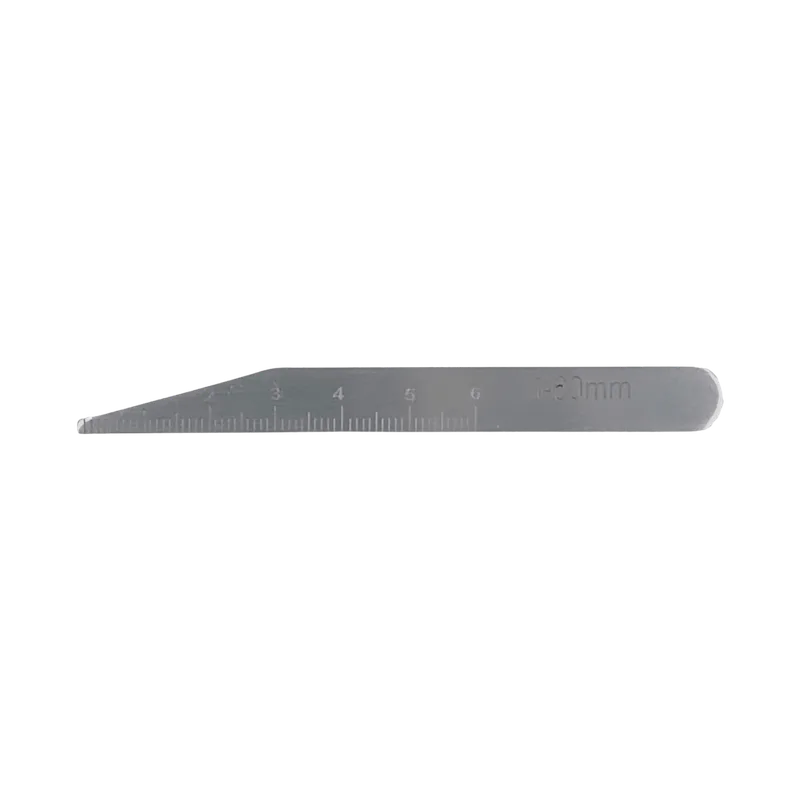
| 0-60 mm | Short scale | Endodontic file and cone measurement |
| 0-60 mm square edge | Short scale, square end | Butt the end against a stop or edge for a zero reference |
| 0-80 mm | Mid-length scale | Endodontic and wire work |
Using a ruler for working length
In endodontics, clinicians commonly set a stop on a file against a ruler to the working length estimated from a radiograph or electronic apex locator, then transfer it to the canal. Accuracy depends on where the zero is. A ruler whose scale starts at the very end gives a clean reference; one with a margin before zero needs to be read from the zero line, not the metal edge. A square-edge version avoids that ambiguity because the end is the reference.
Because the graduations are read by eye, parallax and the thickness of the line affect the result. Hold the ruler flat against the object, look squarely down at the scale, and read the same edge of each line consistently. For endodontic work, treat the ruler as a convenient, not a verified, gauge.
Selecting one
- Scale length: choose a short 0-60 mm scale for file work and 10 or 15 cm for wire.
- Edge: a square edge supports butt-end measurement against a stop.
- Marking: etched, not printed, graduations last through cleaning.
- Rigidity: the strip should not flex under pressure.
- Hang hole: useful for chairside storage and sterilisation pouches.
- Material: stainless steel that is passivated, with no edge burrs.
Care and checking
Equate rulers are passivated stainless steel, ultrasonically cleaned, reusable and latex free, supplied non-sterile, and made for cleaning and autoclave sterilisation. Rinse debris from the etched lines before cleaning; endodontic residue collects in the grooves. A ruler can be checked against a certified reference scale or a gauge block; replace any ruler that is bent, whose etching is worn or whose zero line is damaged.
Ruler versus caliper
A ruler gives a reading in one step but with a coarser, subjective result. A caliper holds parallel jaws against the object and, where it has a vernier, reads a finer fraction of a millimetre, which is why ISO 13385-1 treats callipers as dimensional measuring equipment with defined maximum permissible errors. Use a ruler where half-millimetre reading is adequate and a caliper where it is not.
The Equate difference
Equate lists 6 dental measuring rulers in stainless steel, including 10 cm and 15 cm versions, 0-60 mm with round or square edge, a 0-80 mm ruler and a general stainless steel dental ruler.
Equate Dental Measuring Ruler options

Frequently asked questions
What is a dental measuring ruler used for?
It measures endodontic files, paper points, gutta-percha cones and orthodontic wire lengths, and short distances in the clinic or on models.
What is the difference between a 10 cm and a 15 cm dental ruler?
The 10 cm version is compact for file and cone work, while the 15 cm version gives more length for wire segments and model distances.
Why choose a square-edge dental ruler?
The square end can be butted against a stop or edge, so the end is the zero reference and no parallax at the end of the scale is introduced.
How precise is a dental ruler?
Typical graduations are millimetre and half-millimetre, read by eye. That suits working-length transfer and wire cutting, but not tooth-width measurement, where calipers are better.
Can dental rulers be autoclaved?
Stainless steel dental rulers such as Equate's are reusable and designed for cleaning and autoclave sterilisation. Clean debris from the etched lines first.
How do I know if my ruler is still accurate?
Compare it with a certified scale or gauge block; replace it if it is bent or the etching or zero line is worn.
References
- ISO 13385-1:2019 Geometrical product specifications, dimensional measuring equipment, design and metrological characteristics of callipers
- ISO 14253-1 decision rules for conformity with specifications
- Comparison of three different instruments for orthodontic study model analysis, South African Dental Journal 2020
I am a…