Orthodontic Force Gauge
Written & reviewed by the Equate Technical Team · Updated
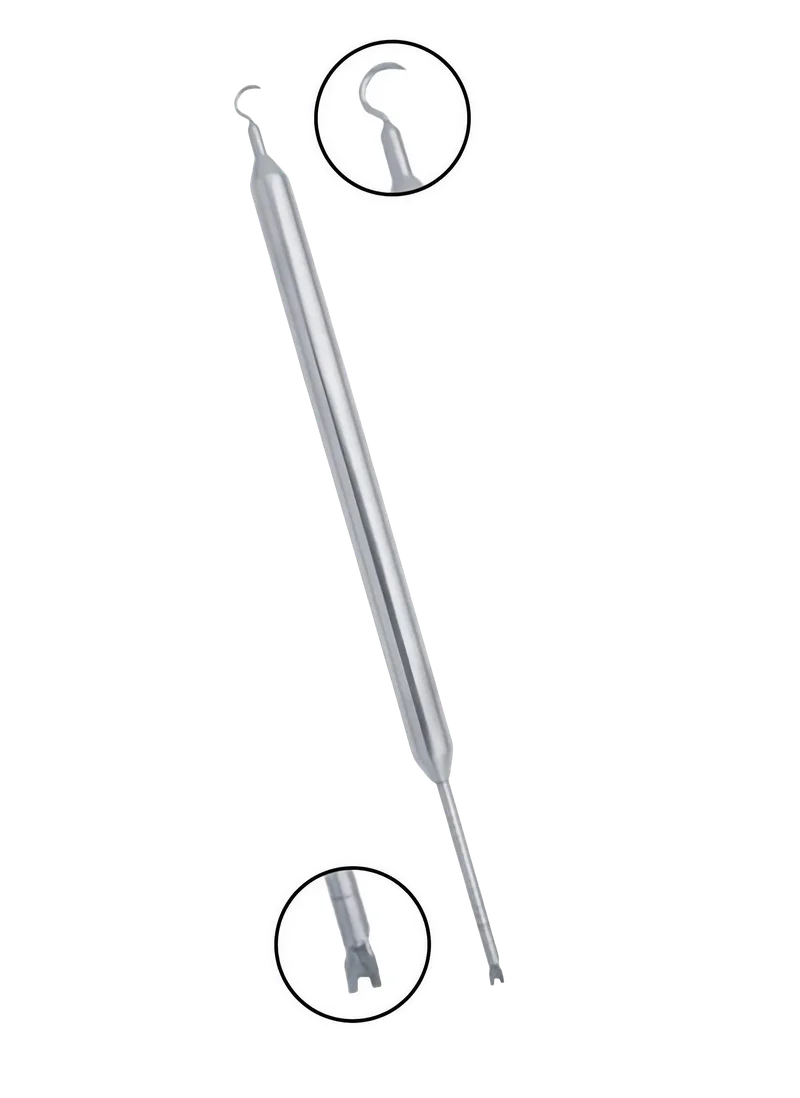
An orthodontic force gauge is a spring-loaded instrument that measures the force delivered by archwires, elastics and auxiliary springs at the bracket. A hook-tipped indicator slides along a calibrated barrel against a coiled spring, so the clinician reads the load directly and adjusts activation to the prescribed force, typically in ounces or grams.
Why measure force at all
Orthodontic tooth movement depends on the force applied, and clinicians usually set activations by feel and experience. A force gauge puts a number on that feel. A 2019 systematic review in the American Journal of Orthodontics and Dentofacial Orthopedics concluded that forces of 50 to 100 cN appear optimal for bodily tooth movement with fixed appliances, with potentially fewer side effects, though the evidence was weak to moderate. It found that forces between 50 and 250 cN produced a similar rate of movement, and that forces above 250 cN gave a slightly higher rate but with adverse effects.
The review's studies were heterogeneous, so it did not pool results in a meta-analysis. The range is a guide, not a prescription, and a gauge lets a clinician check that an elastic or spring is in the intended range at all.
How a spring gauge works
The Dontrix-type gauge is a small barrel with a coiled spring inside. A hook on the indicator engages the appliance, such as an elastic chain, an auxiliary spring or the point where an archwire is deflected. As the hook is pulled to the working position, the indicator moves along the barrel against the spring and the load is read at a calibrated mark.
The Equate gauge reads up to 16 ounces. For orientation, 1 cN is about 1.02 gram-force, so the 50 to 100 cN range in the systematic review is roughly 50 to 100 gf, or about 1.8 to 3.5 ounces, a part of the barrel's range where care in reading matters most. Spring gauges can drift and are read by eye, so they are best used to compare and set typical forces.
Common uses and units
| Use | What is measured | Notes |
|---|---|---|
| Elastics | Load of an elastic at a stretched length | Measure at the intended working length |
| Archwire | Force at a deflection | Hook at the bracket and read at the working position |
| Auxiliary springs | Activation force of a closed or open coil | Compare to the prescription |
| Units | Ounces, gram-force, centinewton | 1 cN is about 1.02 gf; gram-force is not an SI unit |
Limits of what the gauge tells you
- Force changes as the appliance deactivates, so one reading is a snapshot.
- Friction between archwire and bracket changes the force actually reaching the tooth.
- Gauge accuracy depends on the spring, calibration and reading technique, and no specific accuracy study of the Dontrix gauge was found for this page.
- The review evidence on optimal force is weak to moderate and heterogeneous.
- A spring gauge reads along one axis, while appliances load teeth in more than one direction.
Checking the gauge
A force gauge is a measuring instrument, so it should have a reference. Hang a known mass from the hook, such as a calibrated weight, and compare the reading with the expected load. Check that the indicator returns to zero with no load and that the spring is not stuck or deformed. Replace the gauge if it fails the check. Because a spring gauge reads along one axis, hold it in line with the force being measured to avoid reading side loads.
Materials and care
The Equate gauge is passivated stainless steel, ultrasonically cleaned, reusable, latex free and supplied non-sterile, so it can be cleaned and autoclaved. Keep it from being overstretched past its range, since overloading can permanently stretch the spring and shift its zero.
The Equate difference
Equate lists one stainless steel force gauge, the Dontrix Orthodontic Force Gauge, a spring-loaded barrel gauge reading loads up to 16 ounces, about 454 gram-force, for archwire, elastic and spring activation.
Equate Orthodontic Force Gauge options
Frequently asked questions
What is a Dontrix gauge?
The Dontrix gauge is a spring-loaded orthodontic force gauge. A hook-tipped indicator slides along a calibrated barrel against a coiled spring, giving a direct reading of the load applied by an archwire, elastic or spring.
What force is ideal for orthodontic tooth movement?
A 2019 AJODO systematic review found 50 to 100 cN seems optimal for bodily movement with fixed appliances, with weak to moderate evidence. Forces above 250 cN gave slightly faster movement but adverse effects.
How many grams is 16 ounces?
16 ounces is about 454 grams of force, the top of the Equate Dontrix gauge's range.
What is the difference between cN and grams?
A centinewton is about 1.02 gram-force. Gram-force is not an SI unit, but the numbers are close enough for clinical use.
How do I check a force gauge is accurate?
Hang a known calibrated mass from the hook, compare the reading, and confirm the indicator returns to zero without load. Replace the gauge if it fails.
Can a force gauge be autoclaved?
Stainless steel gauges such as Equate's are reusable and designed for cleaning and autoclaving; follow the manufacturer instructions and avoid overstretching the spring.
References
- Optimal force magnitude for bodily orthodontic tooth movement with fixed appliances: a systematic review, AJODO 2019
- Optimal force magnitude for bodily orthodontic tooth movement, AJODO abstract
- Optimum force magnitude for orthodontic tooth movement: a systematic literature review
I am a…