Iwanson Caliper
Written & reviewed by the Equate Technical Team · Updated
An Iwanson caliper is a spring-loaded thickness gauge with curved arms that measures the wall thickness of wax patterns, metal copings, ceramic build-ups and thin sheet material. The curved jaws close on the measuring point and a scale on the arc reads the thickness directly, typically from 0 to 10 mm.
What an Iwanson caliper measures
Restorations fail when they are too thin in the wrong place, so technicians check thickness at several stages: the wax pattern before casting, the metal coping afterwards, and ceramic build-up before glazing. The Iwanson caliper is built for exactly this. Its arms are curved so the tips can reach round the outside of a crown or into a concavity while the scale stays visible.
Product literature from dental suppliers describes the instrument as used for crowns, veneers, inlays, onlays and wax patterns, with a 0.1 to 10 mm range on most models. Scale graduations differ between manufacturers, so check the markings on the specific instrument before relying on it.
How it works
- A spring in the pivot holds the jaws open; finger pressure closes the curved tips onto the object.
- The reading is taken from the arc scale, normally 0 to 10 mm, with the indicator returning to zero when released.
- Blunt tips are intended for wax so they do not mark or pierce the pattern; sharper tips suit metal and ceramic work.
- Closing gently matters: suppliers warn that excessive force deforms wax or soft material and changes the reading.
Iwanson caliper versus other measuring tools
| Instrument | Measures | Typical range | Best for |
|---|---|---|---|
| Iwanson caliper | Thickness of walls and thin work | 0 to 10 mm | Wax patterns, copings, ceramic layers |
| Boley gauge | Linear width and length | Tens of millimetres | Tooth width, arch dimensions on models |
| Dividing gauge | Transfer of a fixed distance | Set by the operator | Comparing and transferring dimensions |
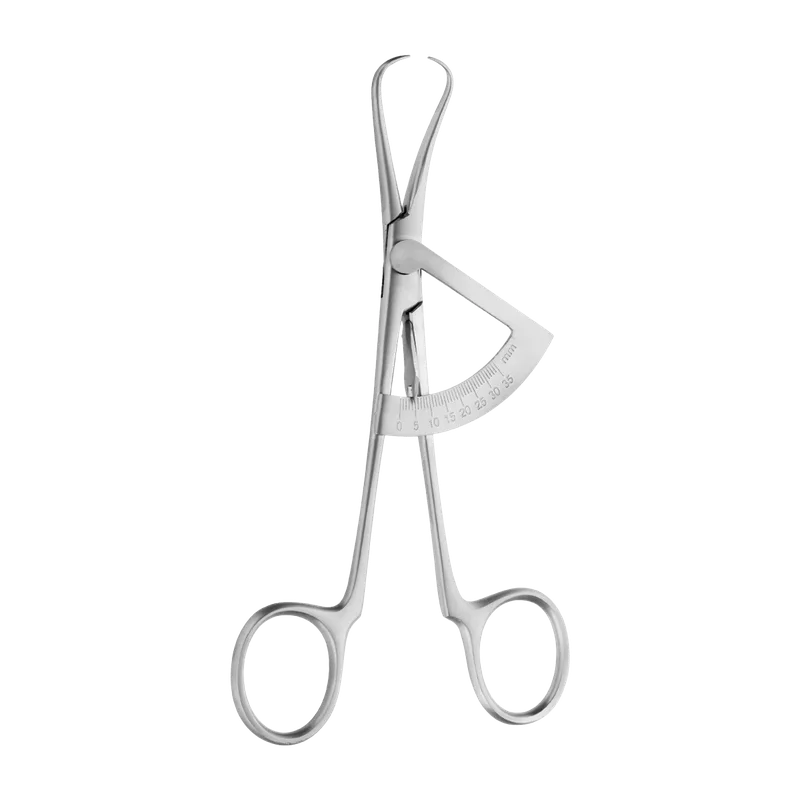
| Bone caliper | Ridge or bone thickness | Scissor-action, e.g. 35 mm | Surgical and implant site assessment |
Equate Iwanson calipers
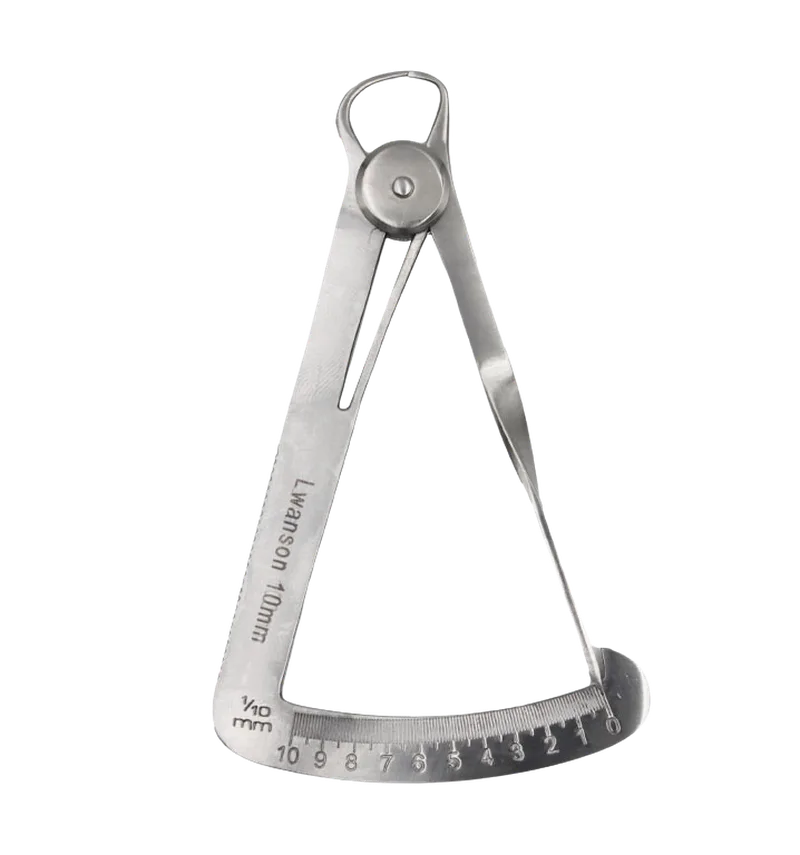
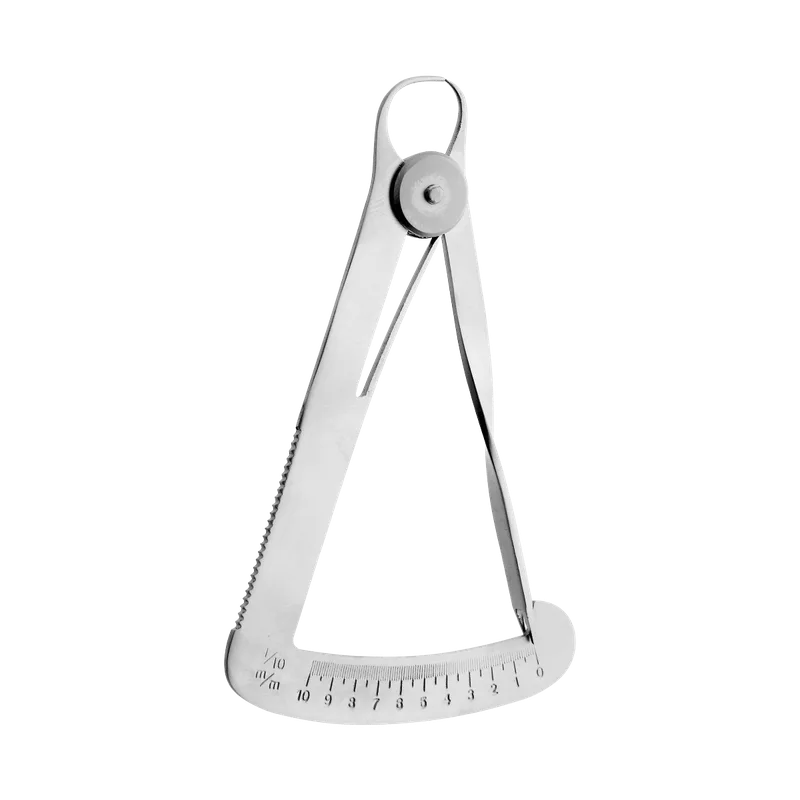
Equate lists two Iwanson-type calipers. The Iwanson Caliper for Wax 10 mm and the Iwanson Wax Thickness Caliper (0-10 mm) are made from stainless steel for stable spring tension, with sprung arms that follow the contour of the work piece. They are autoclavable, reusable and latex free, and are tolerant of routine laboratory handling.
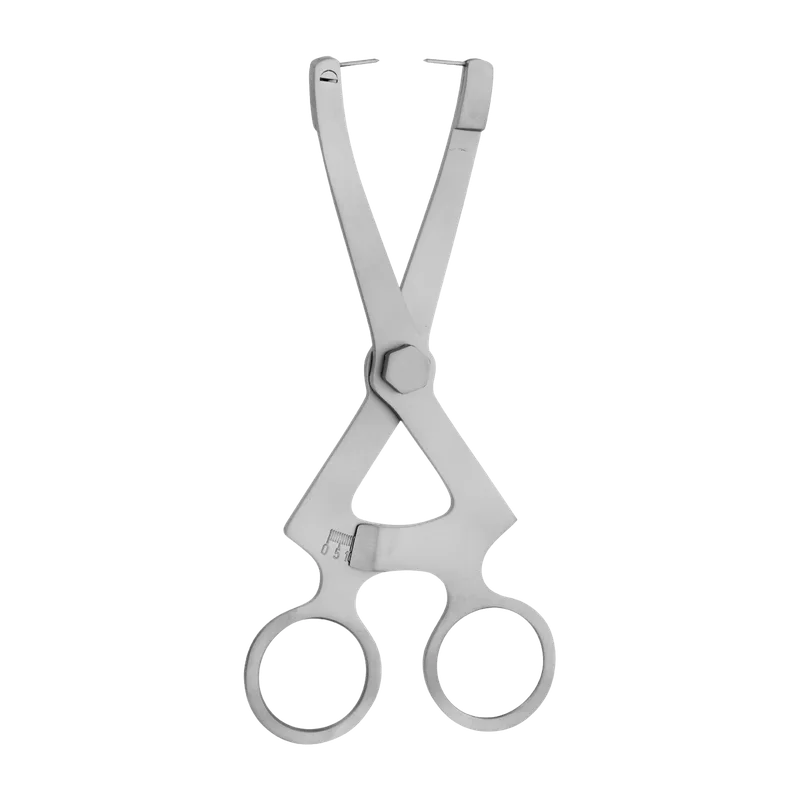
The related Calipers and Rulers family also includes two bone calipers, the Bone Caliper Gauge and a 35 mm version, which share the spring-and-arm principle but are intended for hard-tissue dimensions rather than laboratory thickness checks.
Choosing and using one
Look for tips that meet cleanly at zero, a spring with consistent, light resistance and a scale that is easy to read under bench lighting. For wax work select blunt tips and measure at the same locations on each pattern so readings compare. Record the thickness at critical points such as occlusal and axial walls rather than a single average.
After use, wipe wax and ceramic slurry from the tips, clean the pivot, and replace the caliper if the indicator no longer returns to zero. A bent arm cannot be reliably recalibrated.
The Equate difference
Equate lists 2 Iwanson calipers, the Iwanson Caliper for Wax 10 mm (EI-0529) and the Iwanson Wax Thickness Caliper 0-10 mm (EI-2453), plus 2 bone caliper gauges, all in passivated stainless steel.
Equate Iwanson Caliper options
Frequently asked questions
What is an Iwanson caliper used for?
It measures the thickness of wax patterns, metal copings, ceramic build-ups and thin sheet material, usually on a 0 to 10 mm scale.
What is the difference between an Iwanson caliper and a Boley gauge?
An Iwanson caliper has curved spring arms and reads thickness on an arc scale; a Boley gauge is a sliding caliper for linear dimensions such as tooth width.
Should I choose blunt or sharp tips?
Blunt tips are preferred for wax because they are less likely to mark soft material; sharper tips are used on metal and ceramic.
How accurate is an Iwanson caliper?
Accuracy depends on the scale graduation, usually 0.1 mm on common models, and on technique. Excess closing force can distort wax and change the reading.
Can an Iwanson caliper be autoclaved?
Stainless steel models are generally autoclavable after cleaning; follow the manufacturer's instructions and remove wax first.
Is an Iwanson caliper used in orthodontics?
Mainly in laboratory and prosthodontic work, but orthodontic labs use it for appliance and retainer thickness checks.
References
- Iwanson Spring Caliper Dental Gauge product technical description (ProDent USA)
- Iwanson Crown Caliper 0.1-10 mm specification (Artman Instruments)
- ISO 13485:2016 medical devices quality management systems
I am a…