Dental Instruments In Germany
Written by the Equate Instruments Technical Team · Published ·
Equate Instruments supplies dental hand instruments directly to clinics, dental groups and distributors in Germany, with a Regional Executive for DACH. Germany had 103,998 dentists in total, of whom 73,511 were professionally active (German Dental Association, BZÄK).
Key points
- Medical devices in Germany are overseen by Bundesinstitut für Arzneimittel und Medizinprodukte (BfArM).
- Equate sells direct to Germany, with a named Regional Executive for DACH.
Dentists in Germany at a glance
- Practising dentists: 69,339 (2014) to 71,983 (2024)
- +3.8% since 2014
- Practising dentists: 69,339 (2014) to 71,983 (2024)
- Eurostat (dataset hlth_rs_prs2, Health personnel), 2024
- Germany had 103,998 dentists in total, of whom 73,511 were professionally active (German Dental Association, BZÄK).
- 103,998
- Germany had 103,998 dentists in total, of whom 73,511 were professionally active (German Dental Association, BZÄK).
- Bundeszahnärztekammer (BZÄK), 2024
- At the end of 2024, there was on average one treating dentist for every 1,137 inhabitants in Germany (BZÄK).
- 1,137
- At the end of 2024, there was on average one treating dentist for every 1,137 inhabitants in Germany (BZÄK).
- Bundeszahnärztekammer (BZÄK), 2024
- In Germany, 43,663 dentists worked self-employed in their own practice (BZÄK).
- 43,663
- In Germany, 43,663 dentists worked self-employed in their own practice (BZÄK).
- Bundeszahnärztekammer (BZÄK), 2024
- dental schools listed
- 30
- dental schools listed
- Equate research
- Untreated caries, age 5+31.7%
- Severe periodontal disease, 15+27.4%
- No natural teeth, 20+11.7%
The dark line marks the median of Equate's 22 markets. Source: WHO Oral Health Country Profiles 2022 (2019 estimates).
How many dentists are there in Germany?
The number of practising dentists in Germany rose 3.8%, from 69,339 in 2014 to 71,983 in 2024 (Eurostat (dataset hlth_rs_prs2, Health personnel)).
At the end of 2024, there was on average one treating dentist for every 1,137 inhabitants in Germany (BZÄK).
In Germany, 43,663 dentists worked self-employed in their own practice (BZÄK).
On 31 December 2024, Germany had 3,910 specialist dentists in oral surgery and 3,825 specialist dentists in orthodontics (BZÄK).
See how Germany compares with Equate's other markets in dentists per 10,000 people across 21 countries.
What is the state of oral health in Germany?
In 2019, an estimated 29.1% of children aged 1–9 in Germany had untreated caries of the deciduous teeth (WHO).
In 2019, an estimated 31.7% of people aged 5 and over in Germany had untreated caries of the permanent teeth (WHO).
In 2019, the estimated prevalence of severe periodontal disease among people aged 15 and over in Germany was 27.4% (WHO).
In 2019, an estimated 11.7% of people aged 20 and over in Germany were edentulous (WHO).
In 2020, the incidence of lip and oral cavity cancer in Germany was 4.3 per 100,000 population (WHO).
What do dentists in Germany search for?
Search data for Germany alone isn't published; these are the instrument searches across the English-language markets Equate tracks (Europe and North America), in Google Keyword Planner bands, October 2025 to September 2026.
| Instrument | Searches a month (band) | Most searched term |
|---|---|---|
| Dental Extraction Forceps | 50,350 | dental forceps |
| Dental Scalers (Hand Scalers) | 43,200 | dental scaler |
| Dental Elevators and Luxators | 40,550 | dental elevator |
| Periodontal Probes | 35,600 | dental perio probe |
| Restorative Dental Hand Instruments | 24,000 | acorn burnisher |
| Dental and Oral Surgery Retractors | 20,900 | cheek retractors |
Most-searched Equate instruments for Germany
All products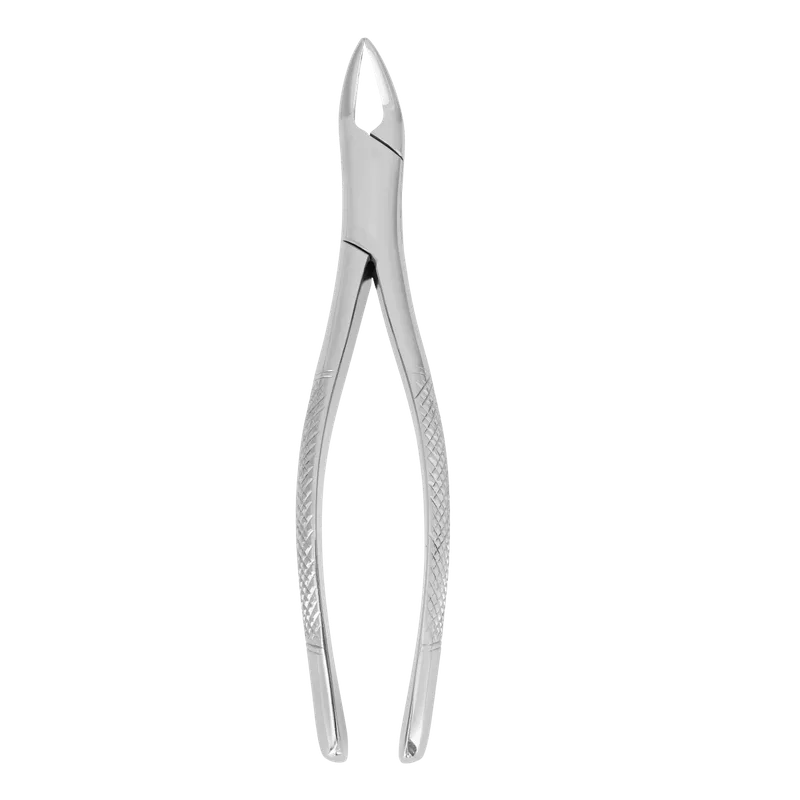
extraction forceps
Extracting Forceps American Pattern Fig.150 Upper Premolars, Incisors & Roots, Universal
EI-1432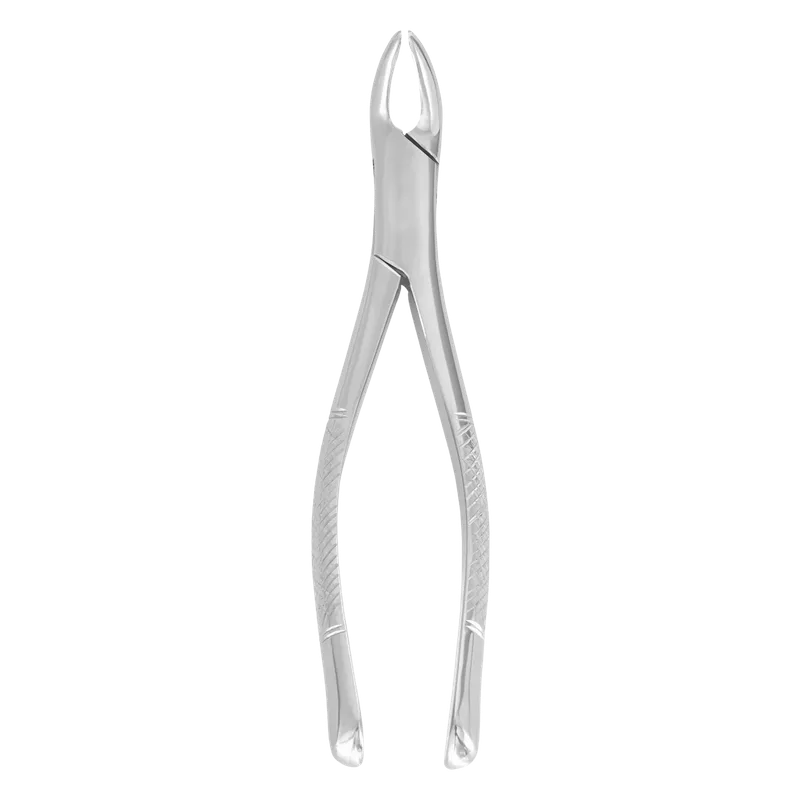
extraction forceps
Extracting Forceps American Pattern Fig.151 Lower Premolars, Incisors & Roots, Universal
EI-1435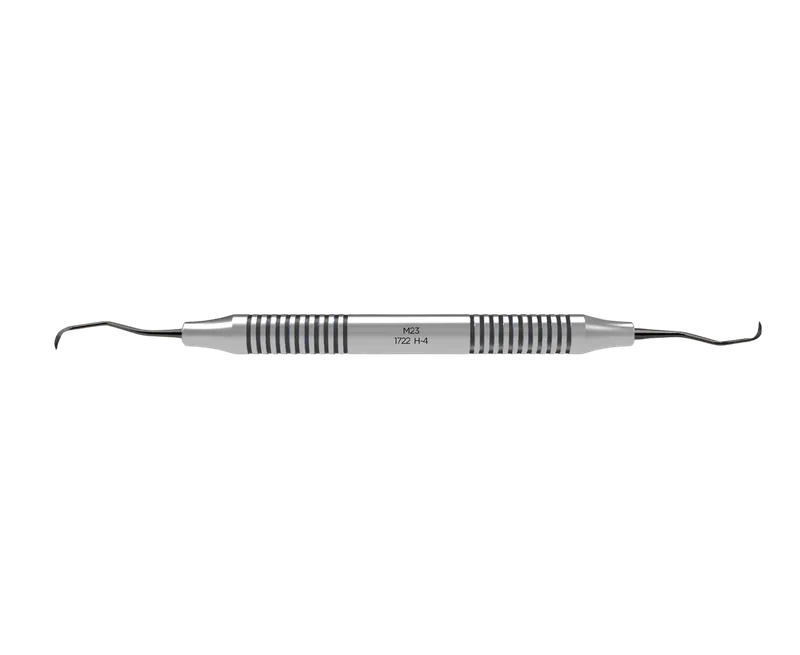
hand scalers
M23 Sickle Scaler - Sharpen-Free
EI-0250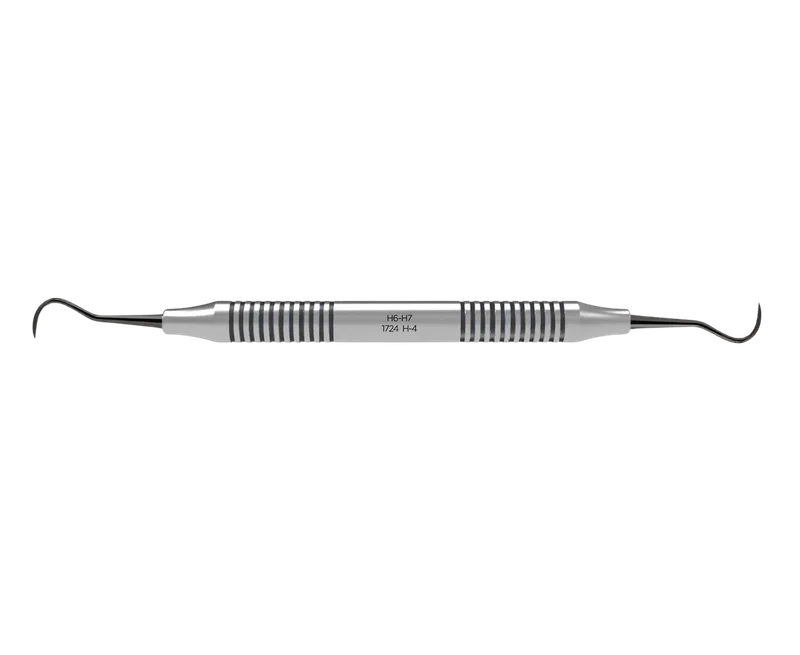
hand scalers
H6-H7 Anterior Sickle Scaler
EI-0251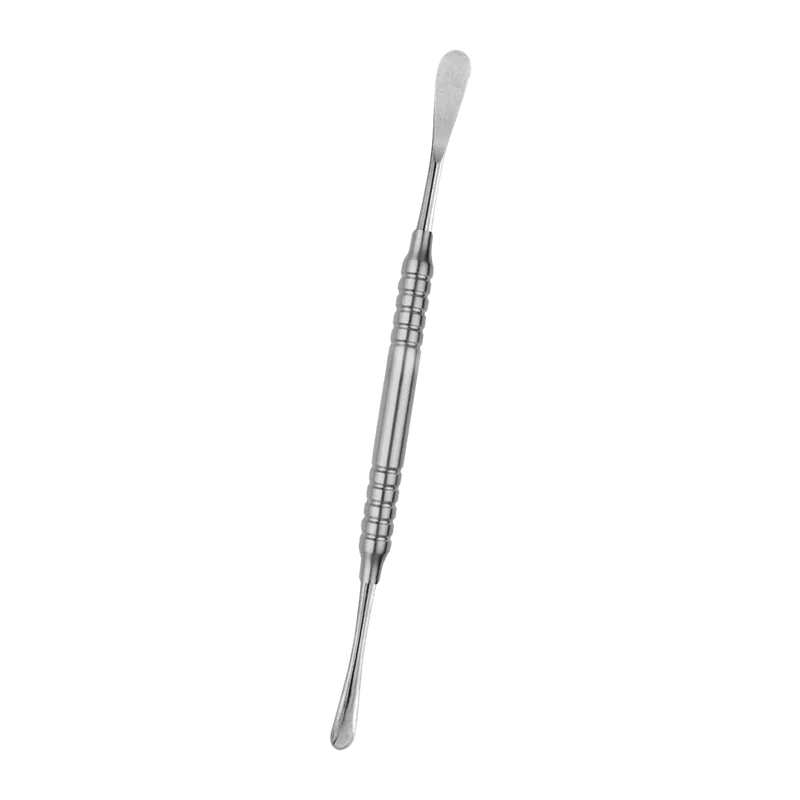
dental elevators and luxators
Periosteal Molt 7/5mm 18.5cm Hollow Handle 10mm
EI-0140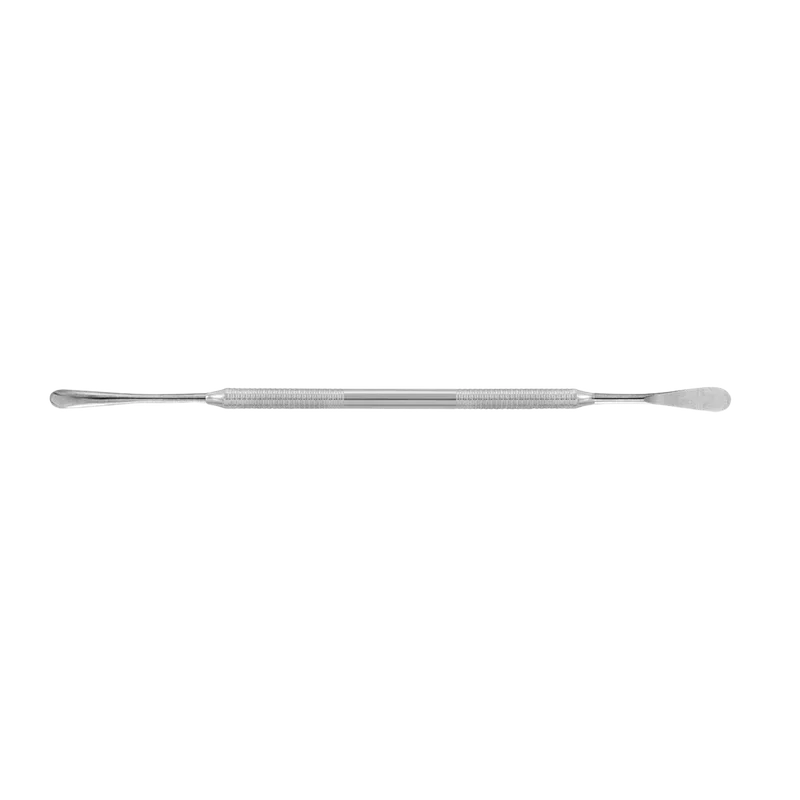
dental elevators and luxators
Molt Periosteal Elevator, 7mm/5mm Ends, Solid Handle
EI-0214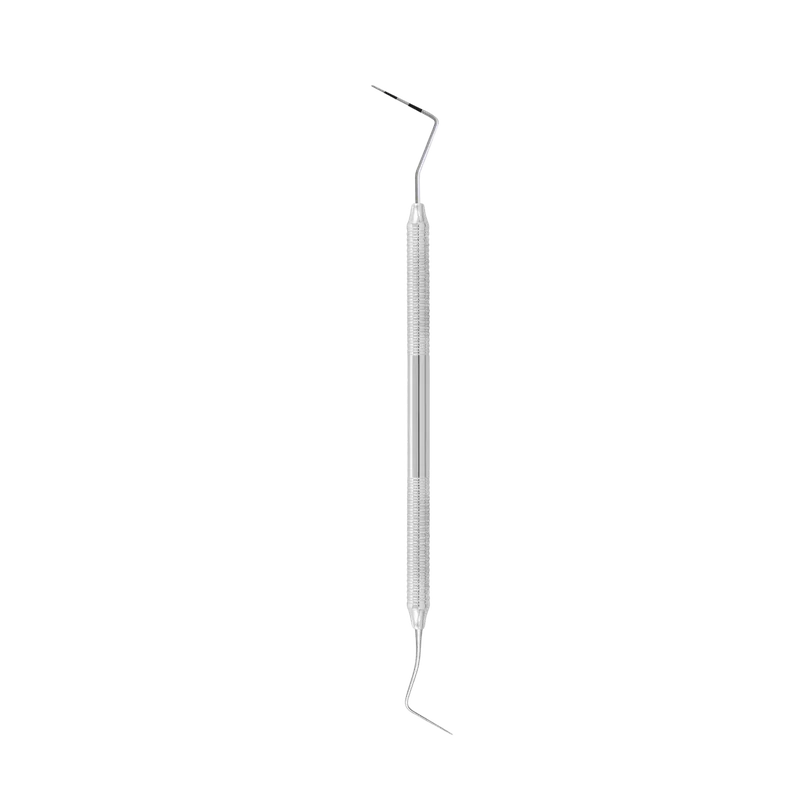
periodontal probes
Expro 9 Explorer and CP-18 Probe Combination - 6 mm Solid Handle
EI-0205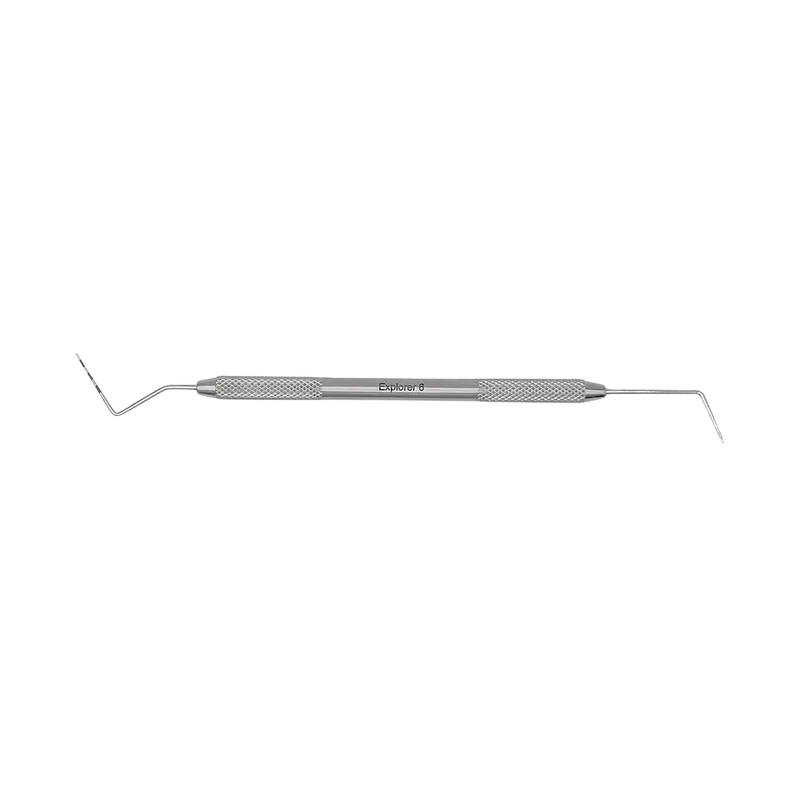
periodontal probes
Probe CP-2 and Explorer #6 - Double-Ended Diagnostic Instrument
EI-0206
How are teeth numbered in Germany?
Dentists in Germany use the FDI two-digit system set out in ISO 3950, where 11 is the upper right central incisor and 48 the lower right third molar.
What do national dental surveys show in Germany?
- Sixth German Oral Health Study (DMS • 6) (Institut der Deutschen Zahnärzte (IDZ), 2025): The Sixth German Oral Health Study (DMS • 6) found that 77.6% of 12-year-olds in Germany were caries-free (IDZ).
- Sixth German Oral Health Study (DMS • 6) – periodontitis (Institut der Deutschen Zahnärzte (IDZ), 2025): According to DMS • 6, 52.7% of younger seniors (aged 65–74) in Germany had severe periodontitis (stage III/IV), as did 17.5% of younger adults aged 35–44 (IDZ).
- Sixth German Oral Health Study (DMS • 6) – MIH (Institut der Deutschen Zahnärzte (IDZ), 2025): DMS • 6 found molar-incisor hypomineralisation (MIH) in 15.3% of 12-year-olds in Germany, with 63.3% of cases classed as mild (IDZ).
How is dental care organised and paid for in Germany?
In Germany, statutory health insurance pays a fixed subsidy (Festzuschuss) of 60% of the standard-care cost for medically necessary dentures, rising to 70% with five years of documented check-ups and 75% after ten years (Federal Ministry of Health).
The KZBV is the public-law umbrella body of Germany's 17 regional associations of statutory health insurance dentists and represents nearly 63,000 dentists in statutory dental care (KZBV).
In 2021, the largest government health financing scheme covered 90% of Germany's population, according to the WHO oral health country profile (WHO).
How are dental instruments regulated in Germany?
Regulation (EU) 2017/745 on medical devices was adopted on 5 April 2017 and has applied in Germany and the rest of the EU since 26 May 2021, replacing the earlier directives (European Commission).
In Germany, proper reprocessing of medical devices is presumed under § 8(2) of the Medical Device Operator Ordinance (MPBetreibV) if the joint KRINKO/BfArM recommendation is followed (Robert Koch Institute).
The authority responsible for medical devices in Germany is Bundesinstitut für Arzneimittel und Medizinprodukte (BfArM).
What are the rules for cleaning and sterilising dental instruments in Germany?
Germany's joint KRINKO/BfArM recommendation on hygiene requirements for reprocessing medical devices was first published in 2001 and updated in 2012, with the current version listed as 2012/2024 (Robert Koch Institute).
Where can you study dentistry in Germany?
Germany has 30 dental schools listed here, in Aachen, Berlin, Bonn, Dresden, Düsseldorf, Erlangen, Frankfurt am Main, Freiburg im Breisgau, Giessen, Göttingen, Greifswald, Halle (Saale), Hamburg, Hanover, Heidelberg, Homburg, Jena, Kiel, Cologne, Leipzig, Mainz, Marburg, Munich, Münster, Regensburg, Rostock, Tübingen, Ulm, Witten and Würzburg.
Under § 2 of Germany's Licensing Regulations for Dentists (ZApprO), dental studies comprise 5,000 hours over five years, with a standard period of study of five years and six months.
| School | City | Founded | Degree |
|---|---|---|---|
| RWTH Aachen University | Aachen | Zahnärztliche Prüfung (state examination in dentistry) | |
| Charité – Universitätsmedizin Berlin | Berlin | Zahnärztliche Prüfung (state examination in dentistry) | |
| University of Bonn | Bonn | Zahnärztliche Prüfung (state examination in dentistry) | |
| TU Dresden | Dresden | Zahnärztliche Prüfung (state examination in dentistry) | |
| Heinrich Heine University Düsseldorf | Düsseldorf | Zahnärztliche Prüfung (state examination in dentistry) | |
| University of Erlangen–Nuremberg | Erlangen | Zahnärztliche Prüfung (state examination in dentistry) | |
| Goethe University Frankfurt | Frankfurt am Main | Zahnärztliche Prüfung (state examination in dentistry) | |
| University of Freiburg | Freiburg im Breisgau | Zahnärztliche Prüfung (state examination in dentistry) | |
| University of Giessen | Giessen | Zahnärztliche Prüfung (state examination in dentistry) | |
| University of Göttingen | Göttingen | Zahnärztliche Prüfung (state examination in dentistry) | |
| University of Greifswald | Greifswald | Zahnärztliche Prüfung (state examination in dentistry) | |
| Martin Luther University Halle-Wittenberg | Halle (Saale) | Zahnärztliche Prüfung (state examination in dentistry) | |
| University Medical Center Hamburg-Eppendorf | Hamburg | Zahnärztliche Prüfung (state examination in dentistry) | |
| Hannover Medical School | Hanover | Zahnärztliche Prüfung (state examination in dentistry) | |
| Heidelberg University | Heidelberg | Zahnärztliche Prüfung (state examination in dentistry) | |
| Saarland University | Homburg | Zahnärztliche Prüfung (state examination in dentistry) | |
| University of Jena | Jena | Zahnärztliche Prüfung (state examination in dentistry) | |
| Kiel University | Kiel | Zahnärztliche Prüfung (state examination in dentistry) | |
| University of Cologne | Cologne | Zahnärztliche Prüfung (state examination in dentistry) | |
| Leipzig University | Leipzig | Zahnärztliche Prüfung (state examination in dentistry) | |
| Johannes Gutenberg University Mainz | Mainz | Zahnärztliche Prüfung (state examination in dentistry) | |
| University of Marburg | Marburg | Zahnärztliche Prüfung (state examination in dentistry) | |
| LMU Munich | Munich | Zahnärztliche Prüfung (state examination in dentistry) | |
| University of Münster | Münster | Zahnärztliche Prüfung (state examination in dentistry) | |
| University of Regensburg | Regensburg | Zahnärztliche Prüfung (state examination in dentistry) | |
| University of Rostock | Rostock | Zahnärztliche Prüfung (state examination in dentistry) | |
| University of Tübingen | Tübingen | Zahnärztliche Prüfung (state examination in dentistry) | |
| Ulm University | Ulm | Zahnärztliche Prüfung (state examination in dentistry) | |
| Witten/Herdecke University | Witten | Zahnärztliche Prüfung (state examination in dentistry) | |
| University of Würzburg | Würzburg | Zahnärztliche Prüfung (state examination in dentistry) |
What are the milestones in Germany's dental history?
- In 1756, the Berlin court dentist Philipp Pfaff published his textbook 'Abhandlung von den Zähnen des menschlichen Körpers und deren Krankheiten' and presented it to Frederick the Great (Wikipedia).
- Philipp Pfaff took impressions of the jaw in sealing wax and poured plaster into them to produce models for making dental prostheses (Wikipedia).
- The surgeon Bernhard von Langenbeck co-founded the German Society of Surgery in 1872 with Gustav Simon and Richard von Volkmann, and was its president until 1885 (Wikipedia).
Which dental instruments are named after people from Germany?
- Several surgical instruments are named after the Berlin surgeon Bernhard von Langenbeck (1810–1887), including a broad, long, blunt wound retractor with a right-angled blade (Wikipedia).
Which organisations represent dentists in Germany?
- Bundeszahnärztekammer (German Dental Association) (association)
- Kassenzahnärztliche Bundesvereinigung (KZBV) (association)
- Bundesinstitut für Arzneimittel und Medizinprodukte (BfArM) (regulator)
Which dental instruments does Equate supply to Germany?
Equate's instrument guides for Germany cover dental curettes, dental elevators and luxators, dental explorers, extraction forceps, mouth mirrors, surgical retractors, hand scalers, periodontal probes, restorative hand instruments, spoon excavators and tooth extraction instruments.
City guides: Aachen, Berlin, Bonn, Cologne, Dresden, Düsseldorf, Erlangen, Frankfurt am Main, Freiburg im Breisgau, Giessen, Göttingen, Greifswald, Halle (Saale), Hamburg, Hanover, Heidelberg, Homburg, Jena, Kiel, Leipzig, Mainz, Marburg, Münster, Munich, Regensburg, Rostock, Tübingen, Ulm, Witten and Würzburg.
Why do dental practices in Germany work with Equate?
- Direct from the manufacturer: practices in Germany order 3,375 instrument references without a distributor mark-up in between.
- Built to one specification across the range: passivated stainless steel, ultrasonically cleaned, shape-, boil- and performance-tested and individually packed.
- A named Regional Executive for DACH handles quotes, samples and volume pricing for private practices and university dental clinics in Germany.
- Clinics in Germany can request samples and a quote before committing to a full order.
Social listening
What dental professionals and students in Germany discuss online
Cost of student instrument kits
CriticalGerman dental students say what they spend on preclinical and clinical kits varies a lot by university, from about a thousand euros to several thousand. Schools that lend the costly items (handpieces, articulators, phantom heads) leave students paying mainly for small hand instruments and consumables.
- Zahnmedizin Kosten· MEDI-LEARN forum, 2010
- Vorklinisches Instrumentarium gesucht!!· MEDI-LEARN forum, 2006
Buying used instruments and checking wear
MixedStudents commonly buy and resell kits from older semesters and generally see this as safe, because course sets have seen few clinical uses. The advice is to check scalers and curettes closely: they can only be resharpened a limited number of times, and bad sharpening ruins them.
- Klinikinstrumente gebraucht kaufen??· MEDI-LEARN forum, 2014
- Klinikkoffer Dental Instrumente Zahnmedizin Instrumentarium + KFO· MEDI-LEARN forum, 2020
- Vorklinisches Instrumentarium gesucht!!· MEDI-LEARN forum, 2006
Equate's summary of public threads on MEDI-LEARN forum, read 2026-10-27. No posters are named and brand names are left out; thread links are listed in the page's data file.
Equate data
Germany in Equate's market data
Germany ranks 3 of 22 in the Equate Dental Market Index 2026, with a score of 90.7 out of 100. See the full index
“90 per cent of our patients come for check-ups”
Your Regional Executive · DACH
Ahmed Wali
Regional Executive, Stuttgart, Germany
Frequently asked questions
How many dentists are there in Germany?
According to the German Dental Association (BZÄK), Germany has 103,998 dentists, of whom 73,511 are professionally active. At the end of 2024 there was one treating dentist for every 1,137 inhabitants.
How many 12-year-olds in Germany are caries-free?
The Sixth German Oral Health Study (DMS • 6), published in 2025, found that 77.6% of 12-year-olds were caries-free. It also found MIH in 15.3% of 12-year-olds.
How common is severe periodontitis in Germany?
DMS • 6 found severe periodontitis (stage III/IV) in 52.7% of people aged 65–74 and 17.5% of those aged 35–44. WHO estimated severe periodontal disease in 27.4% of people aged 15 and over in 2019.
Which medical device rules apply to dental instruments in Germany?
Regulation (EU) 2017/745 on medical devices has applied since 26 May 2021. Germany's competent federal authority for medical devices is the BfArM.
What is the reprocessing standard for dental instruments in Germany?
The joint KRINKO/BfArM recommendation on hygiene requirements for reprocessing medical devices, first published in 2001 and updated in 2012 (current version 2012/2024). Following it creates a legal presumption of proper reprocessing under § 8(2) MPBetreibV.
How long does it take to study dentistry in Germany?
Under the ZApprO, dental studies comprise 5,000 hours over five years, with a standard study period of five years and six months. Around 30 universities have dental clinics, including the Charité in Berlin and LMU Munich.
Who is regarded as a founder of German dentistry?
Philipp Pfaff, court dentist to Frederick the Great, published his dental textbook in Berlin in 1756. He also made plaster models from sealing-wax impressions of the jaw to produce dentures.
References
- Eurostat (dataset hlth_rs_prs2, Health personnel) (2024)
- Bundeszahnärztekammer (BZÄK) (2024)
- World Health Organization (2019)
- Institut der Deutschen Zahnärzte (IDZ) (2025)
- Bundesministerium für Gesundheit (BMG) (2026)
- Kassenzahnärztliche Bundesvereinigung (KZBV) (2026)
- European Commission (2021)
- Robert Koch-Institut (RKI) (2024)
- Bundesministerium der Justiz (gesetze-im-internet.de) (2019)
- Wikipedia (German) (1756) · de.wikipedia.org
- Wikipedia (German) (1872) · de.wikipedia.org
I am a… in Germany