Spoon Excavators (Dental Excavators) In Norway
Written by the Equate Instruments Technical Team · Reviewed by the Medical & Dental Board, Equate Instruments · Published ·
Clinics and distributors in Norway can buy spoon excavators directly from Equate, which lists 70 references. In 2019, an estimated 36.1% of children aged 1 to 9 in Norway had untreated caries of deciduous teeth (WHO Oral Health Country Profile).
Key points
- Spoon excavators are class Ir devices under EU MDR 2017/745.
- In 2020, the age-standardised incidence of lip and oral cavity cancer in Norway was 3.5 per 100,000 people (WHO Oral Health Country Profile).
Dentists in Norway at a glance
- Practising dentists: 4,450 (2014) to 4,878 (2024)
- +9.6% since 2014
- Practising dentists: 4,450 (2014) to 4,878 (2024)
- Eurostat (dataset hlth_rs_prs2, Health personnel), 2024
- In 2019, Norway had 4,703 dentists, or 8.7 per 10,000 people (WHO Oral Health Country Profile, National Health Workforce Accounts).
- 8.7
- In 2019, Norway had 4,703 dentists, or 8.7 per 10,000 people (WHO Oral Health Country Profile, National Health Workforce Accounts).
- World Health Organization, 2019
- dental schools listed
- 3
- dental schools listed
- Equate research
- Untreated caries, age 5+35.1%
- Severe periodontal disease, 15+25%
- No natural teeth, 20+11%
The dark line marks the median of Equate's 22 markets. Source: WHO Oral Health Country Profiles 2022 (2019 estimates).
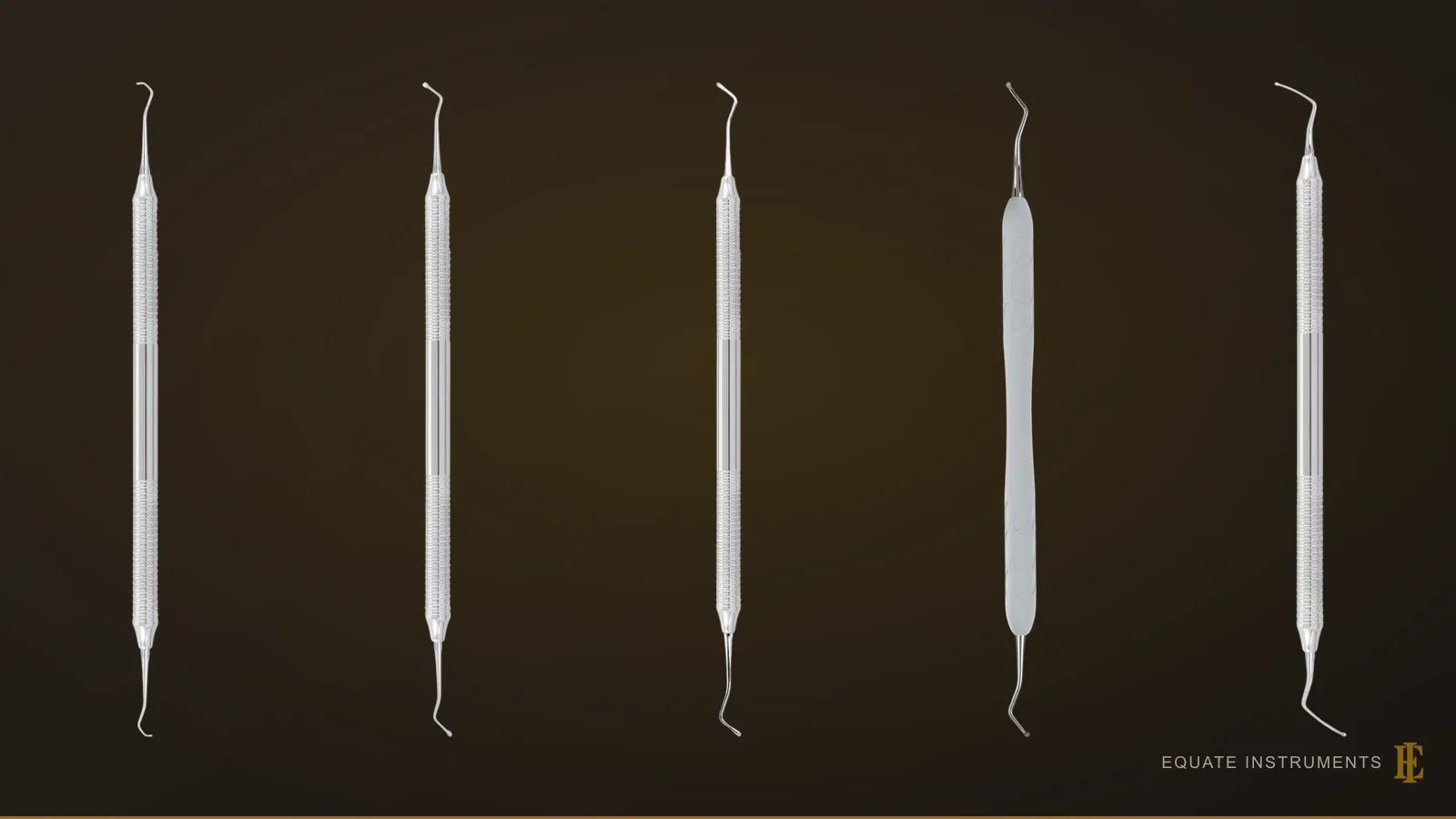
Which types of spoon excavators do clinics in Norway stock?
- Spoon excavators
- Round excavators
- Oval excavators
How are spoon excavators regulated in Norway?
Norway applies the EU medical device rules, mainly Regulation (EU) 2017/745 (MDR), through the EEA Agreement, implemented by the Act of 7 May 2020 no. 37 (Norwegian Medical Products Agency).
Where do dental students in Norway learn to use spoon excavators?
Spoon excavators are part of clinical training at Norway's 3 dental schools, including University of Bergen, Department of Clinical Dentistry and UiT The Arctic University of Norway, Department of Clinical Dentistry.
Popular Equate spoon excavators (dental excavators) for Norway
All products
spoon excavators
Spoon Excavator 1.0 mm - Grey Slim Silicone Handle
EI-1276
spoon excavators
Oval Excavator 1.5 mm - Light Grey Silicone Slim Handle
EI-1283
spoon excavators
Black Spoon Excavator 1.5 mm with 6 mm Solid Knurled Handle
EI-1961
spoon excavators
Spoon Excavator 2.0 mm - Solid Handle
EI-1966
spoon excavators
Oval Excavator 1.5mm Solid Handle 6mm
EI-2151
spoon excavators
Round Long Excavator 1.5 mm - Solid Handle 6 mm
EI-2155
spoon excavators
Spoon Excavator 1.0mm - Solid Handle 6mm
EI-0151
spoon excavators
Round Excavator 1.5 mm Grey
EI-1219
Which spoon excavators does Equate supply to Norway?
How should spoon excavators be cleaned and sterilised in Norway?
Norway's 2018 dental infection-control recommendations were developed by FHI with the dental faculties in Bergen, Oslo and Tromsø, the Norwegian Dental Association and the Directorate of Health (FHI).
In Norway, people who turn 19 to 28 in the year of treatment pay 25% of the cost at the Public Dental Health Service, with the public sector covering 75% (Helsenorge).
What shapes demand for spoon excavators in Norway?
In 2020, the age-standardised incidence of lip and oral cavity cancer in Norway was 3.5 per 100,000 people (WHO Oral Health Country Profile).
In 2019, an estimated 35.1% of people aged 5 and over in Norway had untreated caries of permanent teeth (WHO Oral Health Country Profile).
Why do dentists in Norway need spoon excavators?
A spoon excavator is a hand instrument with a small, sharp, spoon-shaped blade used to scoop soft, decayed dentine out of a cavity. See the full guide to spoon Excavators (Dental Excavators).
Why do practices in Norway buy spoon excavators from Equate?
- Clinics in Norway can request samples and a quote before committing to a full order.
- Direct from the manufacturer: practices in Norway order 70 spoon excavators references without a distributor mark-up in between.
Equate data
The Equate spoon excavators (dental excavators) range for Norway
How this range is arranged for Norway
- WHO estimates untreated caries at 35.1% of people aged 5 and over in Norway, at or above the median of Equate's markets (33.8%), so excavating and packing patterns come first.
Catalogue explorer: 70 references
Starter kit for a new practice in Norway
- Spoon excavator, small:Excavator 1.0 mm - Double-EndedEI-0082
- Spoon excavator, medium:Round Excavator 1.5 mm - Solid Handle 6 mmEI-0083
- Spoon excavator, large:Round Excavator 2.0 mm - Solid Handle 6 mmEI-0084
What buyers search for (all English-language markets Equate tracks)
About 13,800 searches a month across 25 related terms.
- excavator spoon5,000
- spoon excavator5,000
- dental excavator500
- excavator dental instrument500
- excavator dental tool500
- excavator dentistry500
Your Regional Executive · Nordics & Scandinavia
Hassan Nazir
Regional Executive, Helsinki, Finland
Frequently asked questions
Can clinics in Norway buy spoon excavators directly from Equate?
Yes. Equate sells directly to clinics, dental groups and distributors in Norway. The Regional Executive for Nordics & Scandinavia handles quotes, samples and volume pricing.
Which regulation covers spoon excavators in Norway?
Reusable surgical instruments in Norway fall under the EU Medical Device Regulation 2017/745 as class I devices with reprocessing requirements (class Ir).
References
- World Health Organization (2019)
- Regulation (EU) 2017/745 on medical devices, Article 52(7) and Annex VIII (2017)
- Norwegian Medical Products Agency (2020)
- Norwegian Institute of Public Health (FHI) (2018)
- Helsenorge (2026)
- Schwendicke F, Frencken JE, Bjørndal L, et al. Managing carious lesions: consensus recommendations on carious tissue removal. Advances in Dental Research 2016;28(2):58–67
- Frencken JE, Pilot T, Songpaisan Y, Phantumvanit P. Atraumatic restorative treatment (ART): rationale, technique, and development. Journal of Public Health Dentistry 1996;56(3):135–140
- Black GV. A Work on Operative Dentistry. Chicago: Medico-Dental Publishing, 1908 (the instrument formula)
I am a… in Norway