Spoon Excavators (Dental Excavators)
Written by the Equate Instruments Technical Team · Reviewed by the Medical & Dental Board, Equate Instruments · Updated ·
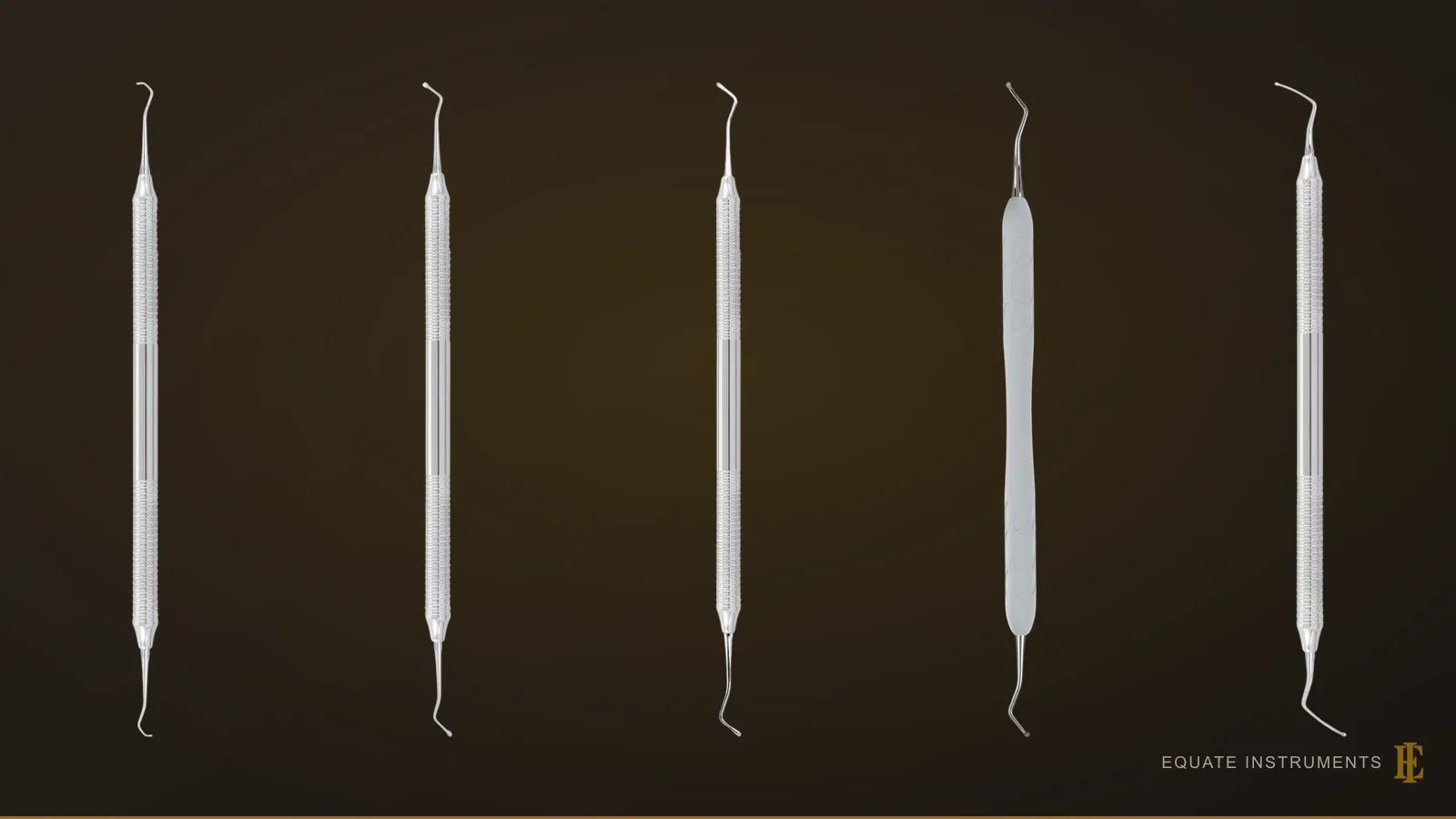
A spoon excavator is a hand instrument with a small, sharp, spoon-shaped blade used to scoop soft, decayed dentine out of a cavity. It's also used to remove temporary fillings and cement. Excavators come in round, oval and spoon blades from about 1 mm to 3 mm, usually double-ended with mirror-image blades, and they're central to minimally invasive caries removal.
Key points
- Excavators remove soft, infected dentine by hand, with more control than a bur and less risk of exposing the pulp.
- Match the blade to the cavity: about 1 mm for small cavities, up to 3 mm for large ones.
- International consensus now favours selective removal of carious tissue, which suits hand excavation.
What is a spoon excavator used for?
Excavators remove carious dentine, the softened, bacteria-laden tissue left after the enamel over it has broken down. The sharp edge of the spoon is drawn through the soft dentine in a scooping or lateral stroke and lifts it out in flakes, while the clinician feels the change from soft to firmer, leathery dentine underneath. That feedback is why excavators are still used next to rotary instruments: they make it easier to stop at the right layer.
They also lift out temporary restorations, excess cement and debris, and they sit in the basic restorative set with a mouth mirror, a dental explorer and the restorative instruments that place the filling.
How does an excavator fit selective caries removal?
In 2016 the International Caries Consensus Collaboration, in recommendations led by Falk Schwendicke, Jo Frencken, Lars Bjørndal and colleagues, advised against removing all softened dentine in deep lesions. Clinicians remove carious tissue selectively instead: to firm dentine at the edges of the cavity, so the restoration seals, and leaving soft or leathery dentine over the pulp in deep cavities, so the pulp isn't exposed. Hand excavators suit this approach because they remove soft tissue readily and leave firmer dentine behind.
Excavators are also the main cutting instrument in Atraumatic Restorative Treatment (ART), developed by Jo Frencken and colleagues and promoted by the World Health Organization for places without electricity or a dental unit. Caries is removed with hand instruments alone and the cavity is sealed with glass-ionomer.
What types of excavator are there?
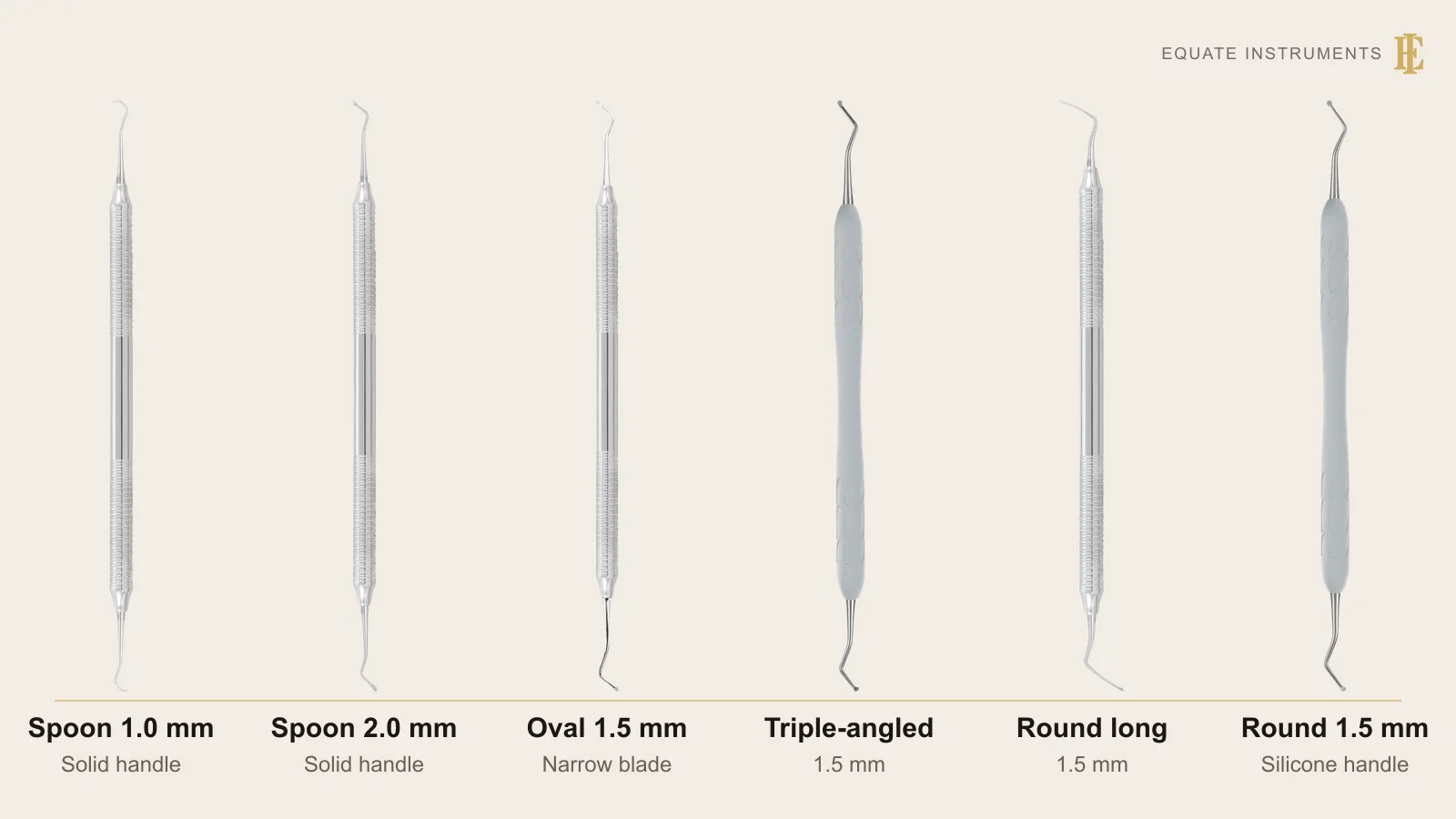
- Spoon excavators: an oval or rounded spoon with a sharp edge all round; the general-purpose design.
- Round excavators: a disc-shaped blade that cuts evenly in every direction.
- Oval excavators: a narrower, longer blade that reaches into proximal boxes and narrow cavities.
- Triple-angled caries excavators: three bends in the shank bring the blade back towards the line of the handle, for balance and access in posterior teeth.
- Long-shank excavators: a longer shank for deep cavities and the pulp chamber.
What do excavator sizes and numbers mean?
Excavators are usually described by blade diameter, for example 1.0, 1.5 or 2.0 mm, and often by a pattern number such as 125/126 for a double-ended pair, where the two numbers are the mirror-image ends. The classic way to describe a hand cutting instrument is G. V. Black's instrument formula, set out in A Work on Operative Dentistry: blade width in tenths of a millimetre, blade length in millimetres and blade angle in centigrades (hundredths of a circle).
| Blade size | Typical use |
|---|---|
| 1.0 mm | Small cavities, fissures and primary teeth |
| 1.5 mm | General use in small and medium cavities |
| 2.0 mm | Medium and large cavities |
| 2.5–3.5 mm | Large cavities and bulk removal of soft dentine |
How do you choose and care for spoon excavators?
A basic set holds a small (1.0–1.5 mm) and a medium (2.0 mm) double-ended excavator. Practices that treat children or work in deep lesions add a large and a long-shank pattern. A sharp edge matters more than with most instruments, because a dull spoon smears soft dentine instead of lifting it.
Check the edge under magnification, clean and sterilise excavators with the restorative set, in line with the CDC's Guidelines for Infection Control in Dental Health-Care Settings or, in UK practices, HTM 01-05, and replace the instrument when the spoon is thin or no longer cuts cleanly.
The Equate difference
Equate lists 70 excavator references: 32 spoon, 36 round and 2 black spoon excavators with blades from 1.0 mm to 3.5 mm, including triple-angled caries excavators and long-shank patterns, on solid 6 mm, hollow 10 mm and colour-coded silicone handles.
Equate Spoon Excavators (Dental Excavators) options

Excavator 65/66 - Titanium-Coated Double-Ended
EI-0020
Excavator 129/130 - Titanium-Coated Double-Ended
EI-0021
Excavator 1.0 mm - Double-Ended
EI-0082
Round Excavator 1.5 mm - Solid Handle 6 mm
EI-0083
Round Excavator 2.0 mm - Solid Handle 6 mm
EI-0084
Excavator 2.5 mm - Double-Ended
EI-0085
Excavator 3.0 mm - Double-Ended
EI-0086
Excavator 125/126 - Double-Ended Spoon
EI-0130
Spoon Excavator 1.0mm - Solid Handle 6mm
EI-0151
Round Excavator 1.5 mm - Solid Handle 6 mm
EI-0152
Round Excavator 2.0 mm - Solid Handle 6 mm
EI-0153
Round Excavator 2.2mm - Solid Handle 6mm
EI-0154Browse all restorative & operative instruments
Buying in your market
Frequently asked questions
What is a spoon excavator used for in dentistry?
It removes soft, decayed dentine from a cavity by hand. It's also used to lift out temporary fillings, excess cement and debris.
What is the difference between a spoon and a round excavator?
A spoon excavator has an oval, spoon-shaped blade and a round excavator has a circular, disc-like blade. Both are sharp all round; the choice mostly comes down to the shape and size of the cavity.
What size spoon excavator should I use?
Match the blade to the cavity: around 1.0 mm for small cavities and primary teeth, 1.5–2.0 mm for general use and 2.5 mm or more for large cavities.
Why use a hand excavator instead of a bur?
An excavator removes soft dentine with more tactile control and no heat, and it makes it easier to stop at firmer dentine, which helps avoid exposing the pulp in deep cavities.
References
- Schwendicke F, Frencken JE, Bjørndal L, et al. Managing carious lesions: consensus recommendations on carious tissue removal. Advances in Dental Research 2016;28(2):58–67
- Frencken JE, Pilot T, Songpaisan Y, Phantumvanit P. Atraumatic restorative treatment (ART): rationale, technique, and development. Journal of Public Health Dentistry 1996;56(3):135–140
- Black GV. A Work on Operative Dentistry. Chicago: Medico-Dental Publishing, 1908 (the instrument formula)
- Ritter AV, Boushell LW, Walter R (eds). Sturdevant's Art and Science of Operative Dentistry. Elsevier (hand instruments for operative dentistry)
- Kohn WG, et al. Guidelines for Infection Control in Dental Health-Care Settings, 2003. MMWR 52(RR-17), Centers for Disease Control and Prevention
I am a…