Spoon Excavators (Dental Excavators) In Ireland
Written by the Equate Instruments Technical Team · Reviewed by the Medical & Dental Board, Equate Instruments · Published ·
In Ireland, Equate supplies 70 spoon excavators references directly to clinics, dental groups and distributors. WHO estimates that 25.4% of children aged 1 to 9 in Ireland had untreated caries of the deciduous teeth in 2019 (WHO).
Key points
- The WHO oral health country profile records 3,217 dentists in Ireland in 2018, or 6.7 per 10,000 people (WHO).
Dentists in Ireland at a glance
- Dentists on the Register of Dentists at year end: 3,643 (2023) to 3,783 (2024)
- +3.8% since 2023
- Dentists on the Register of Dentists at year end: 3,643 (2023) to 3,783 (2024)
- Dental Council of Ireland, 2024
- The WHO oral health country profile records 3,217 dentists in Ireland in 2018, or 6.7 per 10,000 people (WHO).
- 6.7
- The WHO oral health country profile records 3,217 dentists in Ireland in 2018, or 6.7 per 10,000 people (WHO).
- World Health Organization, 2018
- dental schools listed
- 2
- dental schools listed
- Equate research
- Untreated caries, age 5+31.6%
- Severe periodontal disease, 15+4.9%
- No natural teeth, 20+12.8%
The dark line marks the median of Equate's 22 markets. Source: WHO Oral Health Country Profiles 2022 (2019 estimates).
Which types of spoon excavators do clinics in Ireland stock?
- Triple-angled caries excavators
- Long-shank excavators
- Spoon excavators
What are spoon excavators used for in Ireland?
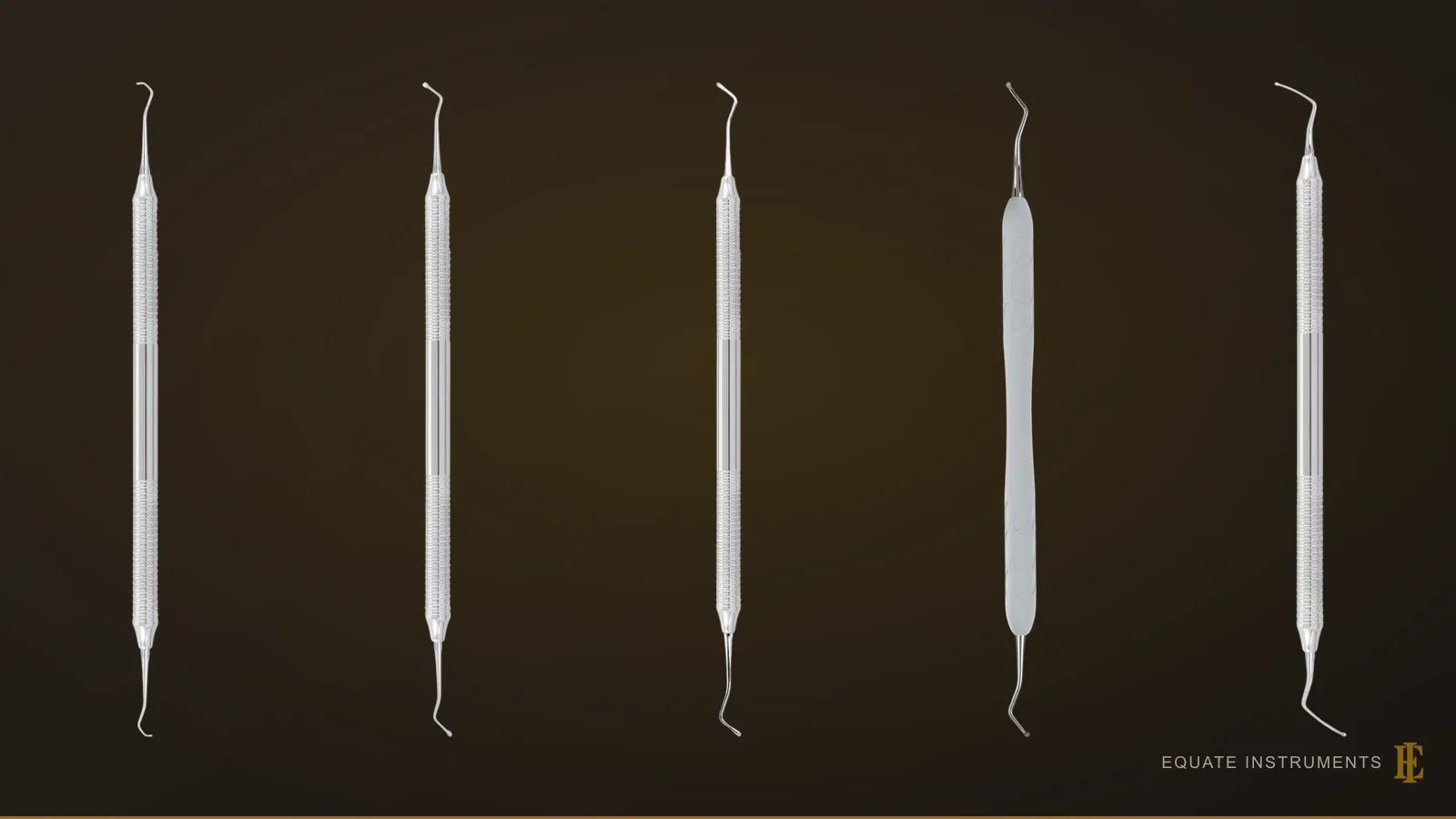
A spoon excavator is a hand instrument with a small, sharp, spoon-shaped blade used to scoop soft, decayed dentine out of a cavity. See the full guide to spoon Excavators (Dental Excavators).
What do dentists in Ireland search for when buying spoon excavators?
In UK & Ireland, spoon excavators draw about 2,050 searches a month (Google Keyword Planner bands, October 2025 to September 2026). The most searched terms are "dental excavator", "excavator dentistry", "cleoid excavator" and "dental excavator types".
Popular Equate spoon excavators (dental excavators) for Ireland
All products
spoon excavators
Spoon Excavator 1.0mm - Solid Handle 6mm
EI-0151
spoon excavators
Round Excavator 1.5 mm Grey
EI-1219
spoon excavators
Triple-angled Caries Excavator - 1.5 mm, Light Grey
EI-1223
spoon excavators
Spoon Excavator 1.0 mm - Grey Slim Silicone Handle
EI-1276
spoon excavators
Oval Excavator 1.5 mm - Light Grey Silicone Slim Handle
EI-1283
spoon excavators
Black Spoon Excavator 1.5 mm with 6 mm Solid Knurled Handle
EI-1961
spoon excavators
Spoon Excavator 2.0 mm - Solid Handle
EI-1966
spoon excavators
Oval Excavator 1.5mm Solid Handle 6mm
EI-2151
How are spoon excavators regulated in Ireland?
In Ireland, the HPRA reports that Regulation (EU) 2023/607 entered into force on 20 March 2023, extending the transitional provisions of the EU Medical Devices Regulation (EU) 2017/745 (HPRA).
How should spoon excavators be cleaned and sterilised in Ireland?
In Ireland, the Dental Council's infection prevention and control code requires reusable, invasive dental instruments, including handpieces, to be sterilised after every use (Dental Council).
WHO reports that Ireland's largest government health financing scheme covers 100% of the population, and that oral health screening, urgent care and basic restorative dental care are available in public primary care (WHO).
What is the Ireland market like for spoon excavators?
The WHO oral health country profile records 3,217 dentists in Ireland in 2018, or 6.7 per 10,000 people (WHO).
Where do dental students in Ireland learn to use spoon excavators?
Students at School of Dental Science, Trinity College Dublin and Cork University Dental School and Hospital, University College Cork train with spoon excavators in their clinical years.
Why do practices in Ireland buy spoon excavators from Equate?
- Buyers in Ireland deal with the manufacturer itself, choosing from 70 spoon excavators references.
- Each reference is passivated stainless steel, ultrasonically cleaned, shape-, boil- and performance-tested and individually packed, whatever the pattern.
Equate data
The Equate spoon excavators (dental excavators) range for Ireland
Catalogue explorer: 70 references
Starter kit for a new practice in Ireland
- Spoon excavator, small:Excavator 1.0 mm - Double-EndedEI-0082
- Spoon excavator, medium:Round Excavator 1.5 mm - Solid Handle 6 mmEI-0083
- Spoon excavator, large:Round Excavator 2.0 mm - Solid Handle 6 mmEI-0084
What buyers search for
About 2,050 searches a month across 25 related terms.
- dental excavator500
- excavator dentistry500
- cleoid excavator50
- dental excavator types50
- discoid excavator50
- endo spoon excavator50
Your Regional Executive · UK & Ireland
Nader Chaudhry
Regional Executive, London, UK
Frequently asked questions
Can clinics in Ireland buy spoon excavators directly from Equate?
Yes. Equate sells directly to clinics, dental groups and distributors in Ireland. The Regional Executive for UK & Ireland handles quotes, samples and volume pricing.
What sterilisation rules apply to spoon excavators in Ireland?
In Ireland, all new dental premises opened after 1 January 2016 must have a separate local decontamination room fitted out for a washer-disinfector, under the Dental Council's code (Dental Council).
References
- World Health Organization (2019)
- Health Products Regulatory Authority (2023)
- Dental Council of Ireland (2020)
- Schwendicke F, Frencken JE, Bjørndal L, et al. Managing carious lesions: consensus recommendations on carious tissue removal. Advances in Dental Research 2016;28(2):58–67
- Frencken JE, Pilot T, Songpaisan Y, Phantumvanit P. Atraumatic restorative treatment (ART): rationale, technique, and development. Journal of Public Health Dentistry 1996;56(3):135–140
- Black GV. A Work on Operative Dentistry. Chicago: Medico-Dental Publishing, 1908 (the instrument formula)
I am a… in Ireland