Distal End Cutter vs Pin & Ligature Cutter
Written & reviewed by the Equate Technical Team · Updated
Verdict: use a distal end cutter for archwires and a pin and ligature cutter for ligature wire and lock pins — they are not interchangeable. The distal end cutter's blades sit at right angles to the handles to cut archwire flush at the molar tube and hold the fragment; the pin and ligature cutter has fine pointed tips for thin wire near brackets.
Side-by-side comparison
| Factor | Distal end cutter | Pin & ligature cutter |
|---|---|---|
| Blade orientation | Perpendicular to handles | In line with handles, fine pointed tips |
| Cuts | Archwire ends up to about .021 × .025 in SS | Ligature wire .008–.012 in, lock pins |
| Safety hold | Usually yes | Usually no |
| Where used | Distal of the last molar tube | Around brackets |
| Damage if misused | Chipped blades on oversize wire | Sprung tips if used on archwire |
| TC inserts available | Yes | Yes |
Why you can't swap them
A pin and ligature cutter's tips are slim so they can slip under a ligature without touching the archwire. That slimness is exactly why they fail when used on an archwire: the force needed to cut rectangular stainless steel spreads or chips them. A distal end cutter, in turn, has bulky blades oriented across the instrument; it cannot reach under a ligature at a bracket and would risk catching the archwire or bracket wings.
Using the wrong cutter is one of the most common reasons orthodontic cutters are sent back for sharpening or replaced early.
For lingual appliances and very crowded arches, mini-head versions of both cutters make access much easier and reduce the chance of catching soft tissue.
How they work together
At a typical archwire change, the ligature cutter removes the old steel ties, the Weingart removes the old wire and places the new one, and the distal end cutter trims the new wire flush at both molar tubes. Elastomeric modules are usually removed with a scaler or explorer rather than either cutter.
Choosing within each type
- Distal end cutter: safety hold for intraoral use; flush-cut or mini head for short tubes and small mouths; TC for heavy daily use.
- Pin & ligature cutter: straight for anterior, angled for posterior; mini head for crowded arches and lingual work.
- Consider carbide for both if your practice changes many archwires per day.
Equate's recommendation
Every chairside tray should carry one of each. A practice cutting mainly rectangular finishing wires should choose a carbide safety-hold distal end cutter; a practice using many steel ligatures should consider a second, angled ligature cutter.
The Equate difference
Equate stocks 28 distal end cutter references (25 safety-hold) and 9 pin-and-ligature cutters plus 17 ligature cutters, at typical list prices of about €85–95, roughly 40–47% below the €158.85 median premium European RRP for orthodontic cutters.
Equate Distal End Cutter vs Pin & Ligature Cutter options
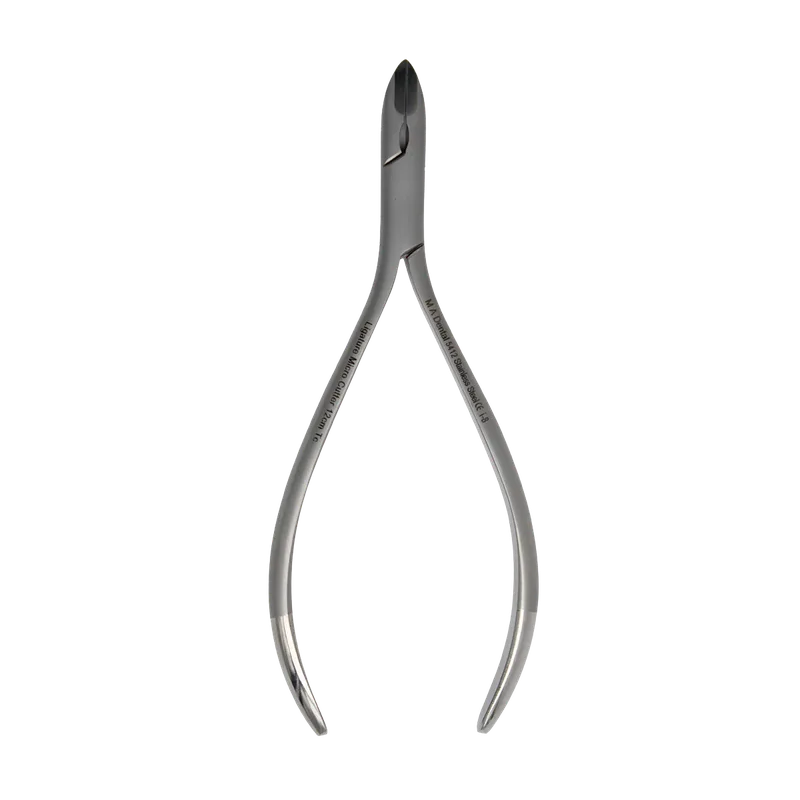
Micro Pin and Ligature Cutter Max 0.012 Inch Wire Tungsten-Carbide
EI-0683
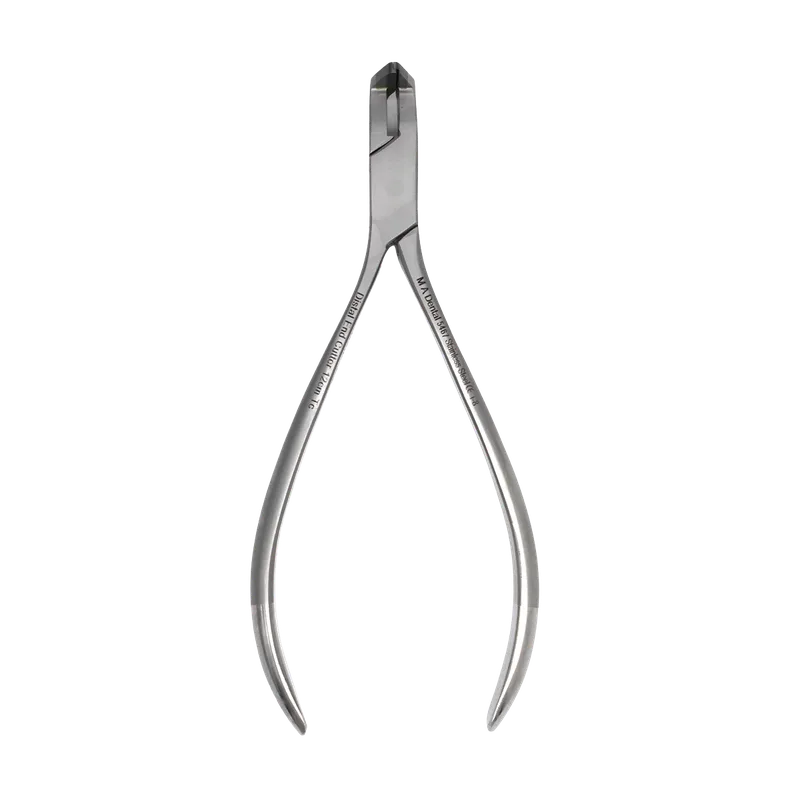
Distal End Cutter with Safety Hold 0.56 x 0.71 mm (.022″ x .028″ Wire, TC)
EI-0700
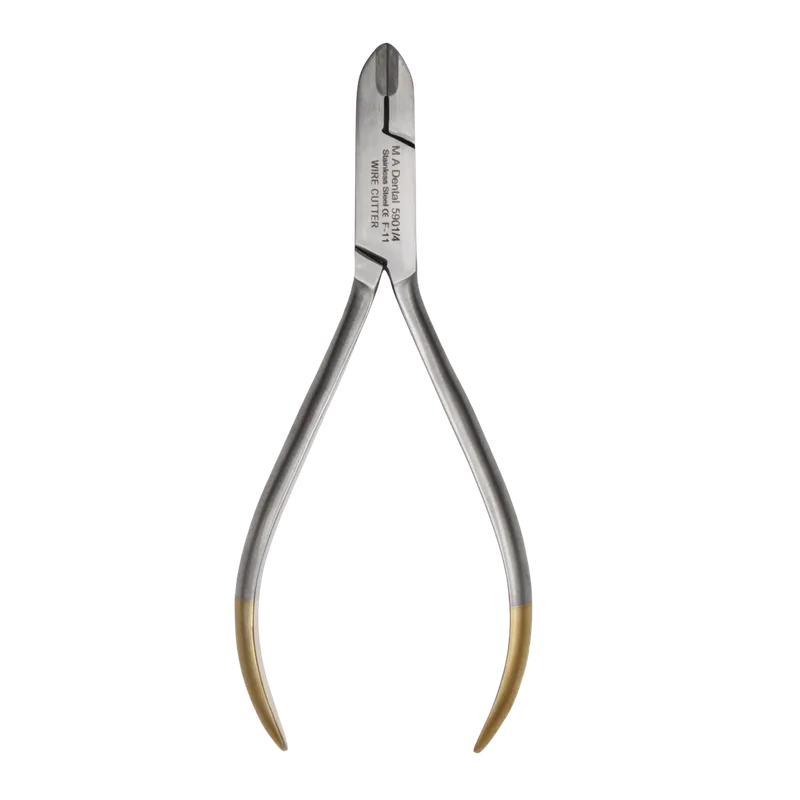
Mini Pin and Ligature Cutter - Tungsten Carbide, 0.30 mm / .012 in Wire
EI-0791
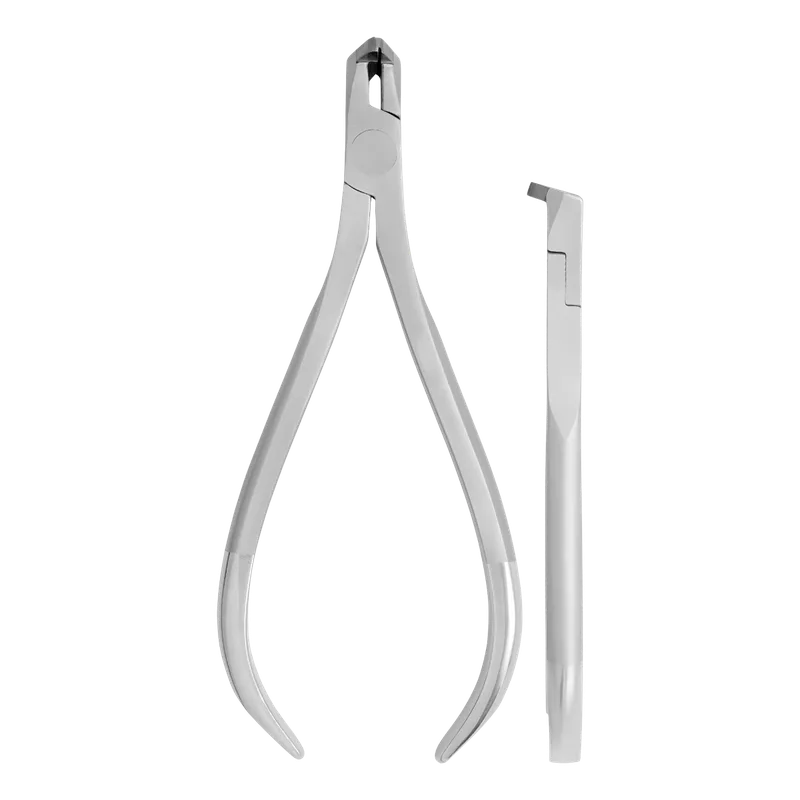
Mini Distal End Cutter with Safety Hold - Tungsten Carbide, 0.55 x 0.64 mm / .021 x .025 in Wire
EI-0793
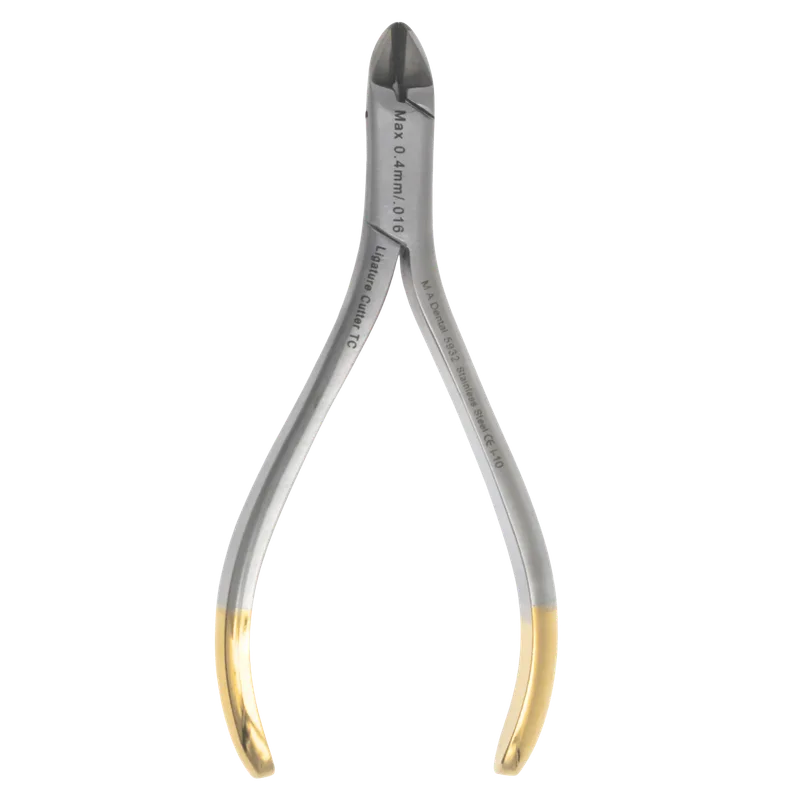
Pin and Ligature Cutter TC - Max 0.4 mm
EI-0807
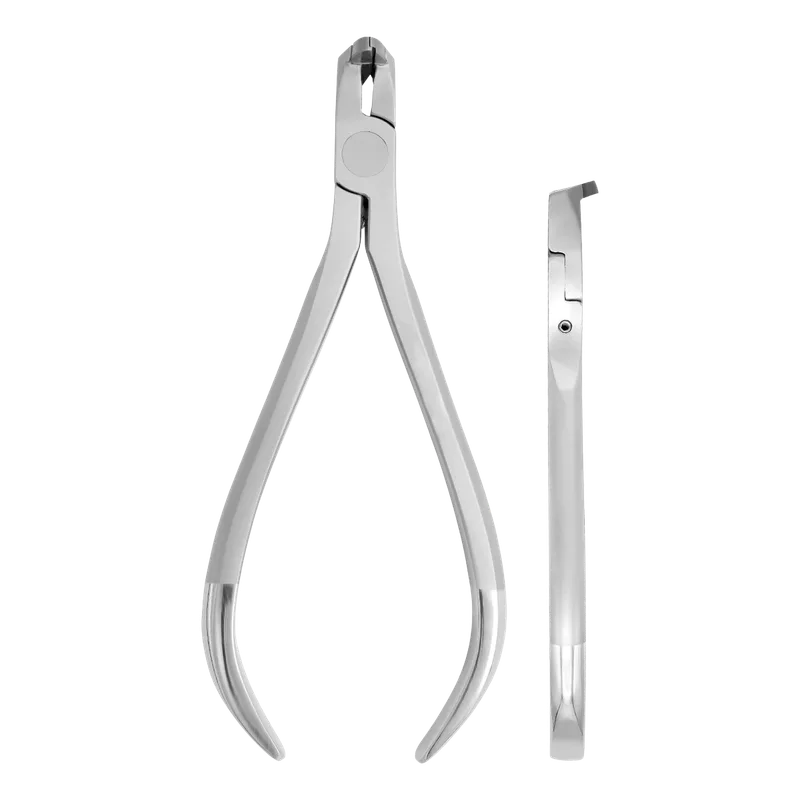
Distal End Cutter with Safety Hold - Side Screw, Tungsten Carbide
EI-2586
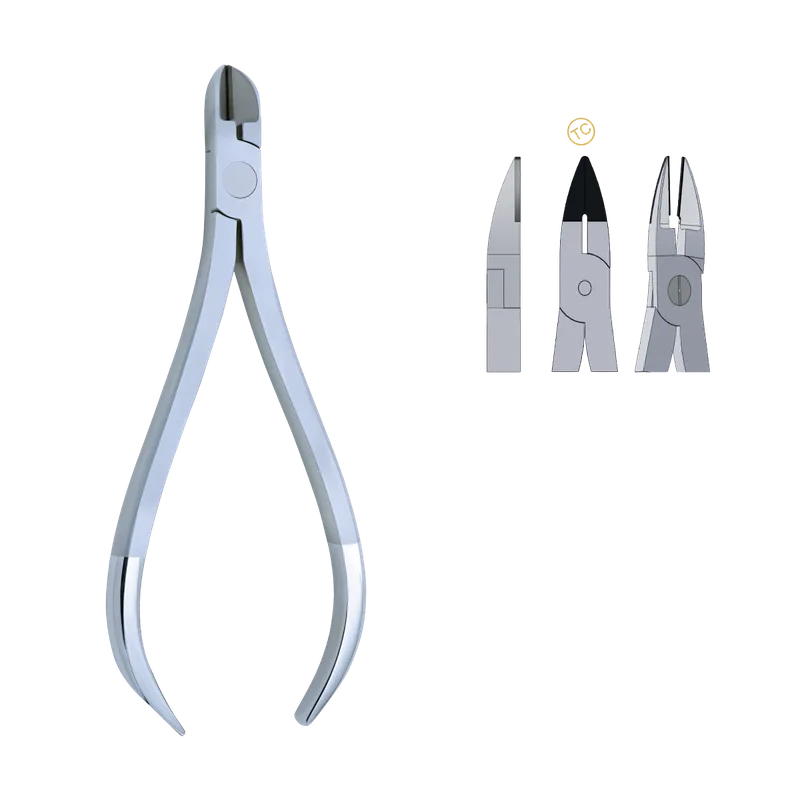
Pin and Ligature Cutter Fine Point with TC Inserts - 0.30 mm (.012 in) Wire
EI-2624
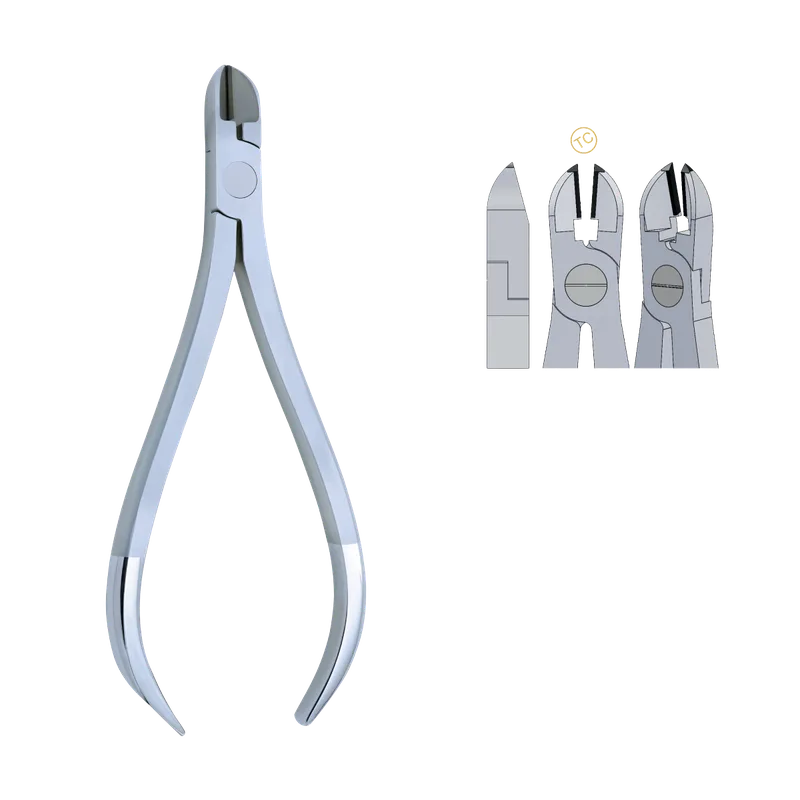
Pin & Ligature Cutter 15°, Tungsten Carbide Inserts - Wire up to 0.40 mm (.016")
EI-2625
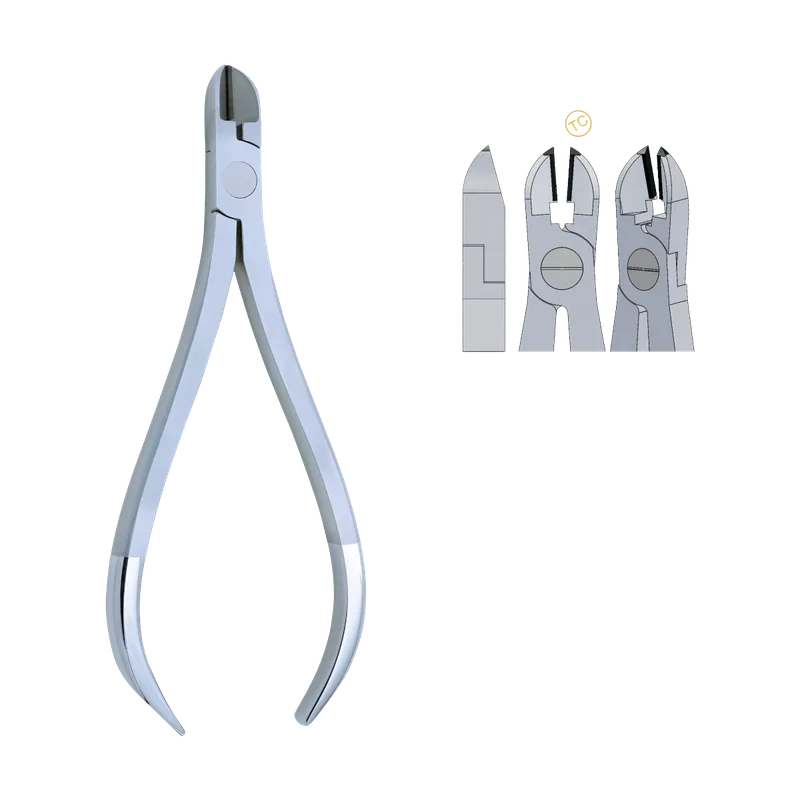
Pin & Ligature Cutter 7°, Tungsten Carbide Inserts - Wire up to 0.40 mm (.016")
EI-2627
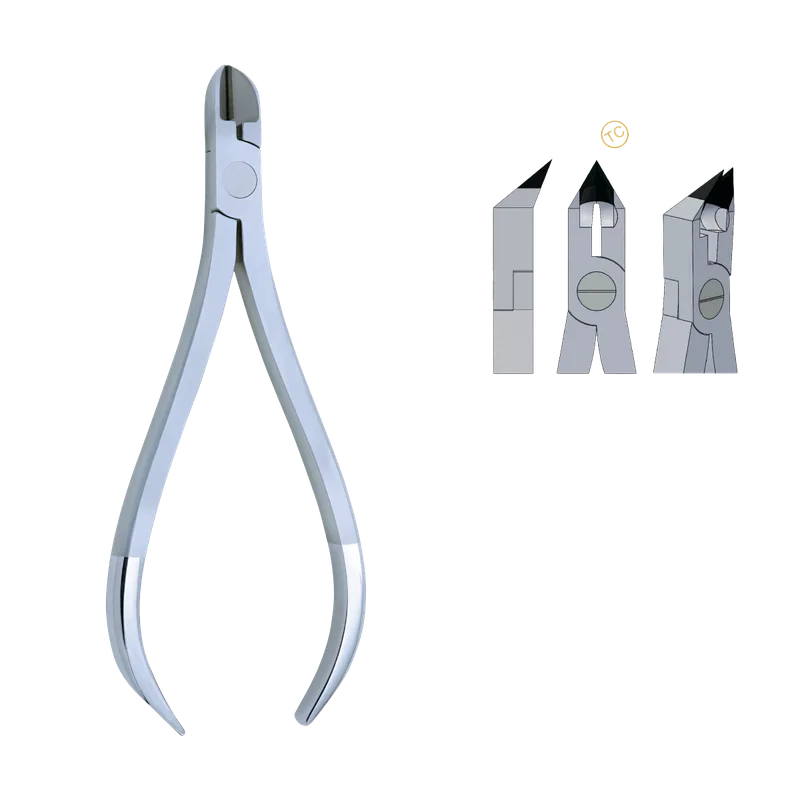
Pin & Ligature Cutter 45°, Tungsten Carbide Inserts - Wire up to 0.30 mm (.012")
EI-2628
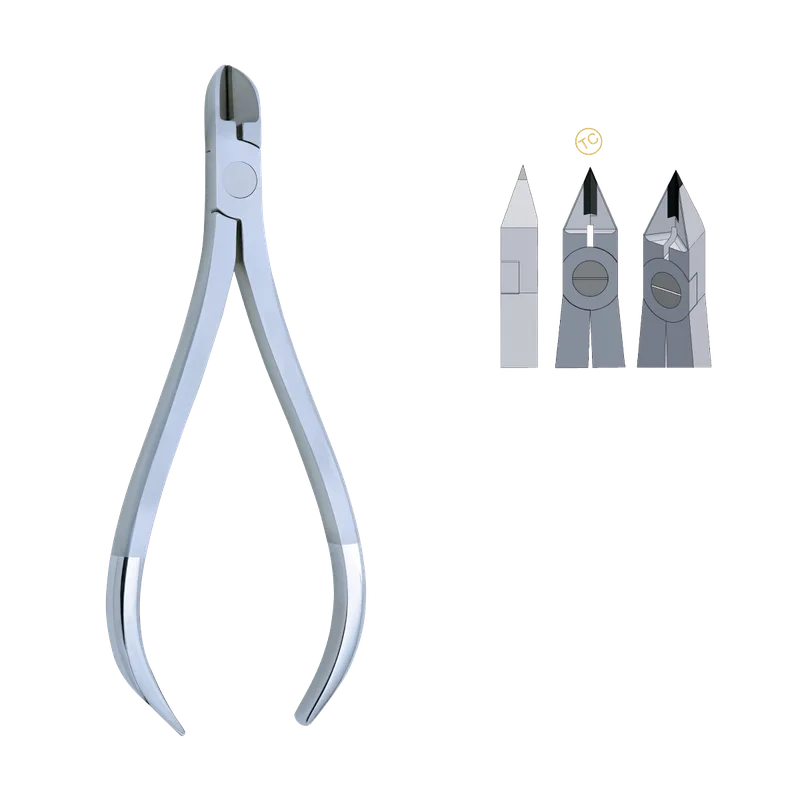
Pin and Ligature Cutter Fine Point with Spring, 15-degree Head - 0.30 mm (.012 in) Wire
EI-2629
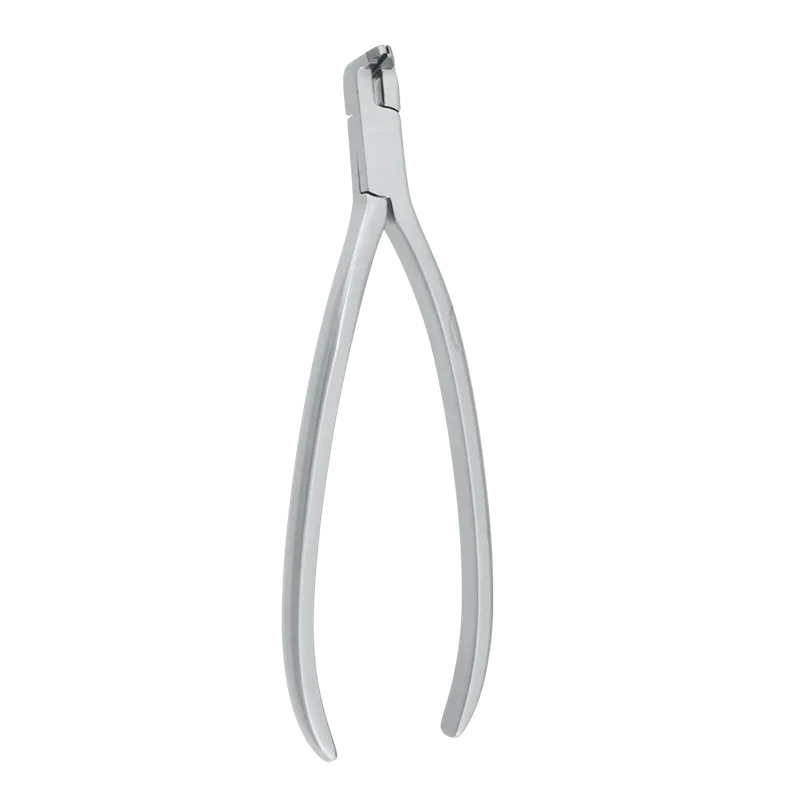
Distal End Cutter Long Handle (TC) .022" x .028"
EI-2647
Frequently asked questions
Can I use a pin and ligature cutter on an archwire?
No. It is designed only for thin ligature wire and lock pins. Archwires will spread or chip its fine tips.
Can a distal end cutter cut ligatures?
Not practically. Its blades are oriented across the instrument and are too bulky to reach under a ligature at the bracket.
Do I need both cutters?
Yes. Almost every orthodontic setup uses both: the ligature cutter to remove ties and the distal end cutter to trim archwires.
Which cutter wears out faster?
Ligature cutters, because their fine tips are more vulnerable and they are used many times per appointment. Carbide inserts help both.
What removes elastomeric ties?
Usually a scaler or explorer is used to flick elastomeric modules off the brackets rather than cutting them.
References
- In vitro comparison of peracetic acid and autoclave sterilization in the corrosion of orthodontic pliers: a pilot study — Dental Press Journal of Orthodontics
- The effect of routine steam autoclaving on orthodontic pliers — PubMed
- Effect of steam versus dry-heat sterilization on the wear of orthodontic ligature-cutting pliers — PubMed
- Classification and uses of orthodontic pliers — Dentaltix clinical blog (supplier reference, used for terminology only)
I am a…