Hard Wire Cutter
Written & reviewed by the Equate Technical Team · Updated
A hard wire cutter is an orthodontic cutting plier built to cut heavy stainless steel, TMA and cobalt-chromium wires, typically up to .028 in (0.71 mm) round or .021 × .025 in rectangular. It has short, robust jaws, often with tungsten carbide inserts, and is used chairside and in the lab wherever a ligature or distal cutter would be overloaded.
What a hard wire cutter is used for
Orthodontic practices cut a lot of wire: archwires being shortened before insertion, auxiliary springs, lingual retainer wire, palatal bars, clasp wire for removable appliances and transpalatal arches. Thin ligature cutters and fine distal end cutters are not designed for these gauges. A hard wire cutter takes over whenever the wire is round stainless steel heavier than about .020 in, rectangular stainless, TMA or cobalt-chromium.
In practice, many clinicians keep one hard wire cutter chairside for cutting archwires to length and a heavier compound-action cutter in the laboratory for clasp and bar wire. Using the right cutter for the gauge is the single biggest factor in how long cutting instruments last.
Head styles and designs
- Straight head — maximum force transmission, ideal at the bench and for cutting wire to length extraorally.
- 15° angled head — easier intraoral access and better visibility when trimming auxiliaries.
- Long-beak versions — reach for cutting inside loops or between appliance components.
- Compound or multi-action heavy cutters — a secondary lever multiplies hand force for very hard or thick wire (lab use).
- Light wire cutters — a lighter frame for wire up to roughly .020 in, faster and more comfortable for routine trimming.
Wire capacity at a glance
| Cutter type | Typical maximum wire | Main setting |
|---|---|---|
| Light wire cutter | Round up to .020 in (0.50 mm) | Chairside, NiTi and light SS |
| Hard wire cutter (12–15 cm) | Round up to .028 in (0.71 mm); rectangular .021 × .025 in | Chairside and lab |
| Heavy-duty compound cutter | Round up to about 1.2 mm, clasp and bar wire | Laboratory |
| Ligature cutter (for comparison) | Ligature wire .010–.012 in only | Chairside |
How to choose a hard wire cutter
Match the cutter to the hardest wire you cut regularly. Tungsten carbide inserts are worth paying for if you cut rectangular stainless, TMA or cobalt-chromium daily; they hold their edge far longer than hardened stainless steel blades. Look for a precisely fitted box joint so the blades meet without lateral play, and check that handles are long enough for comfortable force without hand fatigue.
If you only cut NiTi and light round wire, a light wire cutter is lighter in the hand and fully adequate. If your laboratory bends clasps and palatal bars, add a compound-action heavy cutter rather than forcing a chairside cutter beyond its rating.
Common mistakes
- Cutting wire above the rated size — the most common cause of nicked or chipped blades.
- Twisting the instrument during the cut, which spreads the joint.
- Cutting at the very tip of the jaws; cut nearer the joint where leverage is highest.
- Skipping joint lubrication before autoclaving, which leads to stiffness and corrosion.
The Equate difference
Equate's range includes 27 hard, heavy-duty and light wire cutter references — from 12 cm straight and 15° angled heads to 7 and 9 inch compound-action heavy cutters with TC tips — rated up to .028 in wire, at a typical list price about 40% below premium European RRPs.
Equate Hard Wire Cutter options
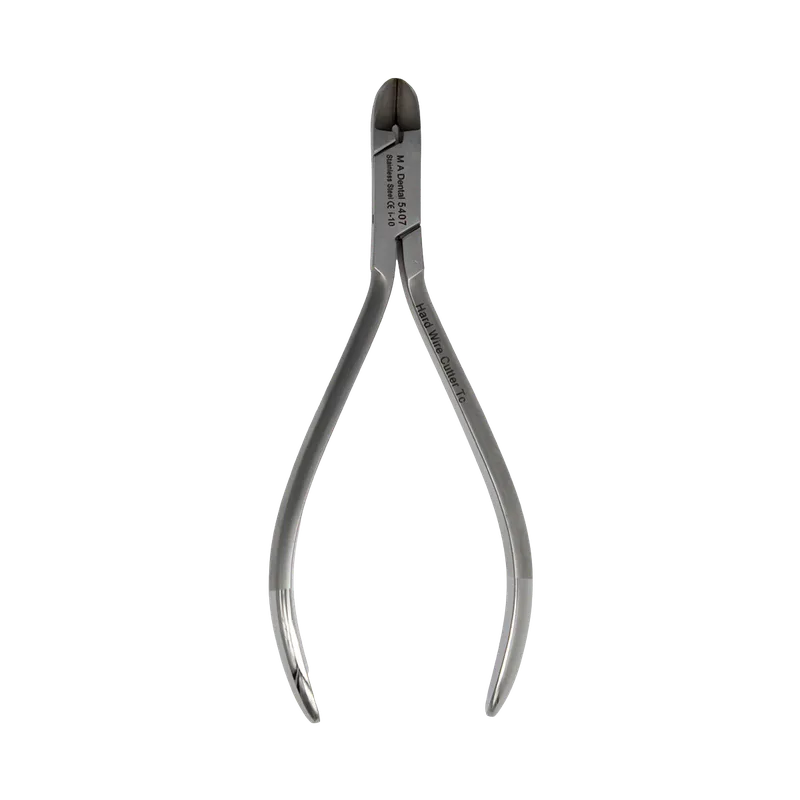
Hard Wire Cutter Plier 15 Degree Tungsten-Carbide Max 0.028 Inch Wire
EI-0681
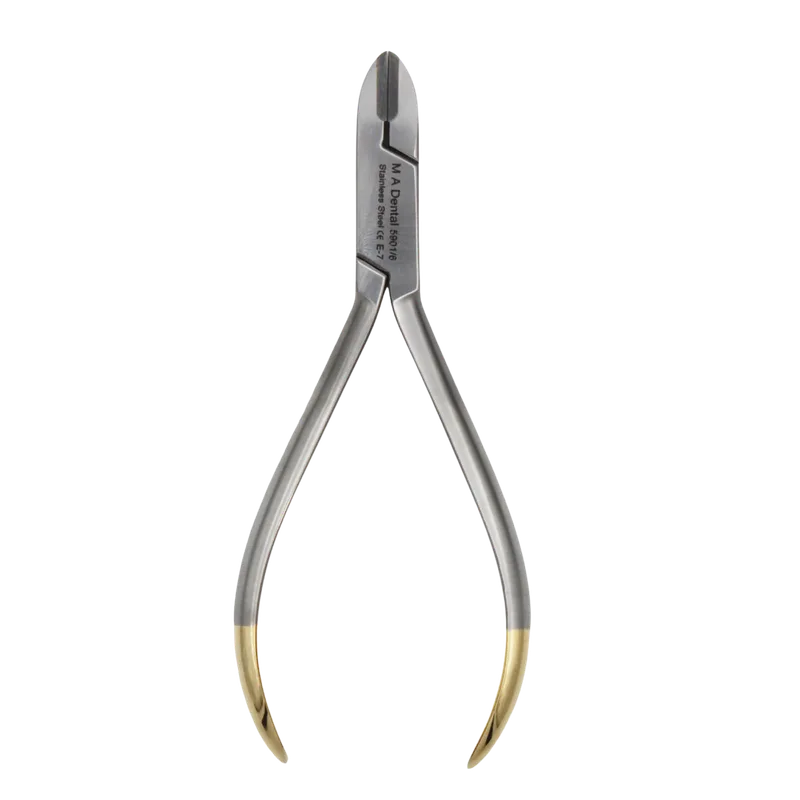
Hard Wire Cutter Plier - Tungsten Carbide, 0.71 mm / .028 in Wire
EI-0792
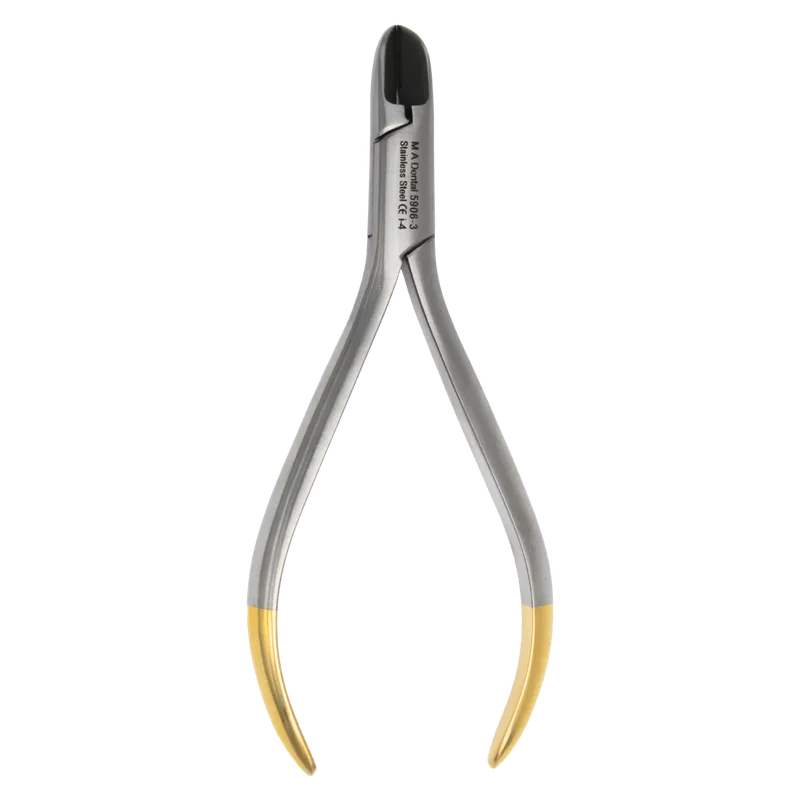
Wire Cutter - Max 0.6 mm, 12 cm
EI-0799
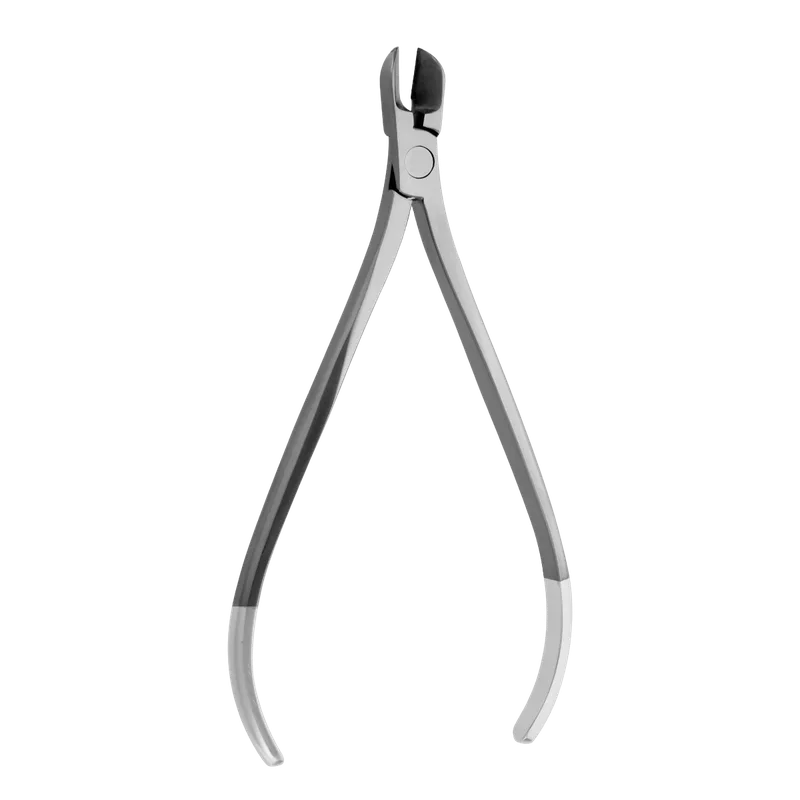
Wire Cutter 15°, Tungsten Carbide, Long-Handle Plier - Wire up to 0.30 mm (.012")
EI-0800
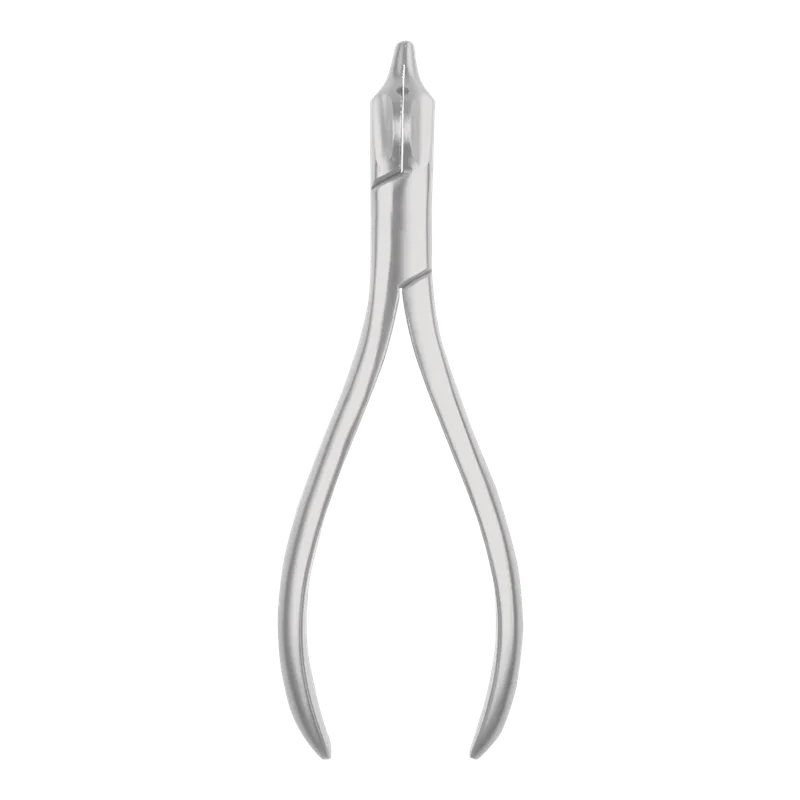
Dolphin Universal Pliers - Bend to 0.9 mm, Cut to 0.7 mm
EI-2622
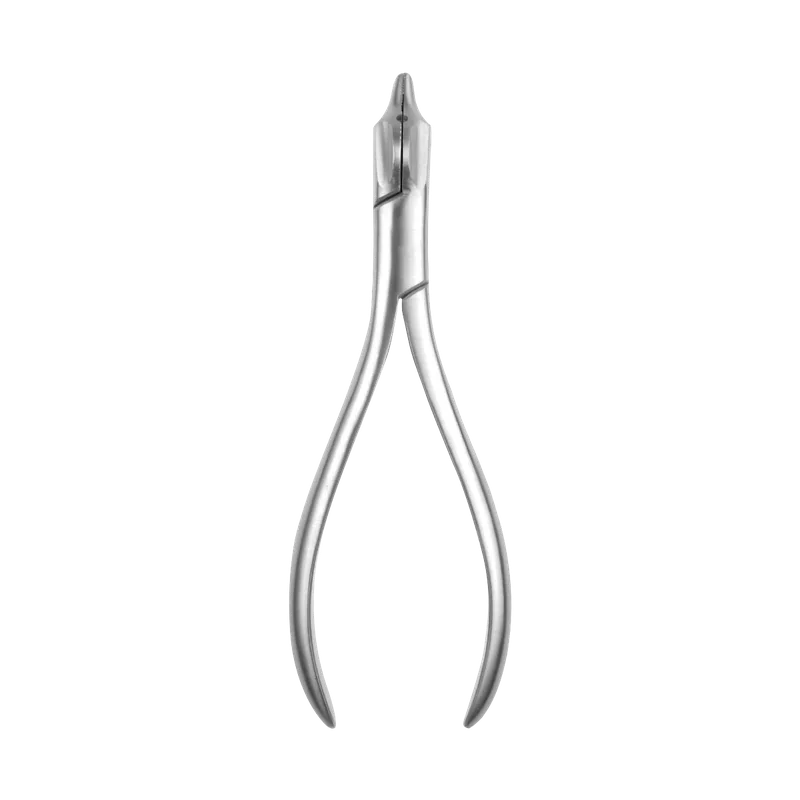
Universal Pliers - Bend to 0.9 mm, Cut to 0.7 mm
EI-2623
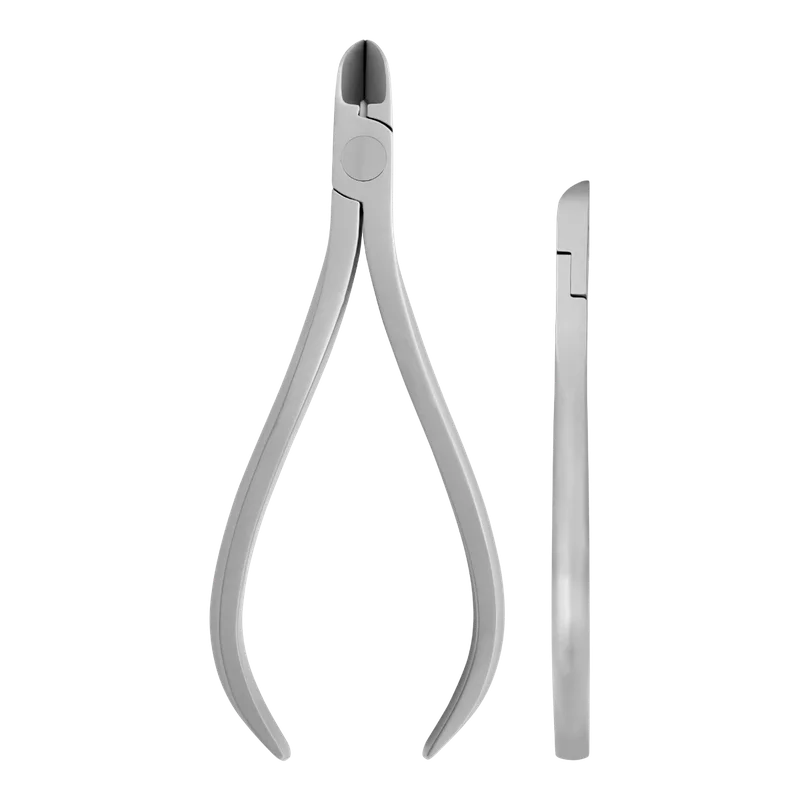
Soft Wire Cutter Pliers - 0.30 mm (.012 in) Wire
EI-2626
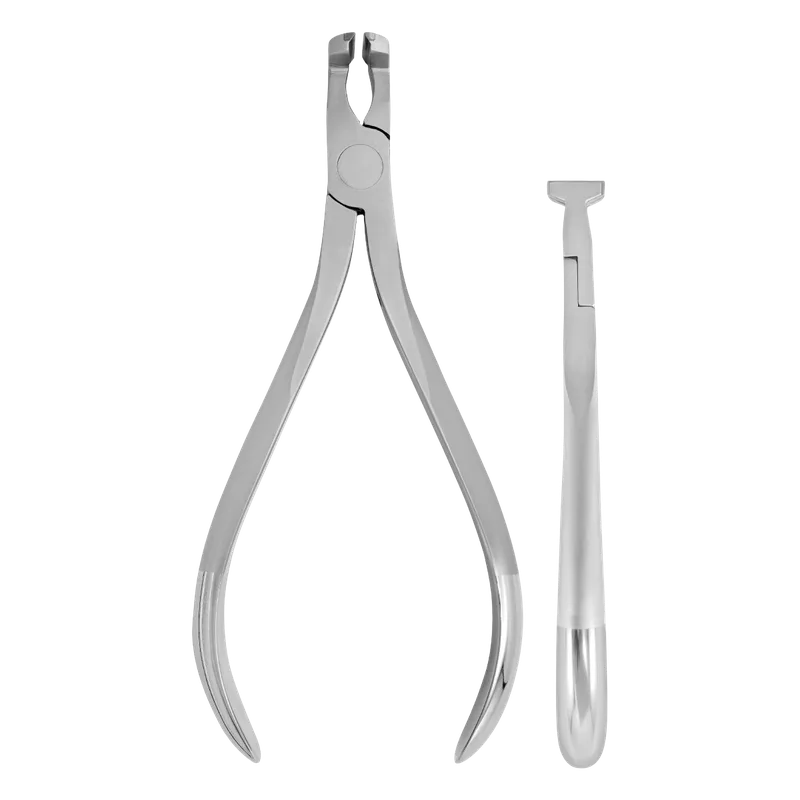
Heavy Duty Hard Wire Cutter with TC Inserts - 1.0 mm (.040 in) Wire
EI-2630
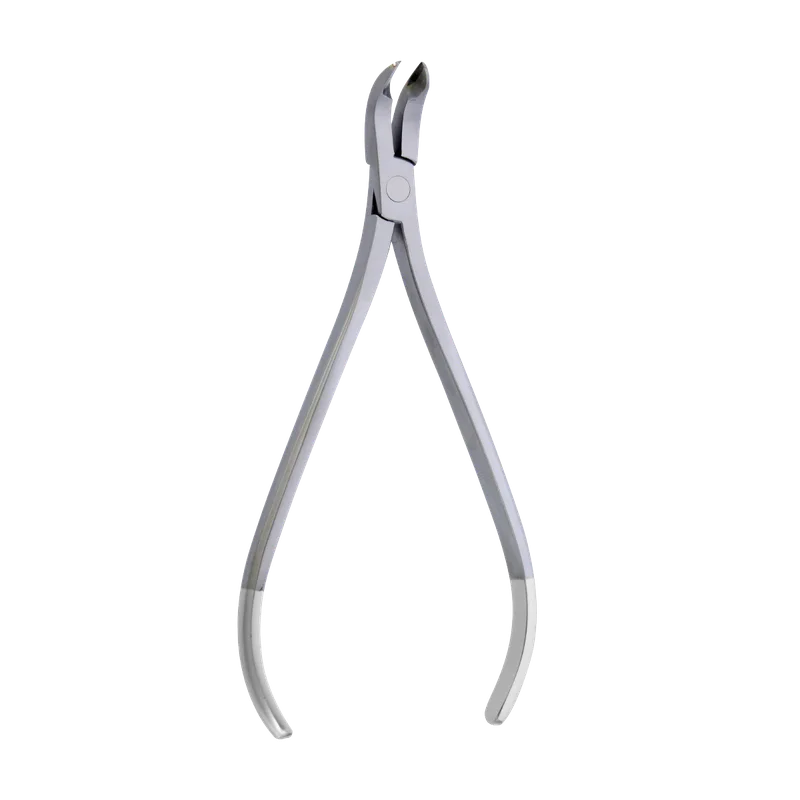
Wire Cutter 60°, Tungsten Carbide, Long-Handle Plier - Wire up to 0.30 mm (.012")
EI-2649
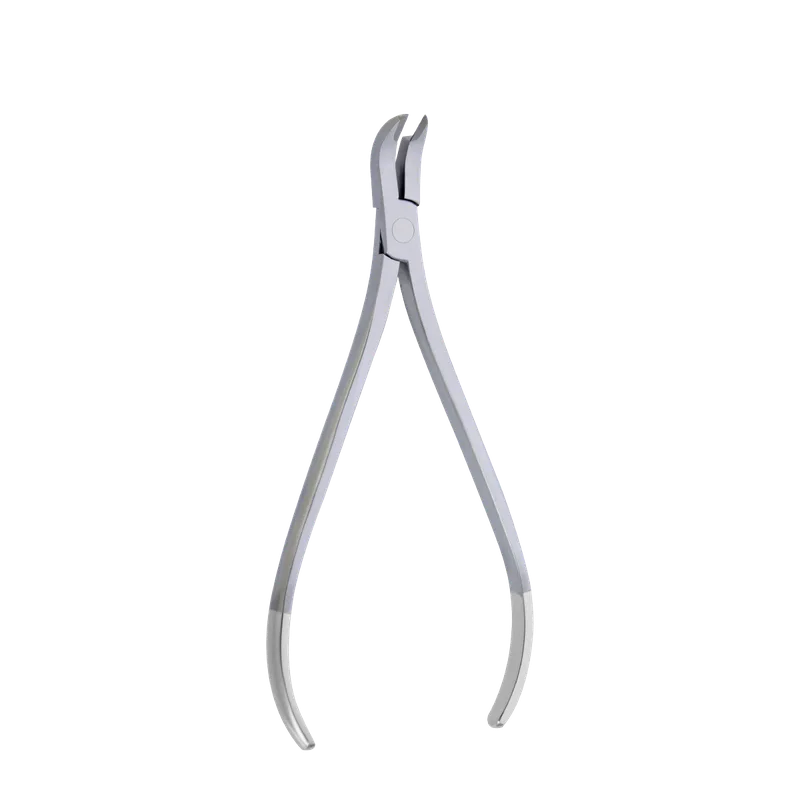
Wire Cutter 60°, Tungsten Carbide, Long-Handle Plier - Wire up to 0.30 mm (.012")
EI-2650
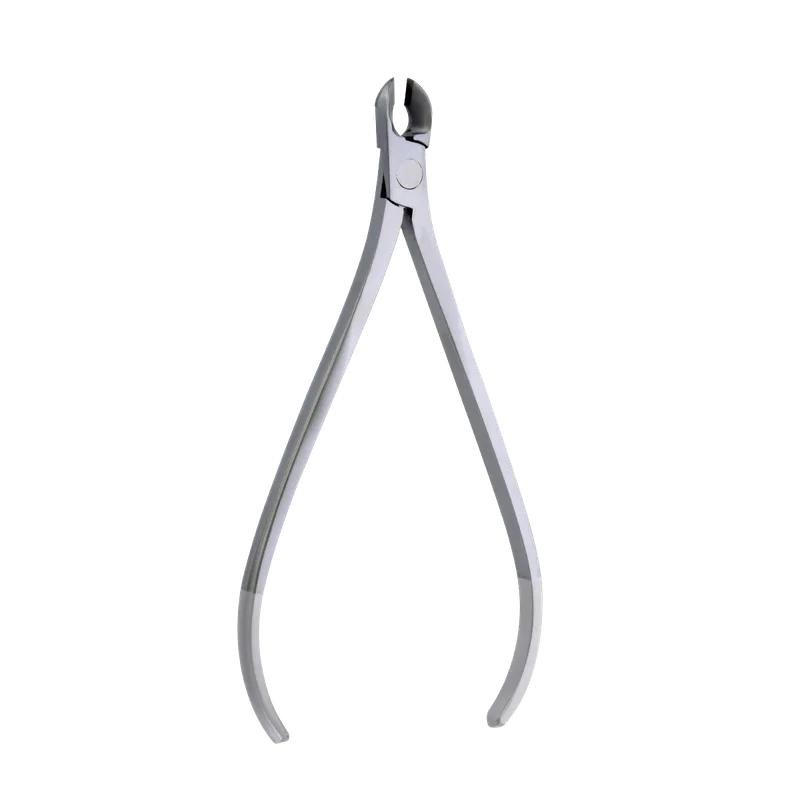
Micro Wire Cutter Tungsten Carbide Long Handle .012"
EI-2651
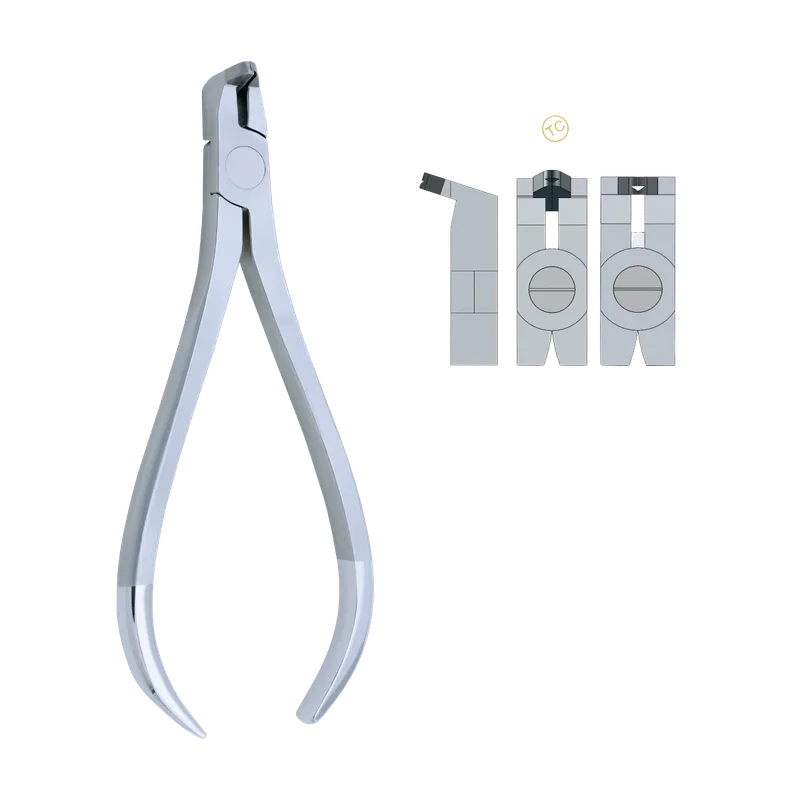
Flush Cut with Hold Plier (TC) .016" x .021"
EI-2663
Frequently asked questions
Can a hard wire cutter cut NiTi wire?
Yes. NiTi is flexible but not especially hard, so a hard wire cutter cuts it easily. A light wire cutter is often more comfortable for routine NiTi trimming, but either works.
What is the maximum wire size for a hard wire cutter?
Most chairside hard wire cutters are rated to about .028 in (0.71 mm) round stainless steel and .021 × .025 in rectangular. Heavy-duty compound-action lab cutters handle thicker clasp and bar wire.
Should I choose a straight or angled hard wire cutter?
Straight heads give the most cutting force and suit bench work. A 15° angled head is easier to use intraorally because it improves access and visibility. Many practices keep one of each.
Can I use a hard wire cutter as a distal end cutter?
Not well. A hard wire cutter's blades run along the instrument rather than across it, so it cannot cut flush against the molar tube, and it usually has no safety hold for the fragment. Use a distal end cutter for intraoral distal cuts.
How do I know my wire cutter needs sharpening?
Signs include needing more hand force, wire ends that look crushed or burred, and visible nicks in the cutting edge under magnification. Carbide cutters should be sent to a service that sharpens carbide.
References
- In vitro comparison of peracetic acid and autoclave sterilization in the corrosion of orthodontic pliers: a pilot study — Dental Press Journal of Orthodontics
- The effect of routine steam autoclaving on orthodontic pliers — PubMed
- Effect of steam versus dry-heat sterilization on the wear of orthodontic ligature-cutting pliers — PubMed
- Classification and uses of orthodontic pliers — Dentaltix clinical blog (supplier reference, used for terminology only)
I am a…