Distal End Cutter
Written & reviewed by the Equate Technical Team · Updated
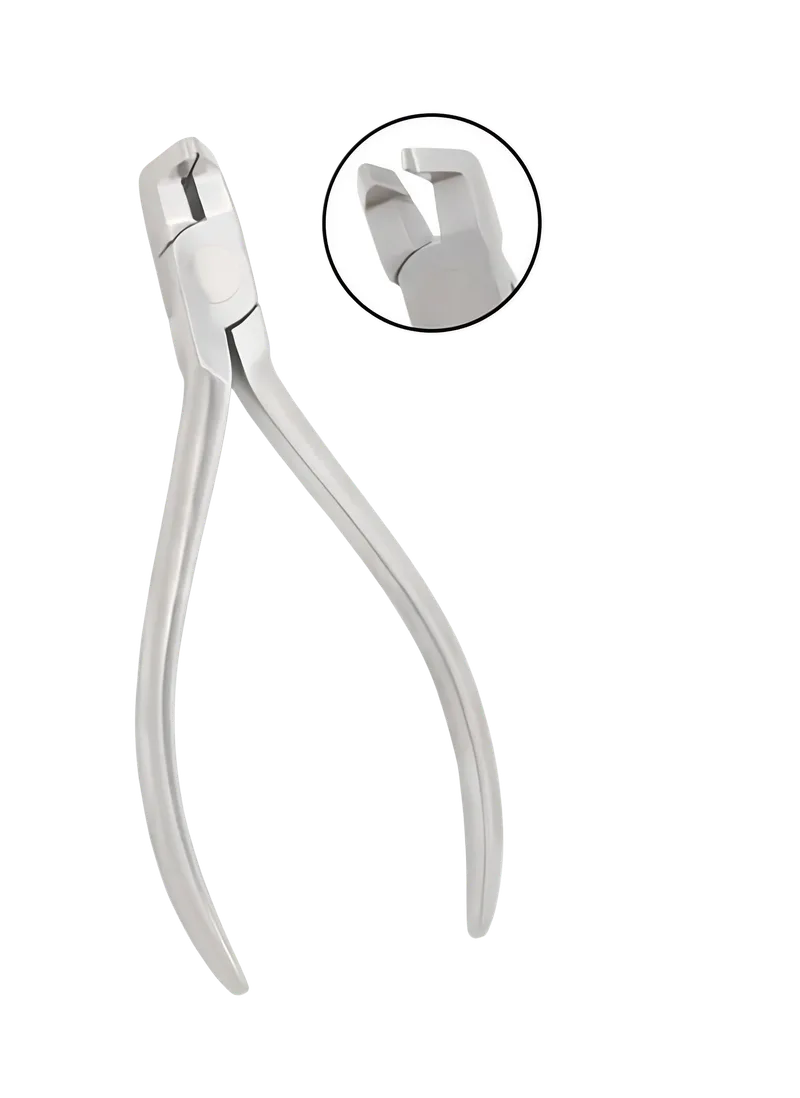
A distal end cutter is an orthodontic cutting plier used to trim the excess end of an archwire flush with the distal edge of the last molar tube or bracket. Its blades sit at right angles to the handles so it can reach the back of the mouth, and most designs hold the cut fragment so it cannot fall into the patient's mouth.
What a distal end cutter is used for
After a new archwire is engaged in the brackets, a short tail usually projects behind the molar tube. Left long, that tail pokes the cheek and is one of the most common reasons patients call the practice between appointments. The distal end cutter is the instrument designed to remove it in one controlled cut, right at the tube, without pulling the wire out of the slot.
Clinicians and assistants reach for it at almost every wire change, which is why it is usually listed among the three or four instruments a new orthodontist or orthodontic assistant needs on day one, alongside a Weingart plier, a ligature cutter and a band remover.
How it works
The cutting edges are oriented perpendicular to the long axis of the instrument. The clinician seats the beaks against the distal surface of the molar tube, closes the handles and the blades shear the wire while pushing the cut segment slightly distally. A safety-hold mechanism — typically a small spring-loaded or friction pad beside the blade — grips the fragment so it comes out with the instrument instead of dropping into the oral cavity or the airway.
Because the cut is made right at the tube, the remaining wire end is short and smooth, which reduces soft-tissue irritation. Some practitioners add a slight cinch-back after cutting to stop the wire migrating; others leave the tail flush.
Types and variations
- Safety-hold distal end cutter — the standard chairside design; retains the cut segment.
- Flush-cut distal end cutter — blades ground to cut as close as possible to the tube, useful with short buccal tubes.
- Mini / short-handle distal end cutter — smaller head and handles for posterior access in small mouths and for operators with smaller hands.
- Long-handle or heavy distal end cutter — extra leverage for rectangular stainless steel and TMA wires.
- Tungsten carbide (TC) insert versions — hardened cutting inserts brazed into the jaws for longer edge life.
Specifications to compare
| Specification | What to look for | Why it matters |
|---|---|---|
| Maximum wire size | At least .021 × .025 in stainless steel; heavy versions to .022 × .028 | Cutting oversized wire chips the blades |
| Cutting insert | Tungsten carbide for heavy daily use; hardened steel for lighter use | TC keeps a sharp edge far longer |
| Safety hold | Positive grip on the fragment, easy to clean | Prevents swallowed or aspirated wire |
| Joint | Box joint, no lateral play | Misaligned blades leave burrs on the wire |
| Finish | Passivated stainless, satin or mirror | Corrosion resistance through repeated autoclave cycles |
How to choose a distal end cutter
Start with the heaviest wire your practice routinely cuts. A practice finishing in .019 × .025 stainless or TMA needs a cutter rated for at least that size, and preferably one with tungsten carbide inserts. Then consider access: if you treat many adolescents or use short molar tubes, a mini head or flush-cut profile saves time. Finally, check that the safety hold can be opened and cleaned easily, because debris trapped in the hold pad is a common sterilisation complaint.
Never use a distal end cutter on wires heavier than its rating, and never use it to cut ligatures or elastomeric chain at an angle that twists the blades. These are the two most common causes of chipped edges.
Care and maintenance
Open the instrument fully for ultrasonic cleaning, lubricate the box joint with an instrument milk before autoclaving, and inspect the cutting edges under magnification. A cutter that leaves a visible burr or needs extra hand force should be sharpened or replaced; carbide inserts usually need a specialist sharpening service.
Published work on orthodontic pliers suggests steam autoclaving is generally gentler on stainless steel pliers than prolonged chemical immersion: a small in-vitro pilot study in the Dental Press Journal of Orthodontics found oxidation on only one of two brands after 100 autoclave cycles and more corrosion after 2% peracetic acid, and an earlier study of ligature-cutting pliers found no significant difference in tip wear between steam and dry-heat sterilisation. Both are small studies, so follow each manufacturer's reprocessing instructions.
The Equate difference
Equate lists 28 distal end cutter references, 25 of them safety-hold designs, all forged from passivated stainless steel and ultrasonically cleaned before packing, at a typical list price around 40–47% below premium European RRPs for the same instrument type.
Equate Distal End Cutter options
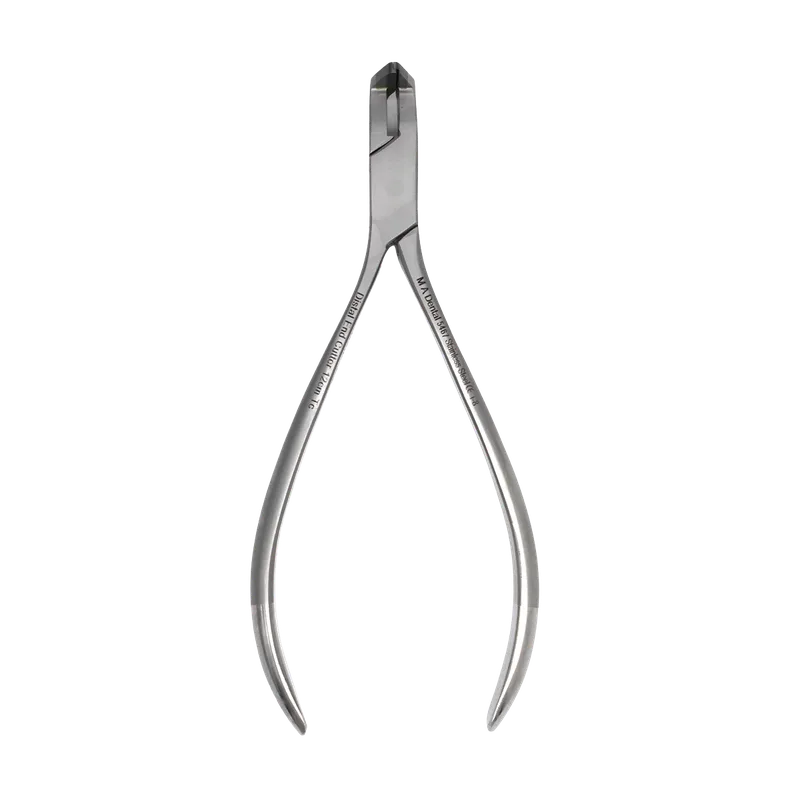
Distal End Cutter with Safety Hold 0.56 x 0.71 mm (.022″ x .028″ Wire, TC)
EI-0700
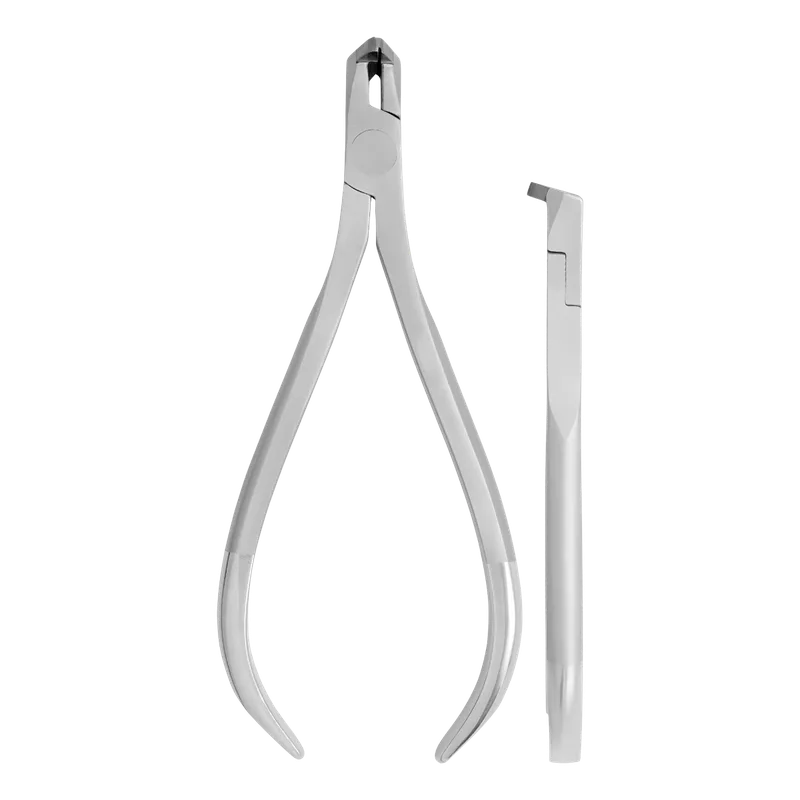
Mini Distal End Cutter with Safety Hold - Tungsten Carbide, 0.55 x 0.64 mm / .021 x .025 in Wire
EI-0793
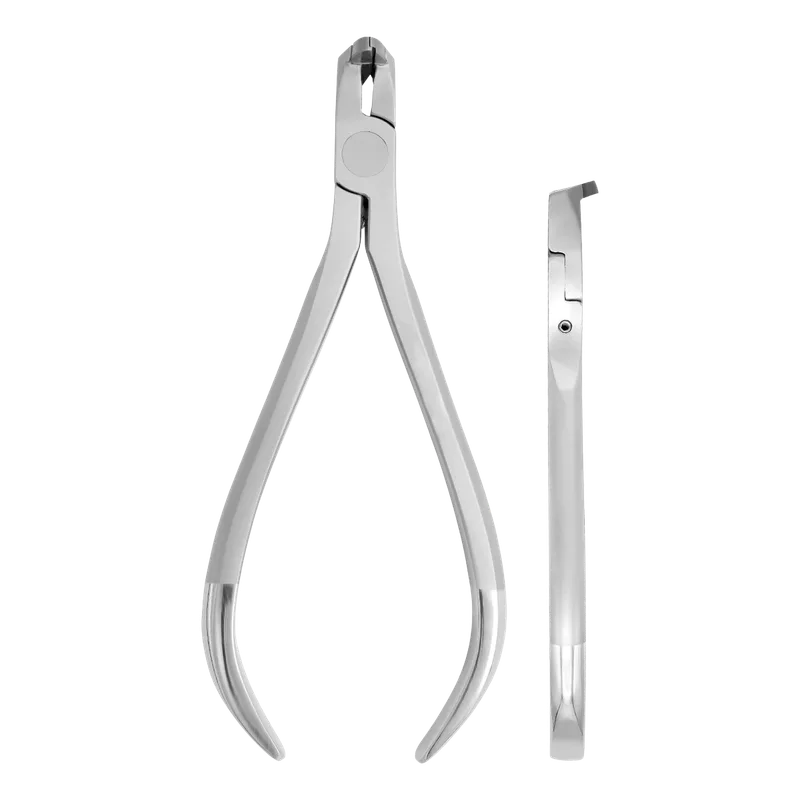
Distal End Cutter with Safety Hold - Side Screw, Tungsten Carbide
EI-2586
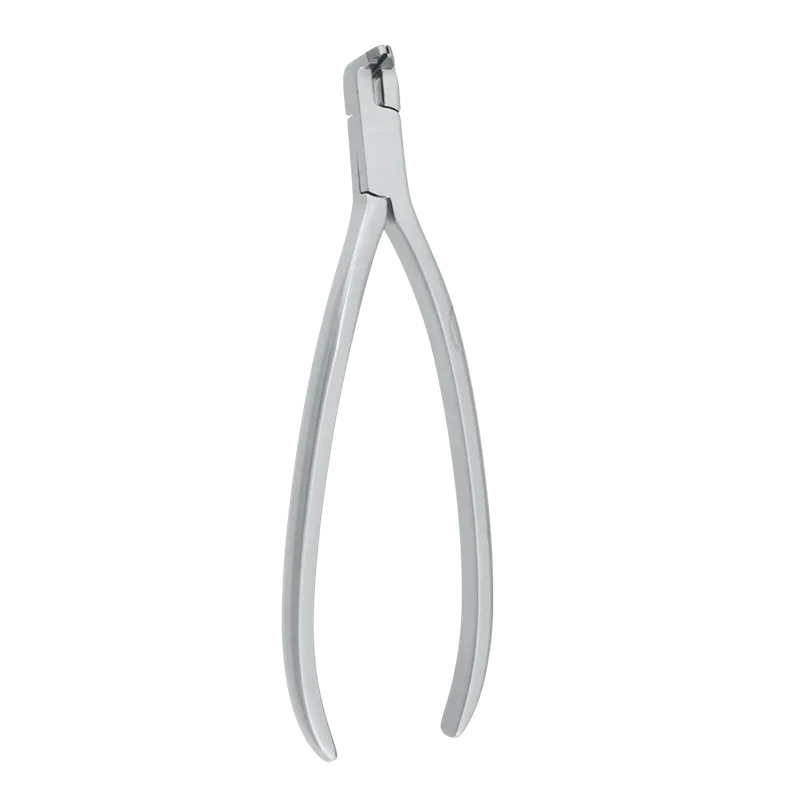
Distal End Cutter Long Handle (TC) .022" x .028"
EI-2647
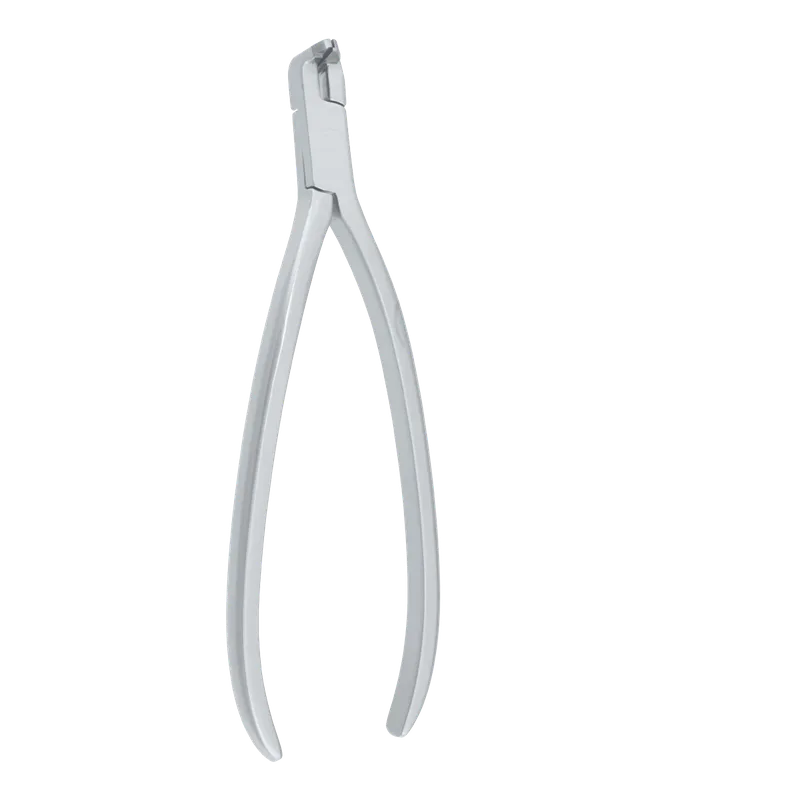
Distal End Cutter Long Handle Curved (TC) .022" x .028"
EI-2648
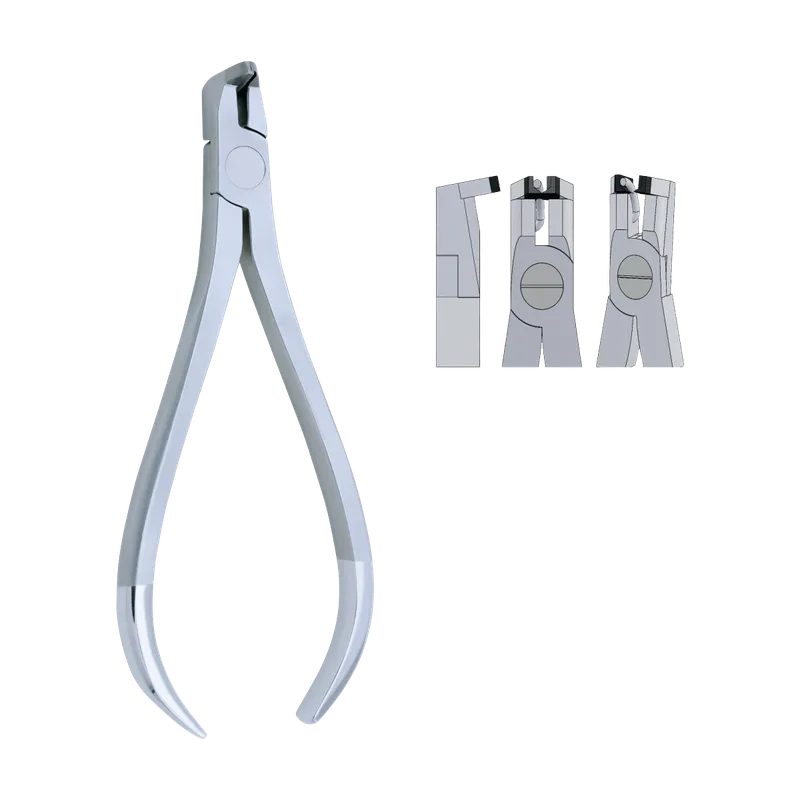
Flush Cut Distal End Cutter with Hold, TC .022″ x .028″
EI-2661
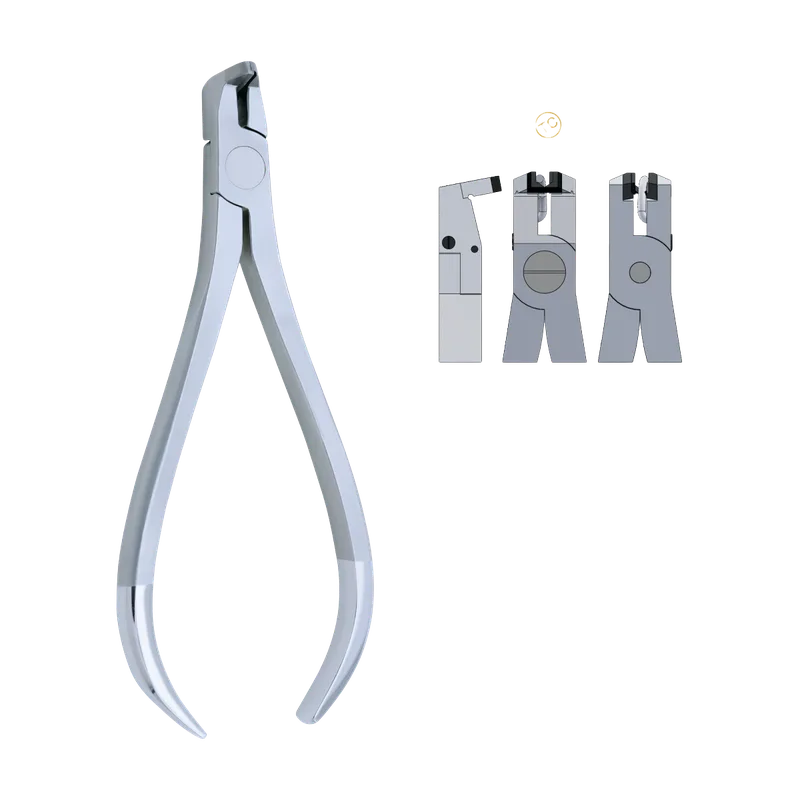
Flush Cut Distal End Cutter with Hold, TC .022″ x .028″
EI-2662
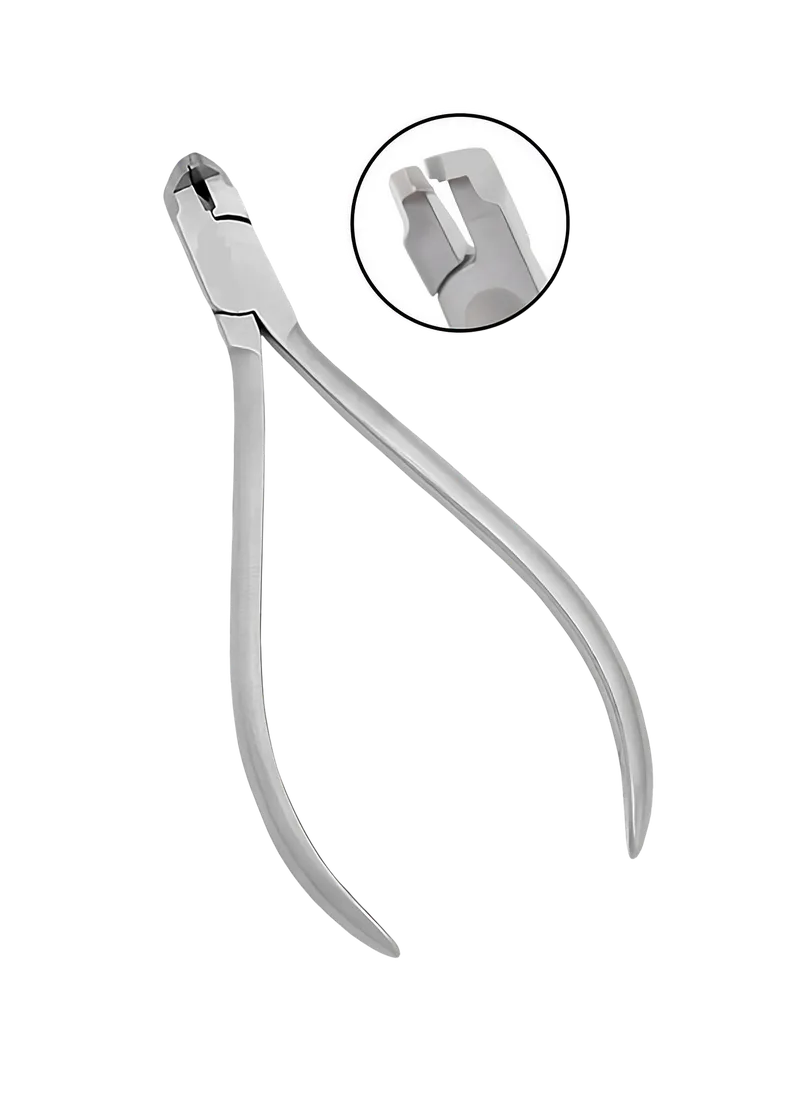
Distal End Cutter Universal Cut 12cm
EI-3129
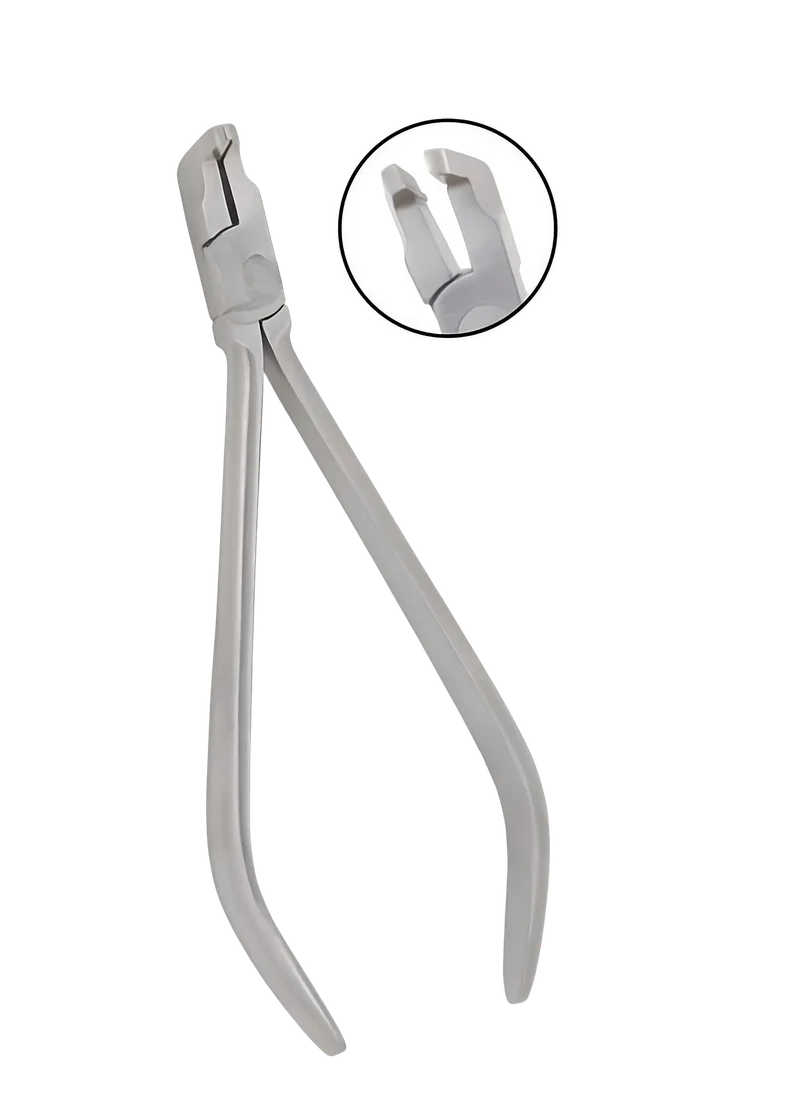
Distal End Cutter Universal Cut Long Handle 14cm
EI-3130
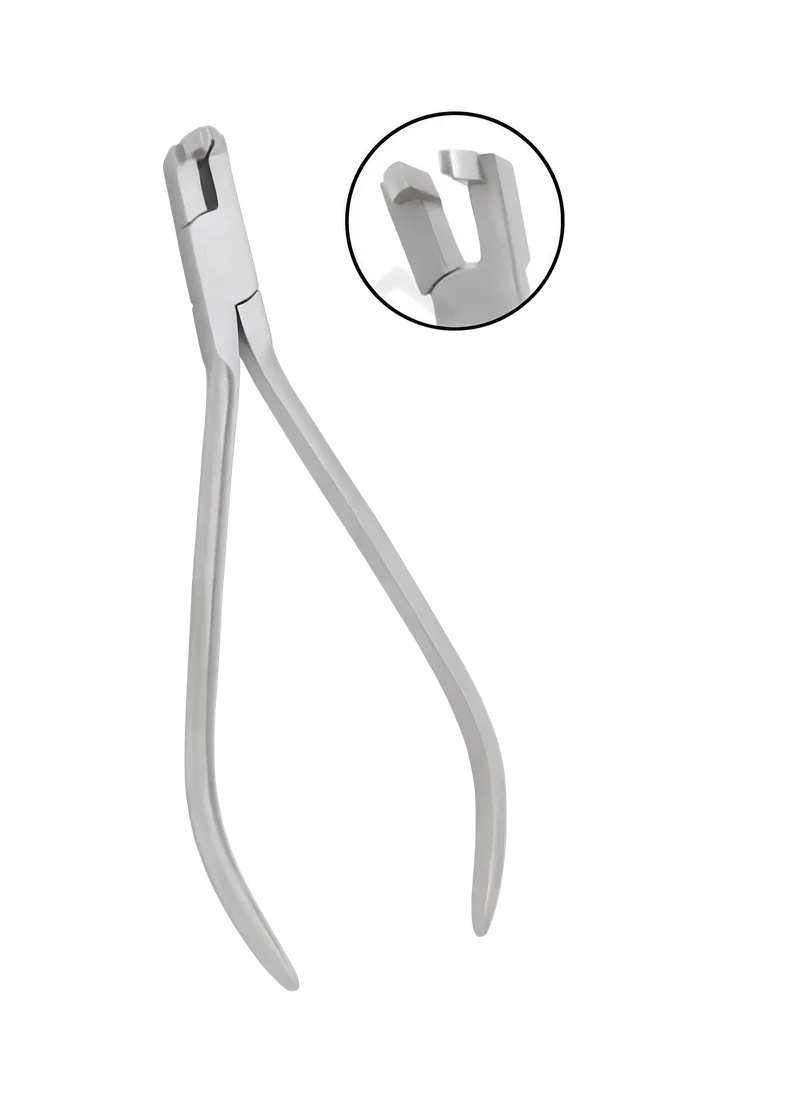
Distal End Cutter Universal Cut Long Slim Pattern 13cm
EI-3131
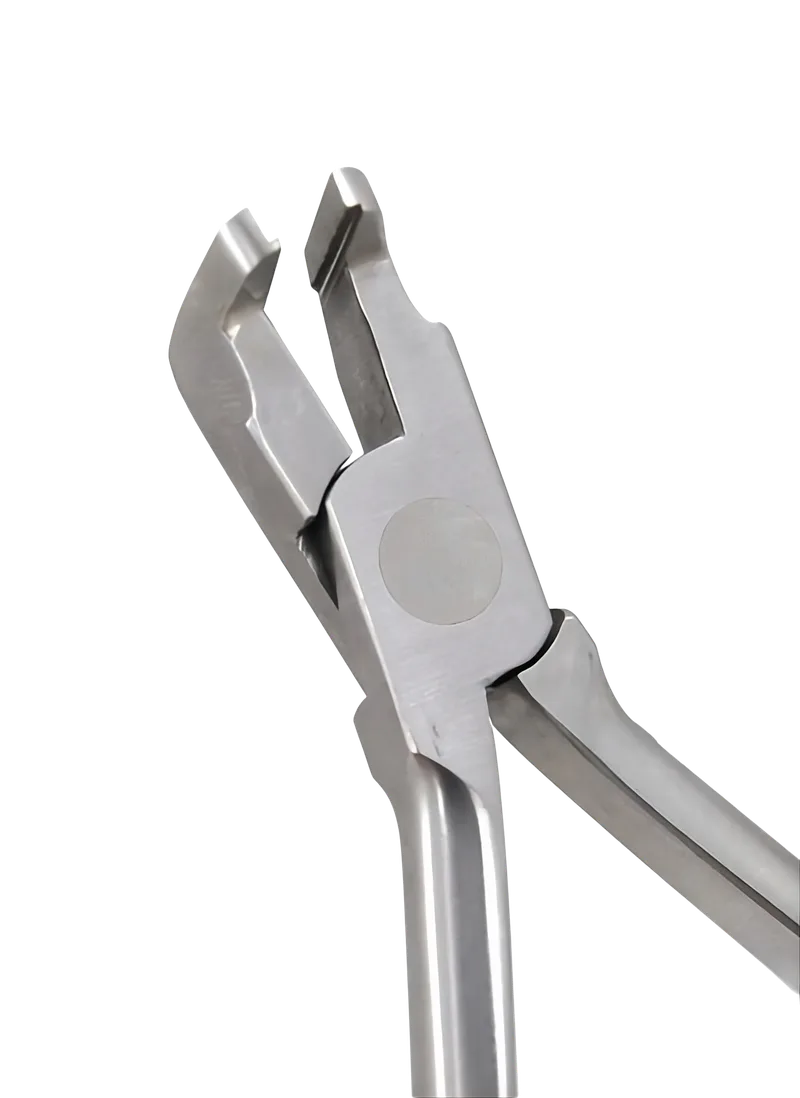
Distal End Cutter Universal Cut Long Neck 12cm
EI-3132
Distal End Cutter Universal Cut Small Neck 11.5cm
EI-3133
Frequently asked questions
What is the difference between a distal end cutter and a pin and ligature cutter?
A distal end cutter cuts the archwire at the back of the last molar tube, with blades at a right angle to the handles. A pin and ligature cutter has small, pointed beaks for cutting thin ligature wire and lock pins close to the bracket. Using a ligature cutter on an archwire damages its tips.
What wire size can a distal end cutter cut?
Most standard designs cut stainless steel up to .021 × .025 in; heavy-duty versions cut up to about .022 × .028 in. Always check the manufacturer's rating and use a dedicated hard wire cutter for heavier gauges.
Do I need a safety-hold distal end cutter?
Yes for intraoral use. The safety hold keeps the cut wire fragment in the instrument, which removes the risk of a sharp segment being swallowed or aspirated. Non-hold cutters are better reserved for laboratory work.
Why does my distal end cutter leave a sharp end?
Usually the blades are dull, chipped or slightly out of alignment at the joint. A sharp tail can also mean the cutter was not seated against the tube. Sharpen or replace the cutter, and smooth the wire end if needed.
Is tungsten carbide worth it for distal end cutters?
For a busy practice, generally yes. Carbide inserts hold their edge much longer than hardened stainless steel when cutting rectangular and TMA wire, so the higher initial price is spread over a longer service life.
References
- In vitro comparison of peracetic acid and autoclave sterilization in the corrosion of orthodontic pliers: a pilot study — Dental Press Journal of Orthodontics
- The effect of routine steam autoclaving on orthodontic pliers — PubMed
- Effect of steam versus dry-heat sterilization on the wear of orthodontic ligature-cutting pliers — PubMed
- Classification and uses of orthodontic pliers — Dentaltix clinical blog (supplier reference, used for terminology only)
I am a…