Tungsten Carbide vs Stainless Steel Orthodontic Pliers
Written & reviewed by the Equate Technical Team · Updated
Verdict: choose tungsten carbide (TC) inserts for high-use cutters and gripping pliers — distal end, hard wire and ligature cutters, Weingarts and debonding pliers — because carbide holds an edge and serrations far longer. Choose solid stainless steel for low-use or bending instruments, where its lower price and toughness matter more than extreme hardness.
Side-by-side comparison
| Factor | Tungsten carbide inserts | Solid stainless steel |
|---|---|---|
| Hardness | Far harder than instrument steel | Hard enough for most bending and gripping |
| Edge / serration life | Much longer between sharpening | Shorter, needs more frequent service |
| Toughness | Brittle: tips can chip if dropped or overloaded | Tough and forgiving |
| Sharpening | Needs a service equipped for carbide | Most sharpening services |
| Purchase price | Higher | Lower |
| Best for | Cutters, Weingarts, debonding, high-volume practices | Bending pliers, low-use instruments, lab |
| Corrosion | Inserts brazed into stainless body; care for the braze line | Passivated stainless resists corrosion well |
When tungsten carbide is worth it
The value of carbide is in edge life. Cutters lose sharpness every time they cut, and serrated gripping tips round off over thousands of uses. In a practice cutting rectangular stainless steel and TMA wire every day, a stainless distal end cutter may need sharpening several times as often as a carbide one, and each service visit takes the instrument off the tray. For those instruments, a carbide insert usually pays for itself through fewer replacements and less downtime.
Clinicians in online forums often describe carbide distal end cutters and ligature cutters as the first upgrade they make, because a cutter that crushes rather than cuts is the most noticeable failure chairside.
Evidence note: we found no independent, peer-reviewed wear testing that compares carbide-insert and stainless steel orthodontic cutters head to head. The longer edge life described here rests on the hardness of the material and on manufacturer and clinician reports, so treat the size of the benefit as indicative rather than measured.
When stainless steel is the better choice
For wire-forming pliers — bird beak, Tweed loop, three-prong, arch forming — the beaks shape wire rather than cut it, so extreme hardness brings less benefit, and well-forged passivated stainless steel lasts many years with routine care. Stainless is also more forgiving if an instrument is dropped; carbide tips are brittle and can chip. Laboratories and low-volume practices often choose stainless across the board.
Cost reality
Premium-brand orthodontic cutters in Europe commonly list between about €100 and €200 before VAT, with carbide models at the top of that range. Equate positions its range at premium build quality with a typical list price around 40–50% below those premium RRPs, so a practice can often equip its key cutters with carbide for roughly what a single premium-brand set of stainless instruments would cost.
Equate's recommendation
- Carbide: distal end cutter, hard wire cutter, ligature cutter, Weingart, debonding plier, adhesive removing plier.
- Stainless: bird beak, Tweed loop and arch formers, three-prong, band pushers, measuring instruments.
- Either: Howe/utility pliers and band removers, depending on volume.
The Equate difference
Across Equate's orthodontic range, TC-insert models sit alongside stainless versions in the same families, and Equate's typical cutter list price (about €85–95) is roughly 40–47% below the €158.85 median premium European RRP for orthodontic cutters, which narrows the cost gap of upgrading to carbide.
Equate Tungsten Carbide vs Stainless Steel Orthodontic Pliers options
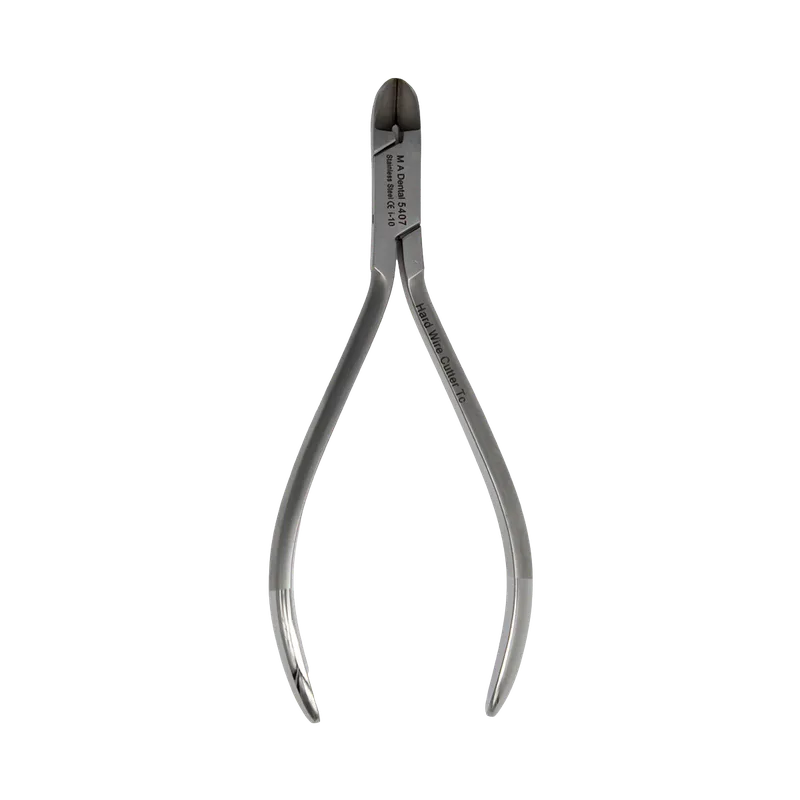
Hard Wire Cutter Plier 15 Degree Tungsten-Carbide Max 0.028 Inch Wire
EI-0681
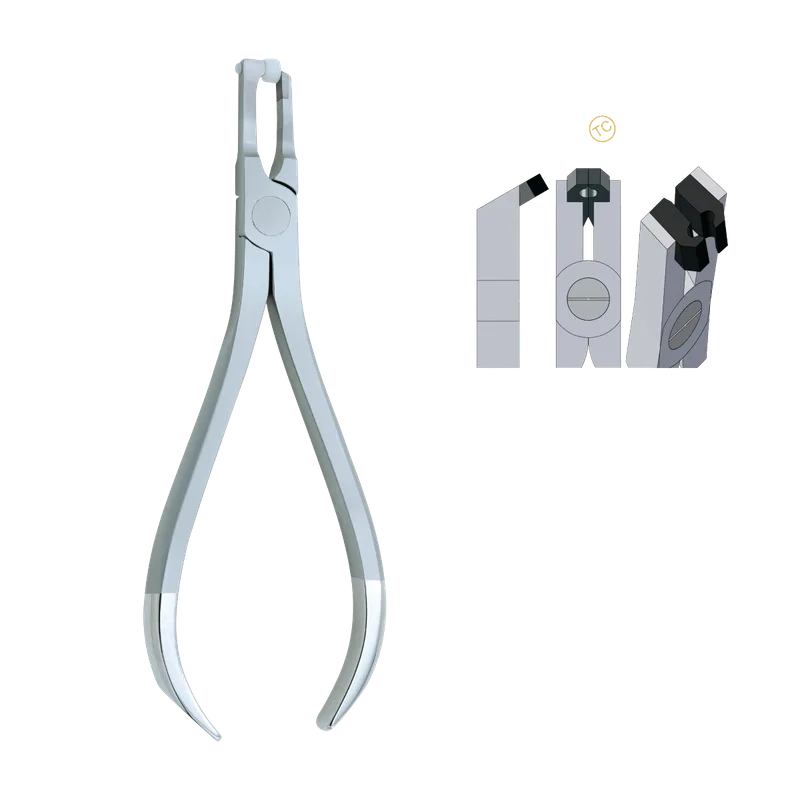
Angulated Debonding Pliers (TC)
EI-0685
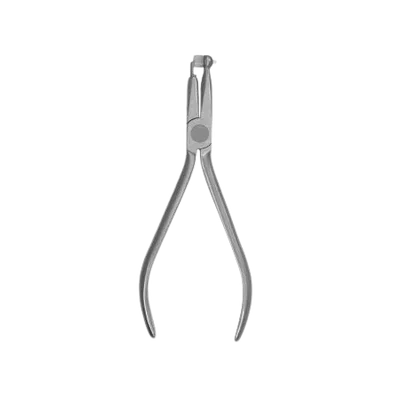
Adhesive Removing Pliers (TC)
EI-0686
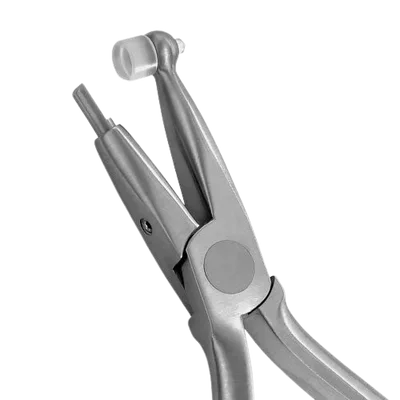
Adhesive Remover Changeable Parts - 5 Sets (Carbide Tip + Teflon Pad)
EI-0687
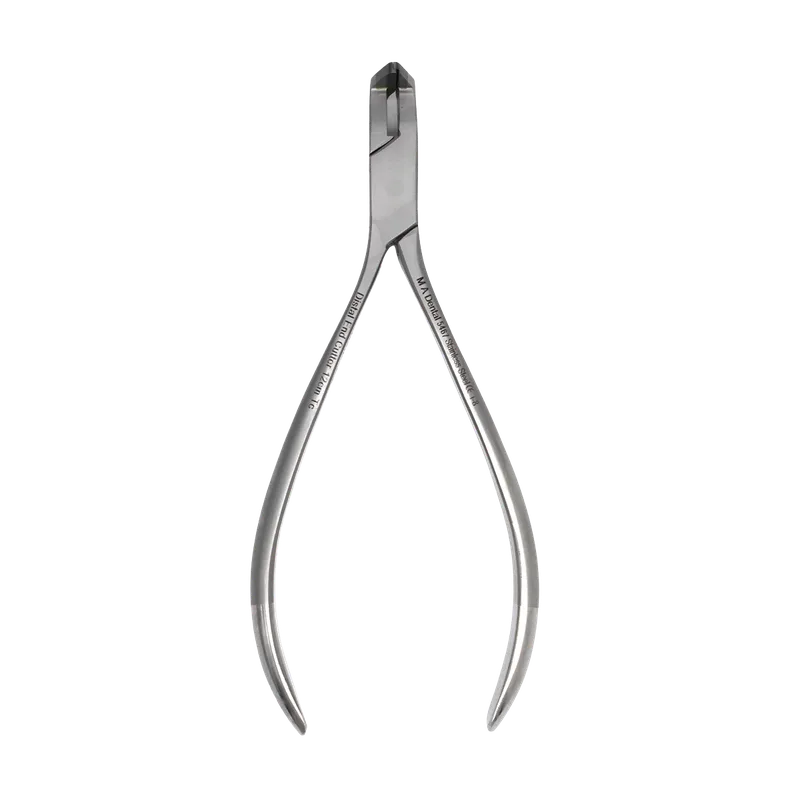
Distal End Cutter with Safety Hold 0.56 x 0.71 mm (.022″ x .028″ Wire, TC)
EI-0700
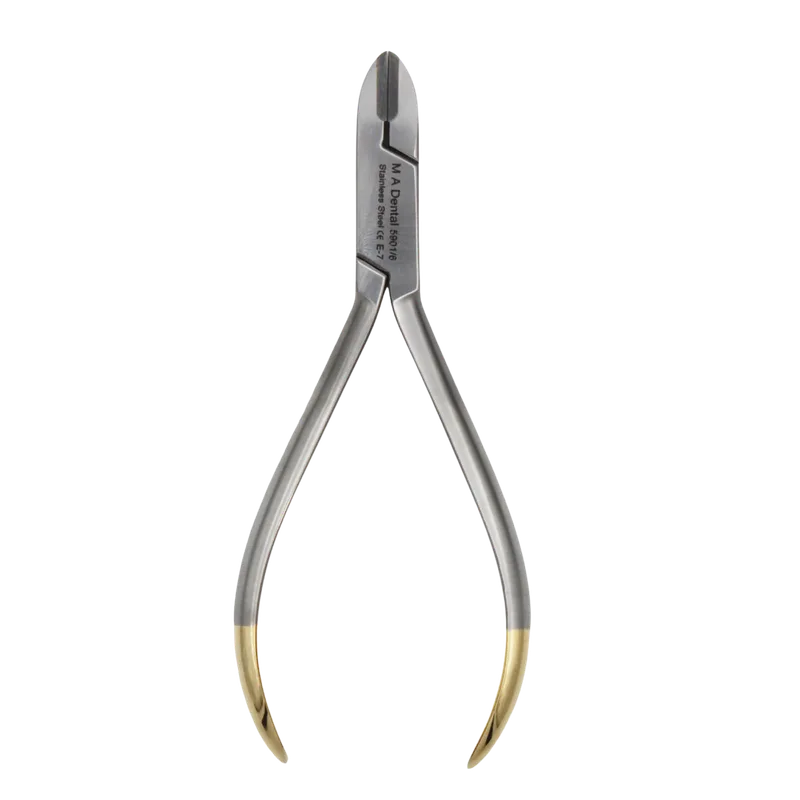
Hard Wire Cutter Plier - Tungsten Carbide, 0.71 mm / .028 in Wire
EI-0792
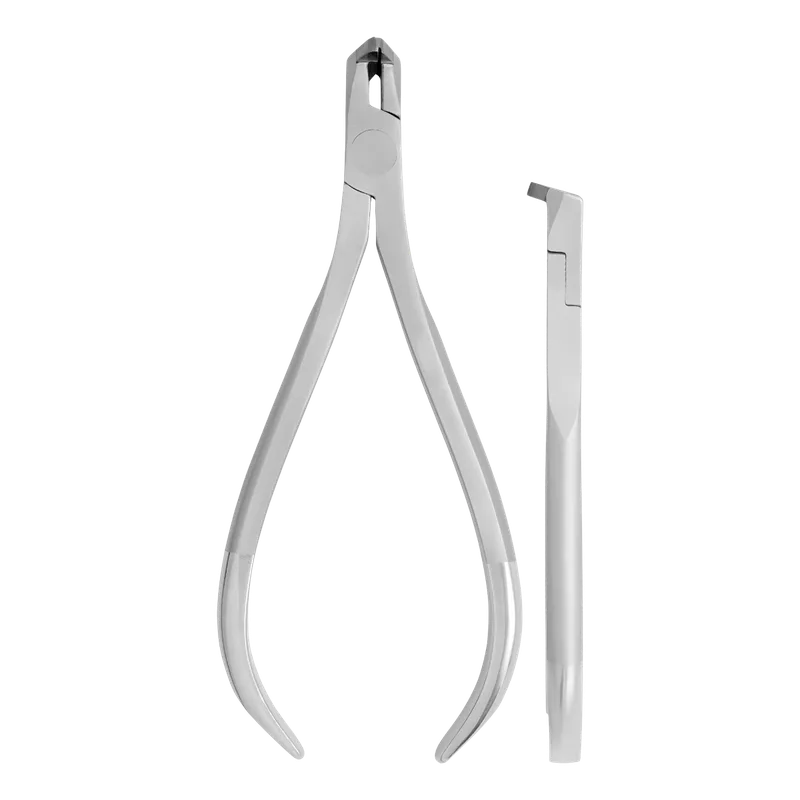
Mini Distal End Cutter with Safety Hold - Tungsten Carbide, 0.55 x 0.64 mm / .021 x .025 in Wire
EI-0793
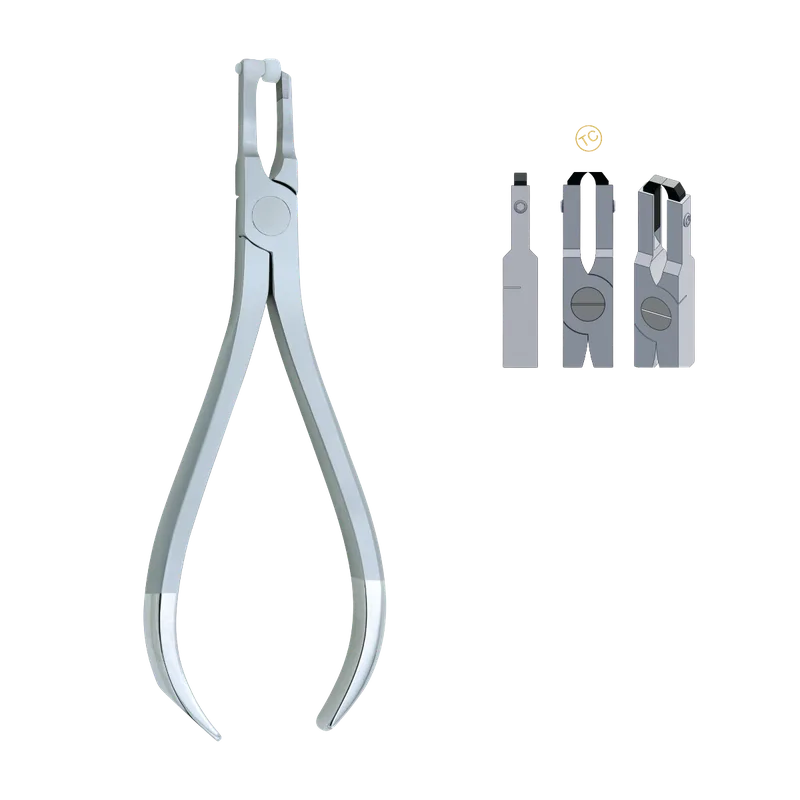
Direct Bond Remover - Wide Tungsten Carbide
EI-2584
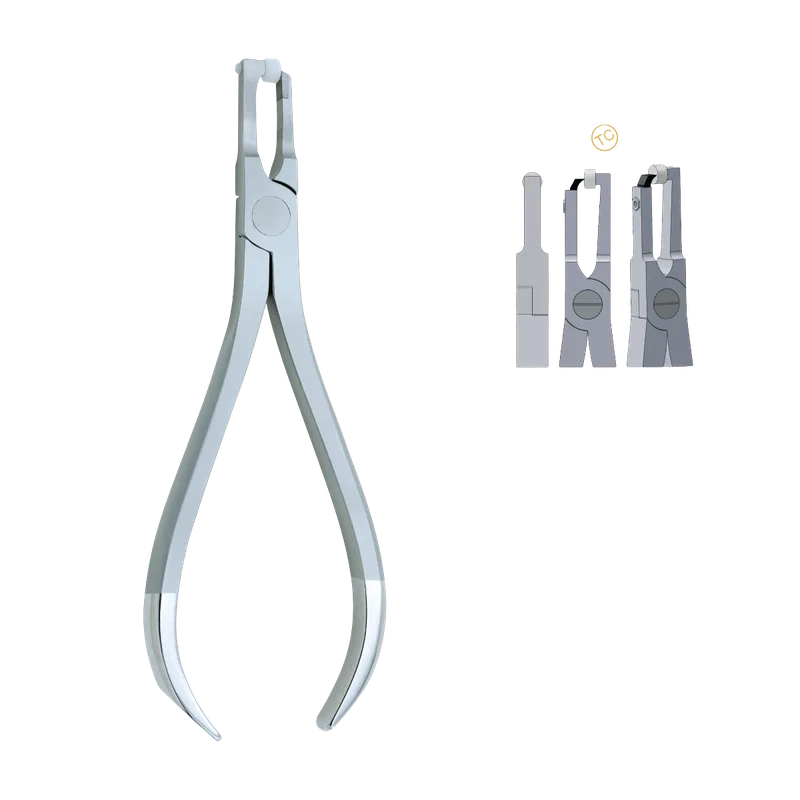
Direct Bond Bracket Remover - Wide with Replaceable Tip and Pad, Tungsten Carbide
EI-2585
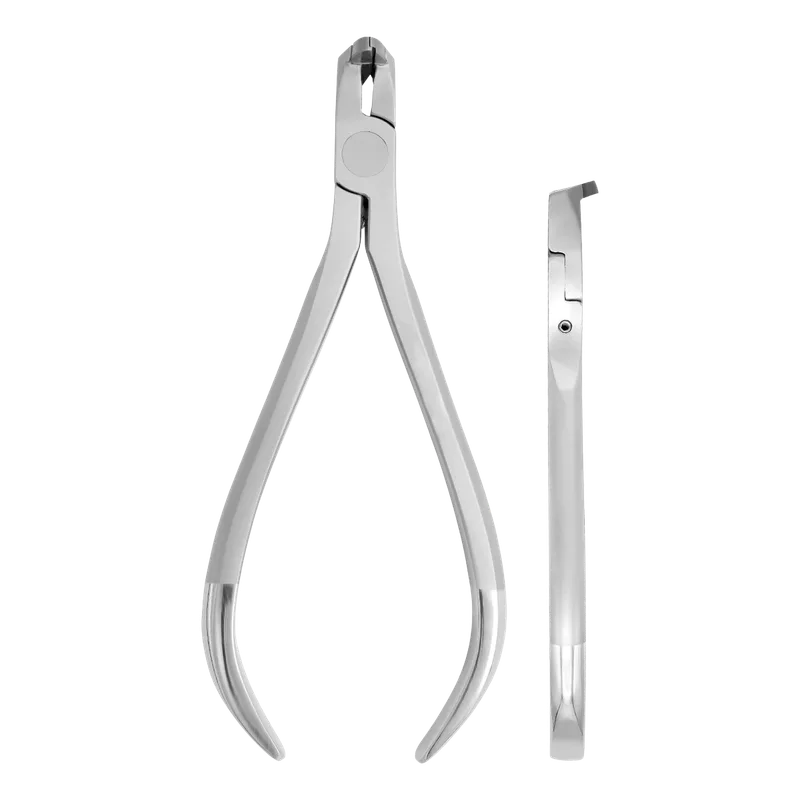
Distal End Cutter with Safety Hold - Side Screw, Tungsten Carbide
EI-2586
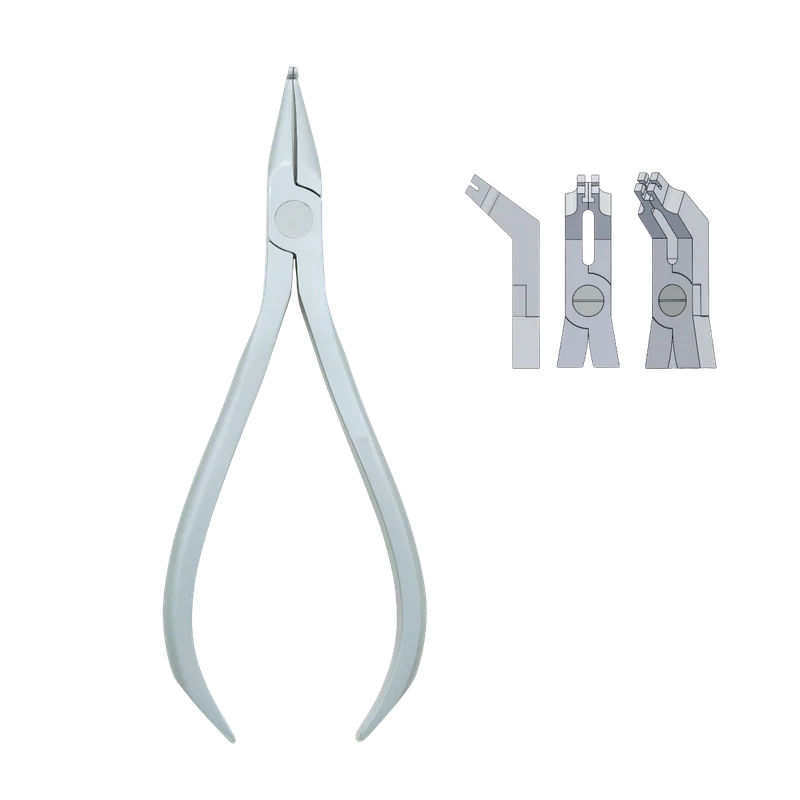
Debonding Pliers
EI-2612
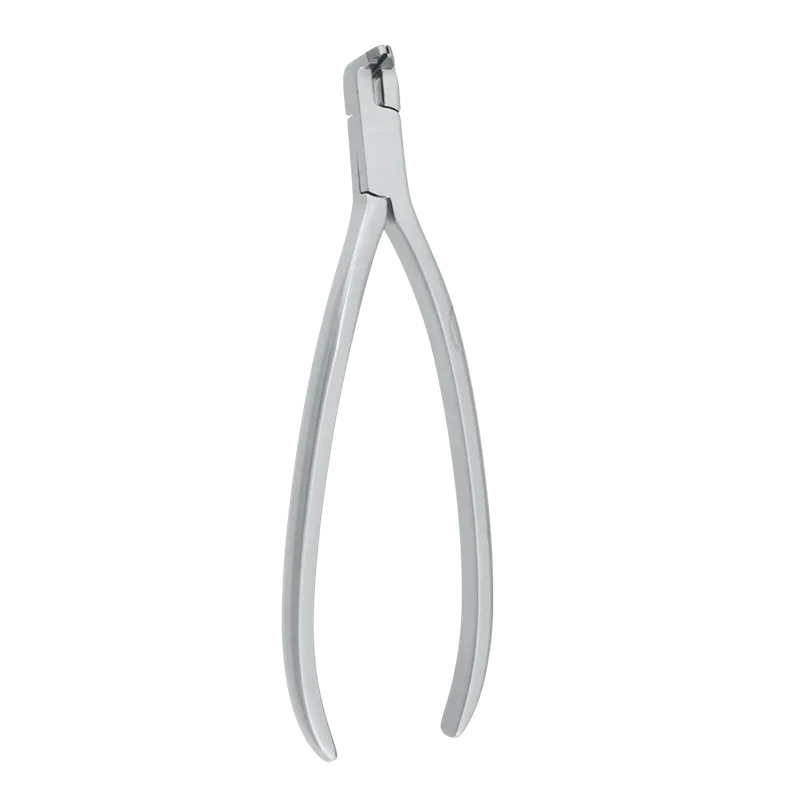
Distal End Cutter Long Handle (TC) .022" x .028"
EI-2647
Frequently asked questions
Are tungsten carbide orthodontic pliers worth the extra cost?
For high-use cutters and gripping pliers, generally yes: carbide holds its edge far longer, so the instrument needs less sharpening and fewer replacements. For bending pliers the benefit is smaller.
Can tungsten carbide pliers be sharpened?
Yes, but they need a sharpening service equipped for carbide. Many general instrument sharpening services only handle stainless steel.
Do carbide tips break?
Carbide is very hard but brittle, so tips can chip if the instrument is dropped or used on wire above its rating. Normal use within the rating is not a problem.
How can I tell if a plier has TC inserts?
Carbide inserts appear as a slightly darker, often grey, section brazed into the working tips. Many manufacturers also mark TC instruments with gold-coloured handles or a TC label.
Is solid carbide better than carbide inserts?
Orthodontic pliers almost always use carbide inserts brazed into a stainless steel body, which combines a hard working edge with a tough, corrosion-resistant frame.
References
- ISO 7153-1:2016 — Surgical instruments: materials, part 1: metals
- The effect of routine steam autoclaving on orthodontic pliers — PubMed
- Effect of steam versus dry-heat sterilization on the wear of orthodontic ligature-cutting pliers — PubMed
- Classification and uses of orthodontic pliers — Dentaltix clinical blog (supplier reference, used for terminology only)
I am a…