Best Distal End Cutters for Orthodontic Practice
Written & reviewed by the Equate Technical Team · Updated
For most practices the best distal end cutter is a safety-hold model with tungsten carbide inserts, rated to .022 x .028 in wire. The hold captures the cut tail so it cannot be swallowed or aspirated. Choose a mini head for tight molar tubes and a flush-cut with hold when comfort at the tube matters most.
Our ranked picks
1. Safety-hold distal end cutter with tungsten carbide inserts
The default choice. The hold grips the wire tail before the blades close, so the cut piece stays in the instrument. Pick a .022 x .028 in rating so one instrument covers round and rectangular finishing wires. Not the right choice if you only ever trim thin NiTi, where a dedicated fine cutter holds the end better.
See Distal End Cutter with Safety Hold 0.56 x 0.71 mm (.022″ x .028″ Wire, TC)2. Flush-cut distal end cutter with hold
Blades are ground to leave the wire end flat against the tube, which reduces the sharp stub that irritates cheek tissue. Choose it for patients with sensitive mucosa. Not ideal when you need to cut wire well away from the tube, because the head is built for close, level cuts.
See Flush Cut Distal End Cutter with Hold, TC .022″ x .028″3. Mini-head safety-hold cutter
A narrow head reaches second molar tubes and crowded posterior segments with less cheek retraction. It is rated lower (.021 x .025 in in the Equate mini model), so it is the wrong tool for heavy stainless finishing wires.
See Distal End Cutter with Safety Hold 0.56 x 0.71 mm (.022″ x .028″ Wire, TC)4. Long-handle or long-neck universal-cut cutter
Extra reach and leverage for patients with limited opening and for clinicians who want a longer working distance. It is bulkier to carry in a cassette and slower to turn in the mouth, so keep it as a second instrument rather than your only one.
See Distal End Cutter with Safety Hold 0.56 x 0.71 mm (.022″ x .028″ Wire, TC)5. Short-handle flush cutter without hold
Compact and light for lab work or bench trimming. Because it has no hold it is the wrong choice for intraoral distal cuts, where a captured tail is the safety standard.
See Flush Cutter Without Hold 45 Degree Angled 11.5cm
Why the hold matters more than the brand
The reason distal end cutters exist as a separate instrument is the cut tail. Clinical reviews of ingested orthodontic appliances, including a literature review indexed in PubMed Central, identify placing a new archwire and cutting its distal end as a moment of risk, and describe precautions such as inspecting the cutter tips for a trapped piece, wiping the tips with gauze after each cut and placing gauze distal to the wire. A case report in the orthodontic literature describes a swallowed archwire segment that lodged in the larynx and needed endoscopic retrieval.
That evidence supports the hazard and the precautions. We did not find a head-to-head clinical trial showing that a hold mechanism lowers ingestion rates, so treat the hold as a sensible design control and not a guarantee. A bench study by O'Neill (1996, British Journal of Orthodontics) tested fourteen distal end cutters and reported significant differences between them, mainly in how well each held the cut end, with thin nickel-titanium wire held less reliably than stainless steel. In practice, check the hold on the wire you use most before buying in bulk.
How we evaluated these picks
Review date: 21 October 2026. This is an editorial assessment by Equate, the publisher and manufacturer of the instruments listed here, so it is not independent. Rankings follow instrument design and published clinical and bench literature. We did not run laboratory cutting tests, and the order should not be read as a measured performance ranking.
Each variant was scored on four things: whether it captures the cut tail, the wire sizes it is rated for, access in the posterior segment, and how much it adds to a tray that already has a ligature cutter and a hard wire cutter. For the broader tray context see our guide to the best orthodontic pliers.
Selection criteria
| Criterion | What to look for | Why it matters |
|---|---|---|
| Hold mechanism | Spring or locking clip that grips before the blades meet | Keeps the tail inside the instrument |
| Wire rating | Stated maximum such as .022 x .028 in | A cutter used above its rating chips or springs open |
| Blade material | Tungsten carbide inserts for steel and NiTi | Holds an edge longer than plain stainless on hard wire |
| Head size | Mini versus standard | Access to second molars and short clinical crowns |
| Joint | Box joint with no side play | Blades that stay aligned cut cleanly instead of crushing |
| Handle length | 11.5 to 14.5 cm across the range | Reach and leverage versus tray space |
Which situation calls for which cutter
| Situation | Best-fit variant | Note |
|---|---|---|
| Routine archwire change, round or rectangular steel | Safety-hold with TC inserts, .022 x .028 in | Default instrument per operatory |
| Final cut flush at the molar tube | Flush-cut with hold | Leaves a smoother end for the cheek |
| Second molar tubes, small mouths | Mini-head safety-hold | Check the lower wire rating |
| Limited patient opening, long working distance | Long-handle or long-neck | Heavier to handle |
| Trimming wire on the bench | Short-handle flush cutter | Not for intraoral use |
| Cutting heavy wire, pins or ties | Not a distal end cutter | Use a hard wire cutter or ligature cutter |
Care and replacement
Clean and heat-sterilise instruments following the CDC 2003 dental infection control guideline and the manufacturer's instructions for use, and keep the joint lubricated with instrument milk. Wipe the hold clip free of wire debris before every sterilisation cycle, because debris in the clip can stop it gripping the tail.
Retire a cutter when the blades leave a burr, the cut end is crushed instead of sheared, or the jaws no longer meet along their length. Carbide inserts resist wear, but several supplier sources note they are more brittle than stainless steel, so avoid dropping or twisting them against heavy wire. Peer-reviewed data on carbide versus stainless edge life is limited, so we treat these as manufacturer-level claims.
The Equate difference
Equate lists 28 distal end cutter references across three subcategories: 25 safety-hold models (including 'Distal End Cutter with Safety Hold 0.56 x 0.71 mm (.022 x .028 in Wire, TC)' and a 'Mini Distal End Cutter with Safety Hold' for .021 x .025 in), 2 flush-cut cutters with hold and 1 short-handle flush cutter without hold.
Equate Best Distal End Cutters for Orthodontic Practice options
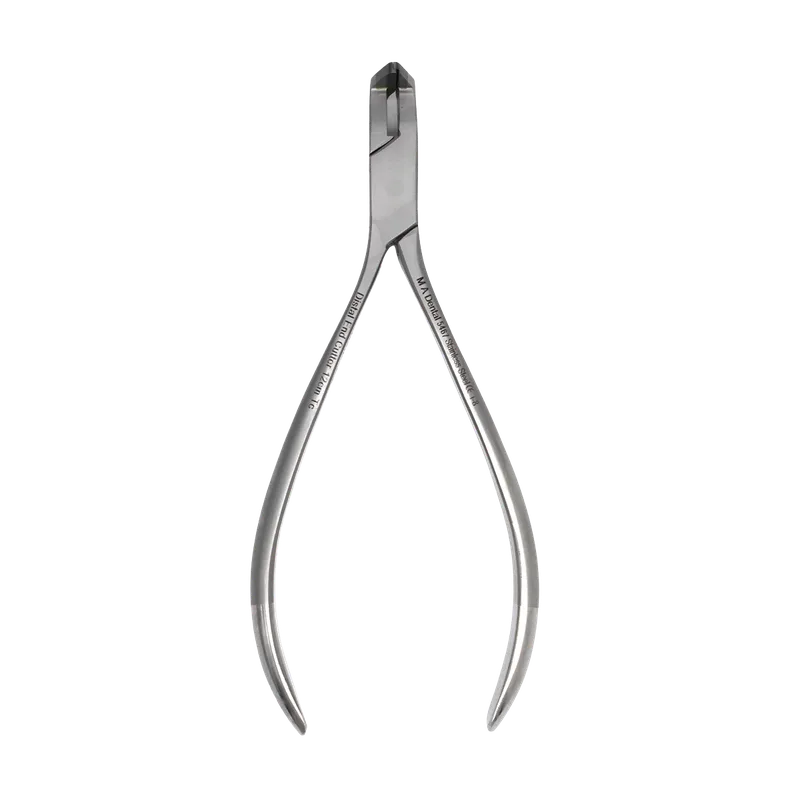
Distal End Cutter with Safety Hold 0.56 x 0.71 mm (.022″ x .028″ Wire, TC)
EI-0700
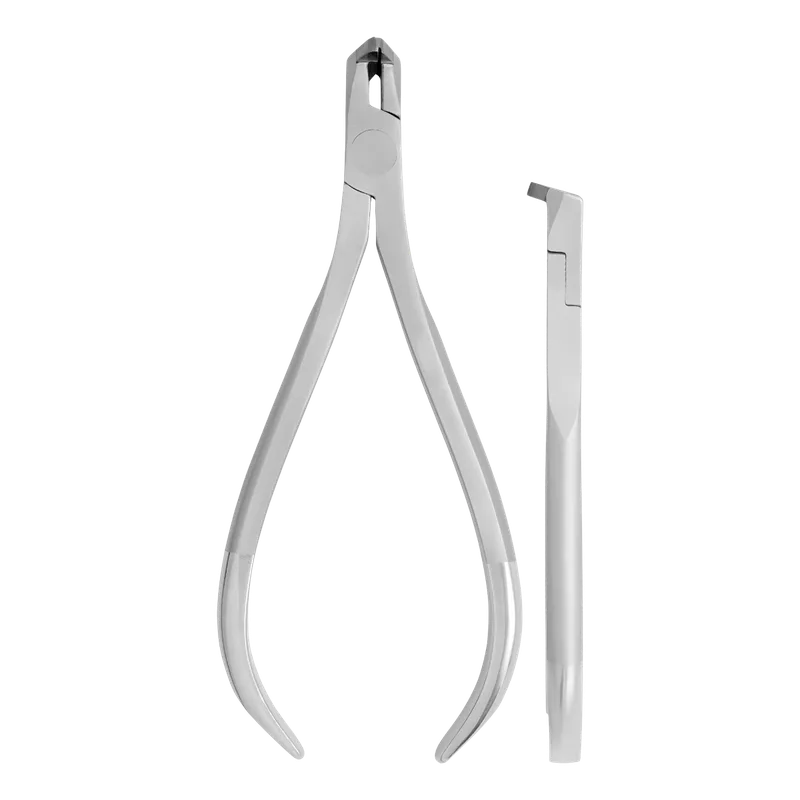
Mini Distal End Cutter with Safety Hold - Tungsten Carbide, 0.55 x 0.64 mm / .021 x .025 in Wire
EI-0793
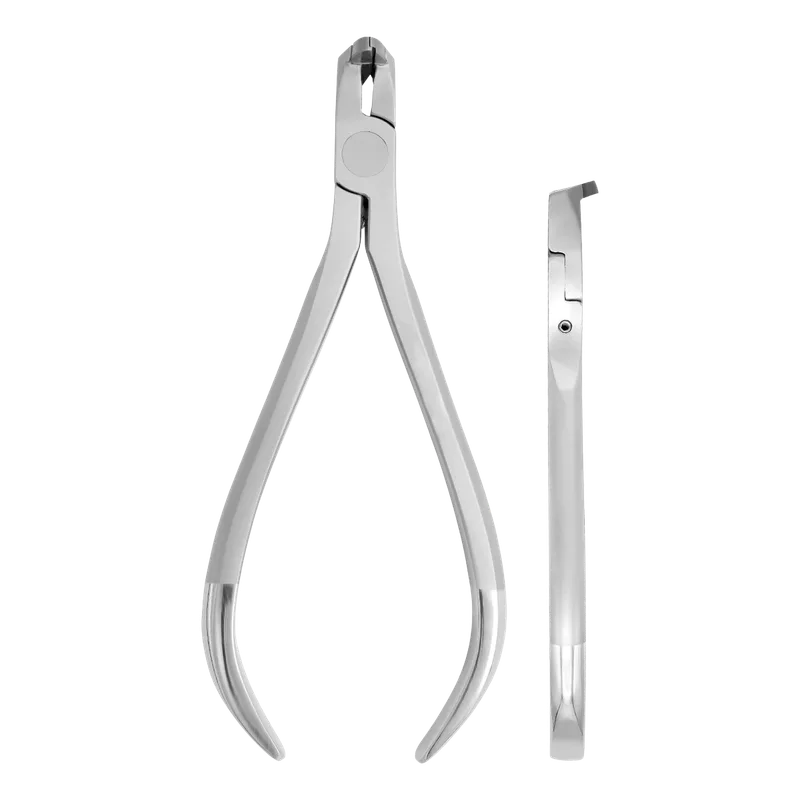
Distal End Cutter with Safety Hold - Side Screw, Tungsten Carbide
EI-2586
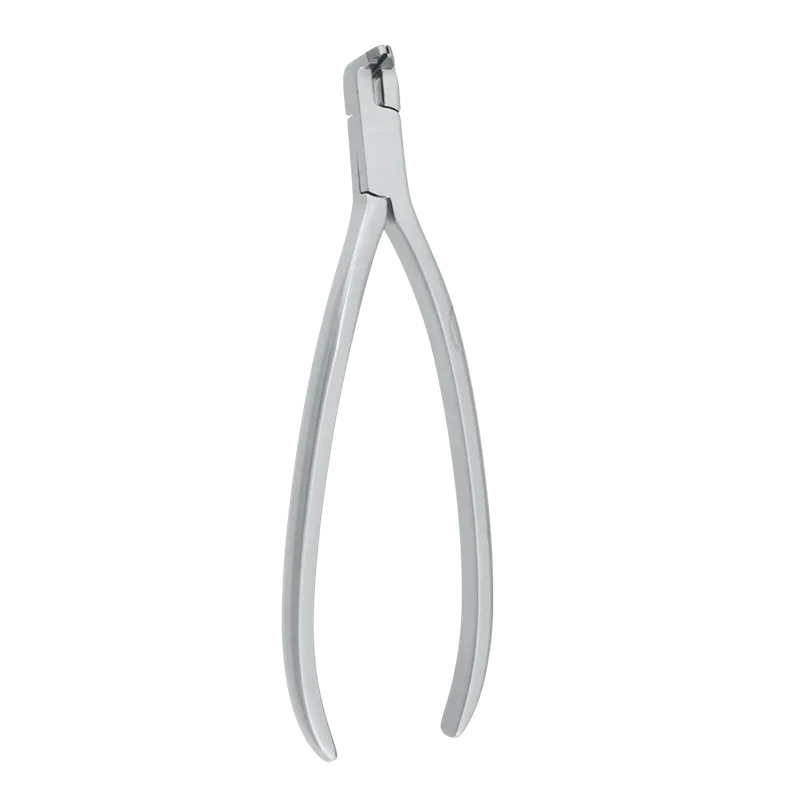
Distal End Cutter Long Handle (TC) .022" x .028"
EI-2647
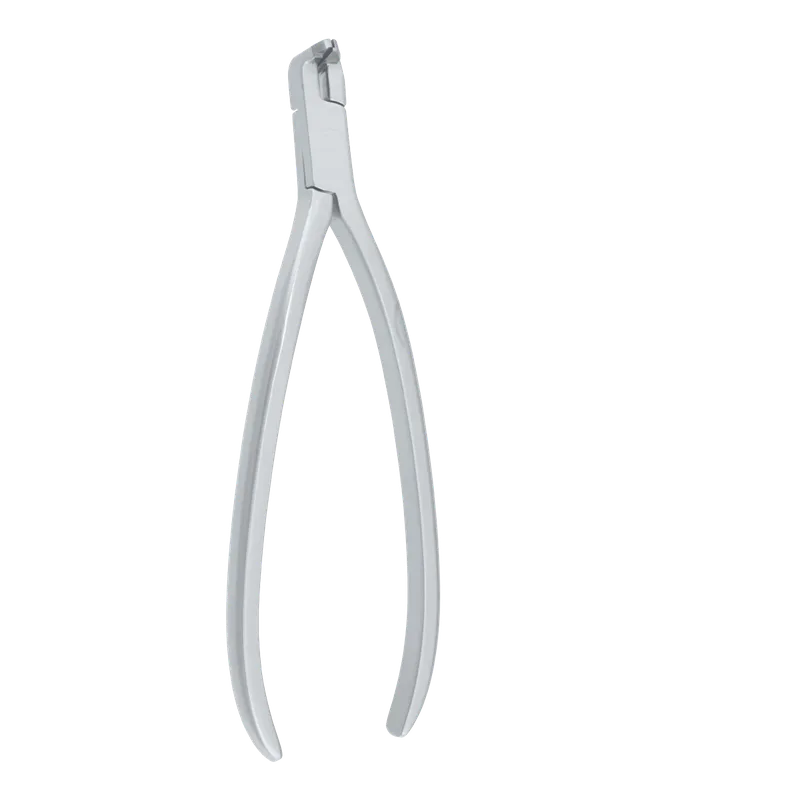
Distal End Cutter Long Handle Curved (TC) .022" x .028"
EI-2648
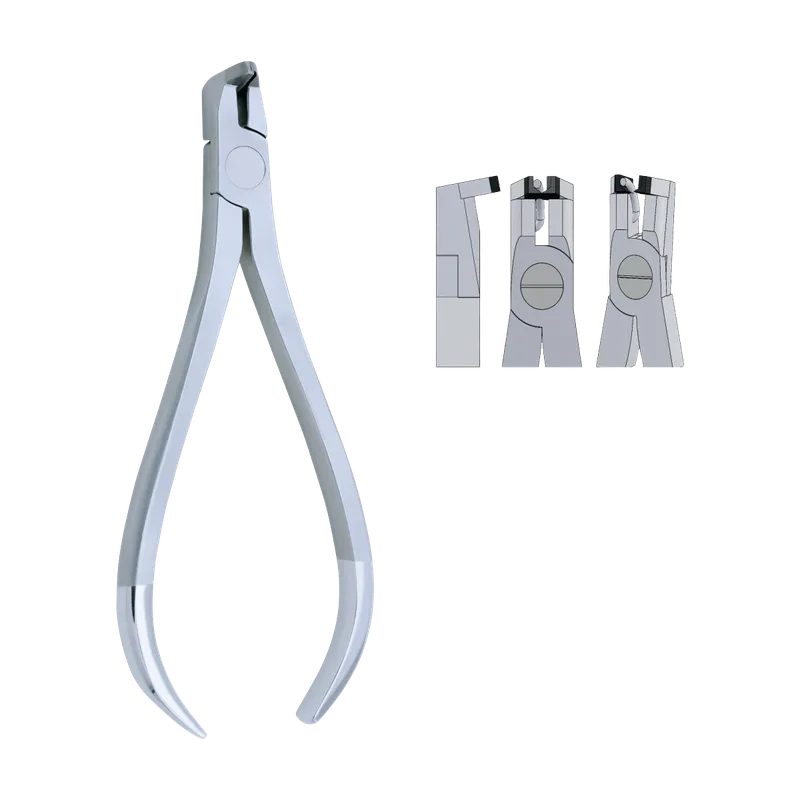
Flush Cut Distal End Cutter with Hold, TC .022″ x .028″
EI-2661
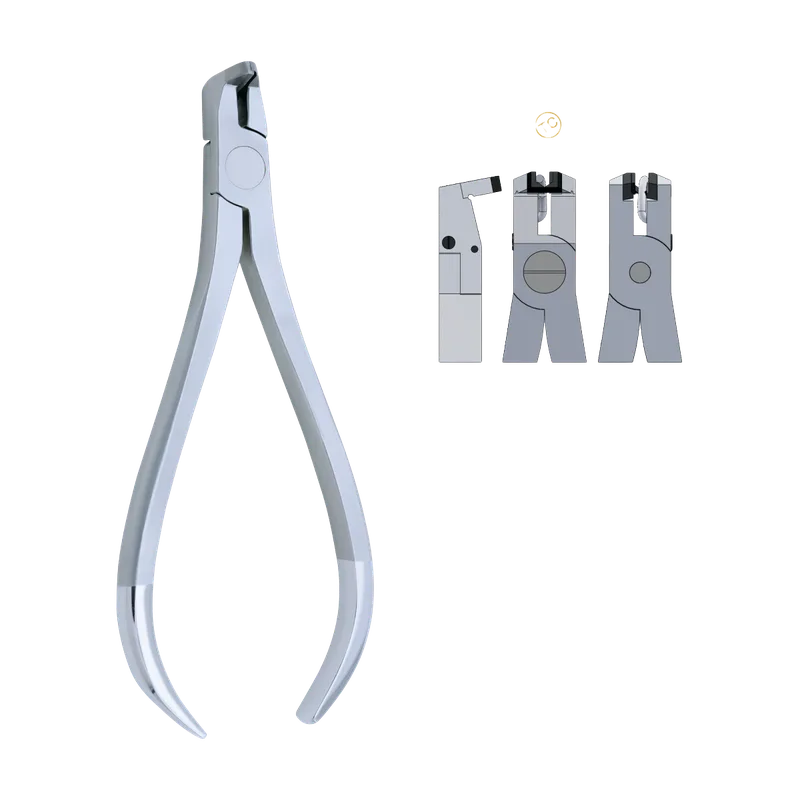
Flush Cut Distal End Cutter with Hold, TC .022″ x .028″
EI-2662
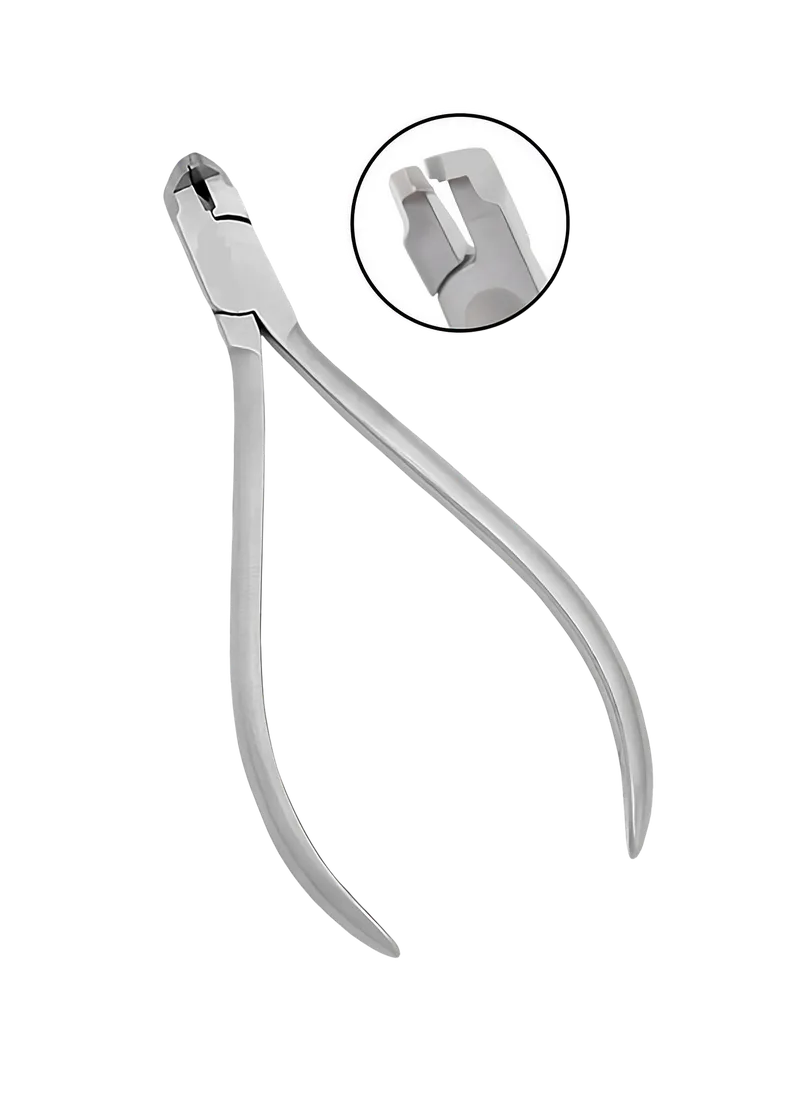
Distal End Cutter Universal Cut 12cm
EI-3129
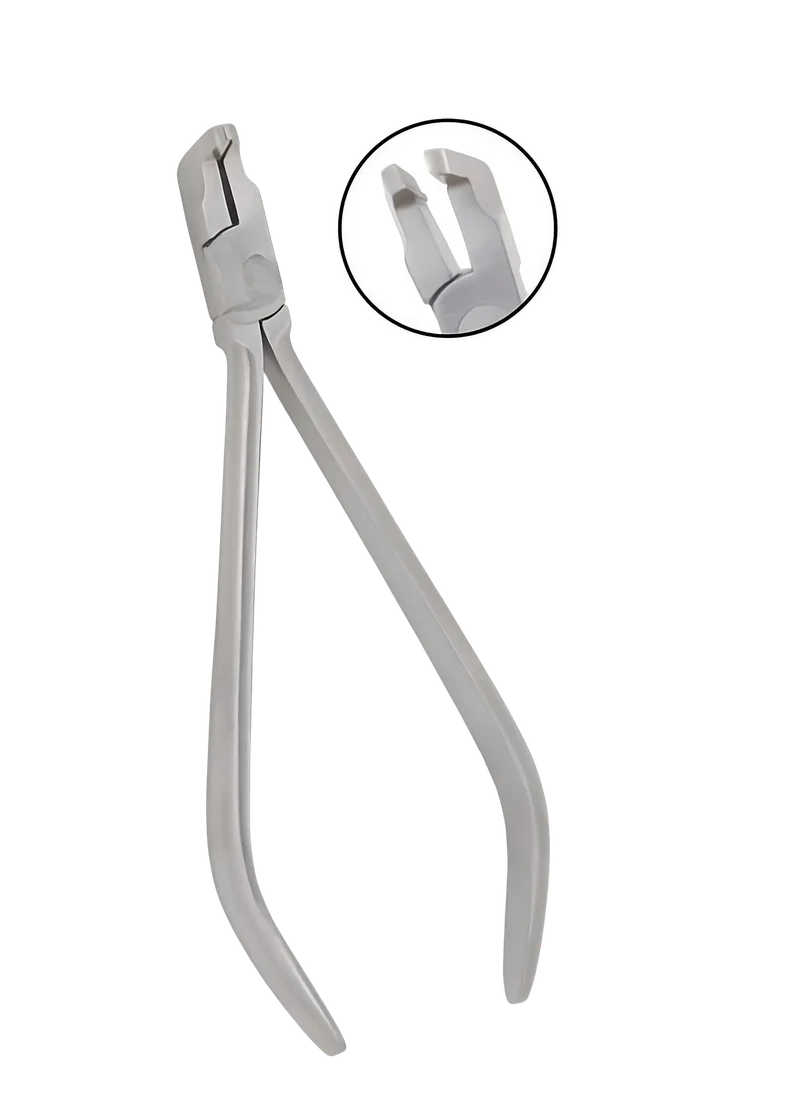
Distal End Cutter Universal Cut Long Handle 14cm
EI-3130
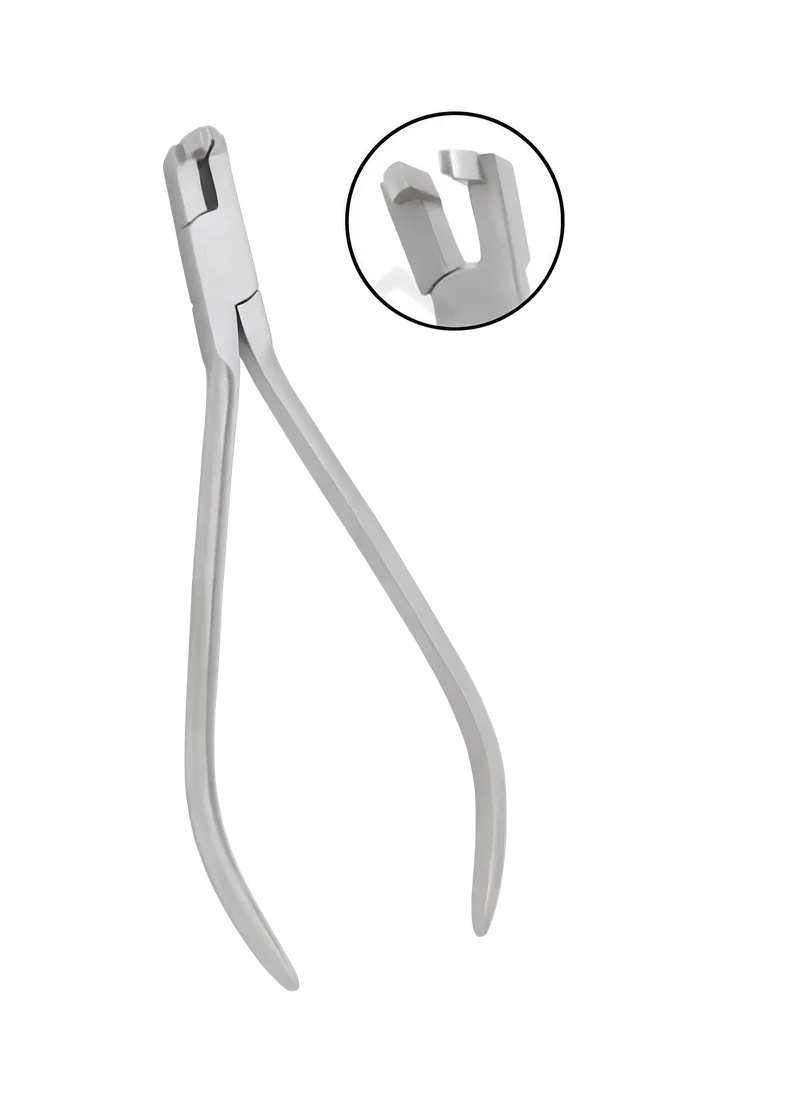
Distal End Cutter Universal Cut Long Slim Pattern 13cm
EI-3131
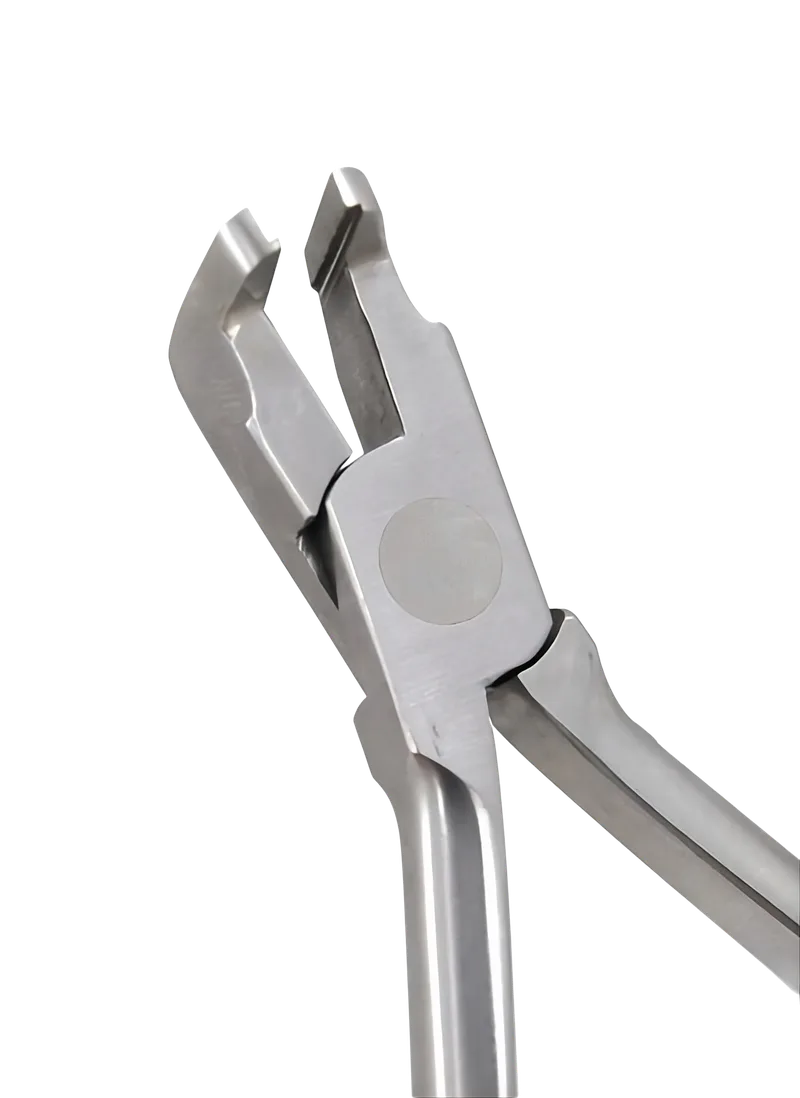
Distal End Cutter Universal Cut Long Neck 12cm
EI-3132
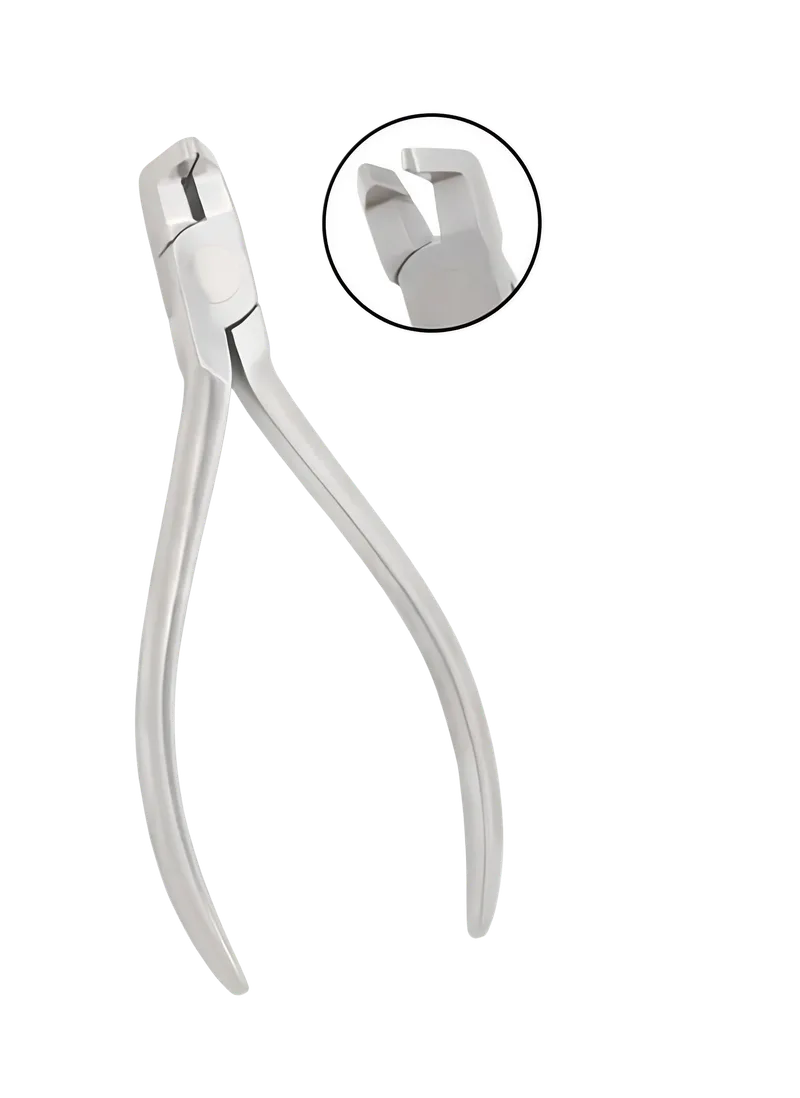
Distal End Cutter Universal Cut Small Neck 11.5cm
EI-3133
Frequently asked questions
What is a distal end cutter used for?
It trims the free end of an archwire where it extends past the last molar tube, and the safety-hold type grips the cut piece so it does not fall into the mouth.
What is the difference between a distal end cutter and a ligature cutter?
A distal end cutter has a larger, hold-equipped head for archwire tails. A pin and ligature cutter has fine tips for thin steel ties and pins. See our comparison of distal end cutters and pin and ligature cutters.
Can a distal end cutter cut stainless steel wire?
Yes, within its stated rating. Many are rated to .022 x .028 in. Heavier wire needs a hard wire cutter, and a dull cutter will crush rather than shear.
Should I buy a distal end cutter with or without a safety hold?
With a hold for any intraoral use. Cutters without a hold, such as short-handle flush cutters, suit bench work.
Can you cut NiTi archwire with a distal end cutter?
Only if the manufacturer rates it for NiTi. NiTi springs back after cutting and is harder on edges, so use a carbide-insert cutter and control the free end.
How often should distal end cutters be sharpened or replaced?
When cuts become crushed, burred or the hold no longer grips. Frequency depends on case volume and wire mix, so there is no fixed interval.
What happens if a patient swallows a piece of archwire?
It is a medical emergency; reviews recommend immediate medical assessment. Prevention steps include a hold-type cutter, gauze behind the wire and checking the cutter tips after every cut.
References
- Ingestion of orthodontic appliances: a literature review, PubMed Central
- O'Neill JRS. Distal end cutters: efficiency, safety and design. British Journal of Orthodontics, 1996
- Laryngeal impaction of an archwire segment after accidental ingestion during orthodontic adjustment, case report
- CDC, Guidelines for Infection Control in Dental Health-Care Settings, 2003 (MMWR 52 RR-17)
- ISO 13485:2016 Medical devices quality management systems
I am a…