Best Hard Wire Cutters for Orthodontic Practice
Written & reviewed by the Equate Technical Team · Updated
The best hard wire cutter for most practices is a 15-degree angled model with tungsten carbide inserts, rated for .028 in (0.71 mm) wire. Choose a compound-pivot or heavy-duty model for thick wire and appliance work, and a straight or long-beak head when you need access. Never use a hard wire cutter on a distal end tail intraorally unless it holds the piece.
Our ranked picks
1. 15-degree angled hard wire cutter, carbide inserts, .028 in
The standard working cutter: the angle clears the cheek and the carbide inserts keep their edge on stainless steel and NiTi. Right for archwire removal and trimming. Wrong for heavy appliance wire thicker than its rating, and for any intraoral cut where the fragment must be held.
See Hard Wire Cutter Plier 15 Degree Tungsten-Carbide Max 0.028 Inch Wire2. Compound-pivot hard wire cutter
A double pivot multiplies hand force, so heavier wire cuts with less effort. Choose it for clinicians with hand fatigue or frequent thick-wire work. Slower to close and bulkier, so not a replacement for a fine-tipped cutter.
See Hard Wire Cutter Plier 15 Degree Tungsten-Carbide Max 0.028 Inch Wire3. Heavy-duty multi-action cutter, 1.8 to 2.2 mm capacity
For lab and appliance work, such as cutting thick stainless wire for expanders and retainers. Wrong for chairside archwire changes: it is too large for the mouth.
See Heavy Duty Hard Wire Cutter with TC Inserts - 1.0 mm (.040 in) Wire4. Straight or long-beak hard wire cutter
A straight head cuts square across the wire, and a long beak reaches distal segments. Choose it for posterior access. The longer beak has less leverage, so it is wrong for heavy wire.
See Hard Wire Cutter Plier 15 Degree Tungsten-Carbide Max 0.028 Inch Wire5. Light wire cutter
Fine cutters rated to .012 in for ligature wire and soft wire. They are not a hard wire cutter and will be damaged by stainless archwire.
See Wire Cutter - Max 0.6 mm, 12 cm
What 'hard wire' means in practice
A hard wire cutter is rated for wire that would damage a light cutter: stainless steel archwires in larger sizes and appliance wire. The rating printed on the instrument, for example .028 in or 0.71 mm, is the working limit, and manufacturers' catalogues are the only source for it. An independent peer-reviewed cutting test of hard wire cutters on 0.016 and 0.018 in archwires is not available, to our knowledge, so the evidence here is indirect: the 1996 British Journal of Orthodontics study of distal end cutters by O'Neill found that cutters differed significantly and that cutter design affected how cleanly wire was cut and held, which is why design and rating matter.
Practitioner guidance from supplier technical pages says a dull cutter crushes stainless wire rather than shearing it, leaving a flattened, burred end, and that NiTi is harder on edges. Those are supplier statements, not trial results.
How we evaluated these picks
Dated 21 October 2026. Equate publishes this guide and manufactures cutters in this category, so it is a manufacturer's editorial view. We ranked by the capacity ratings Equate lists, how often each job occurs and how easily another instrument could stand in. No lab cutting test was run. The ranking is not an independent test and should not be treated as one.
Capacity and head chooser
| Wire or job | Head and capacity | Equate example |
|---|---|---|
| Stainless archwire up to .028 in | 15 degree angled, carbide | Hard Wire Cutter Plier 15 Degree Tungsten-Carbide, max 0.028 in |
| Same, but square cut and reach | Straight, 12 cm or long beak | Hard Wire Cutter - Straight, Long Beak 12 cm |
| Thicker wire, less hand force | Compound pivot, 15 cm | Hard Wire Cutter 15 cm with Compound Pivot |
| Expander and retainer wire in the lab | Heavy duty, up to 2.2 mm | Hard Wire Cutter (TC) 2.2 mm capacity, 22 cm |
| Ligature wire and soft wire | Light cutter, .012 in | Soft Wire Cutter Pliers 0.30 mm |
Choosing among hard wire cutters, step by step
- Start from your largest working wire. Buy a cutter rated above it, not at it.
- Decide whether archwires are cut chairside or at the bench. Chairside favours a 12 cm angled head, the bench favours leverage.
- Pick carbide inserts if you cut NiTi often; stainless-only bench use may not justify them.
- Check there is no gap when the blades close and no side play in the joint.
- Keep a distal end cutter for intraoral tail cuts; the hold, not the strength, matters there.
Care and failure signs
Cut only within the rating. Twisting wire in the blades or cutting hardened material can chip carbide inserts, which supplier sources describe as brittle. Wipe, lubricate the joint and heat-sterilise to the instructions for use; the CDC 2003 guideline sets out the processing steps for dental instruments.
Signs that a cutter needs service: wire flattens before cutting, burrs on the cut end, blades do not meet at the tips, and hand force rises.
The Equate difference
Equate lists 13 hard wire cutters (for example 'Hard Wire Cutter Plier 15 Degree Tungsten-Carbide Max 0.028 Inch Wire' and a 15 cm compound-pivot model), 4 heavy duty cutters with capacities of 1.0 mm to 2.2 mm, and 10 light wire cutters rated to .012 in.
Equate Best Hard Wire Cutters for Orthodontic Practice options
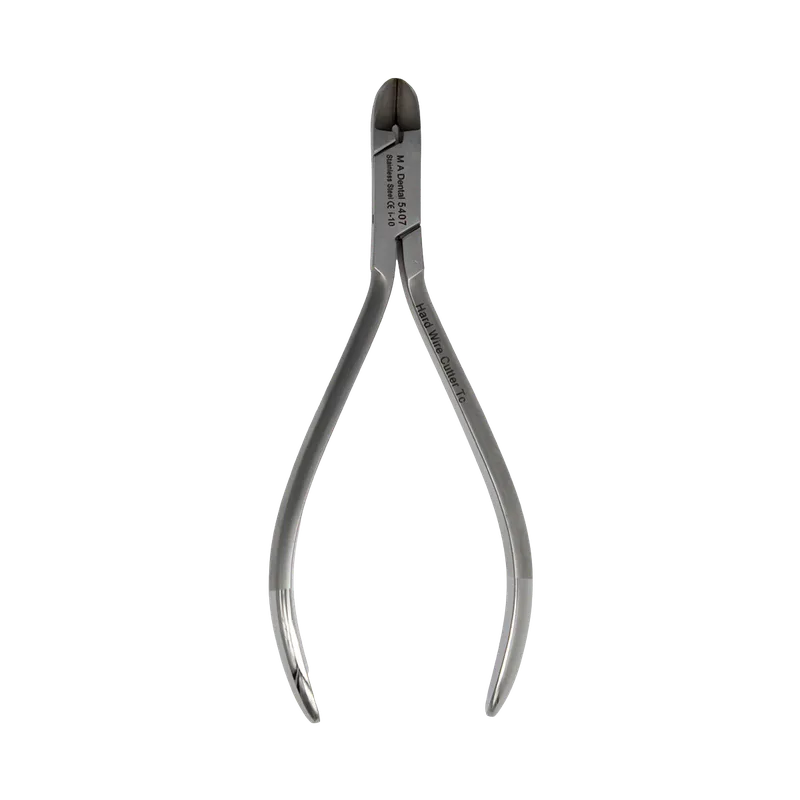
Hard Wire Cutter Plier 15 Degree Tungsten-Carbide Max 0.028 Inch Wire
EI-0681
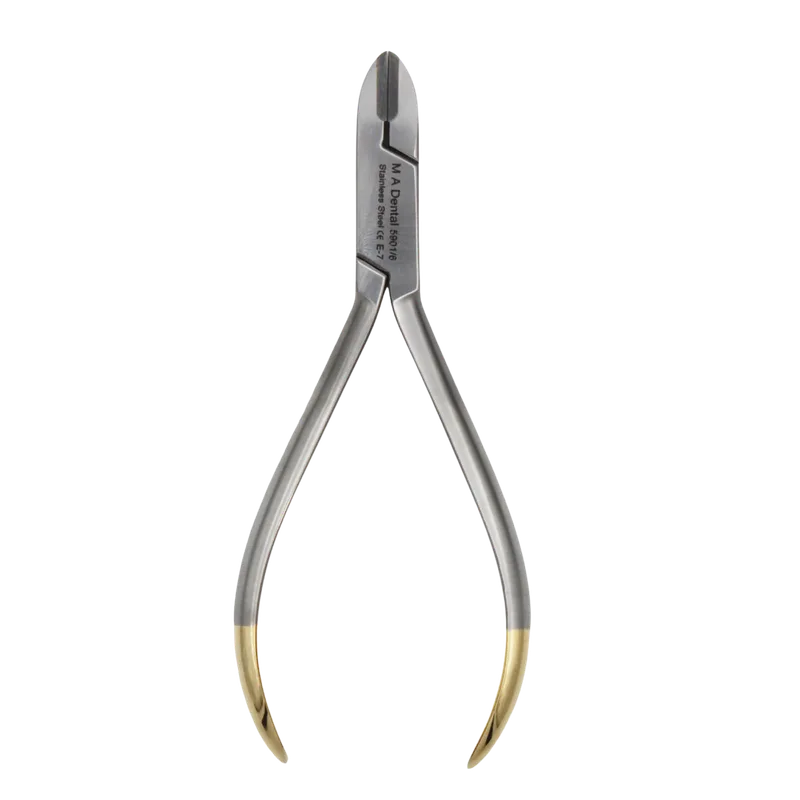
Hard Wire Cutter Plier - Tungsten Carbide, 0.71 mm / .028 in Wire
EI-0792
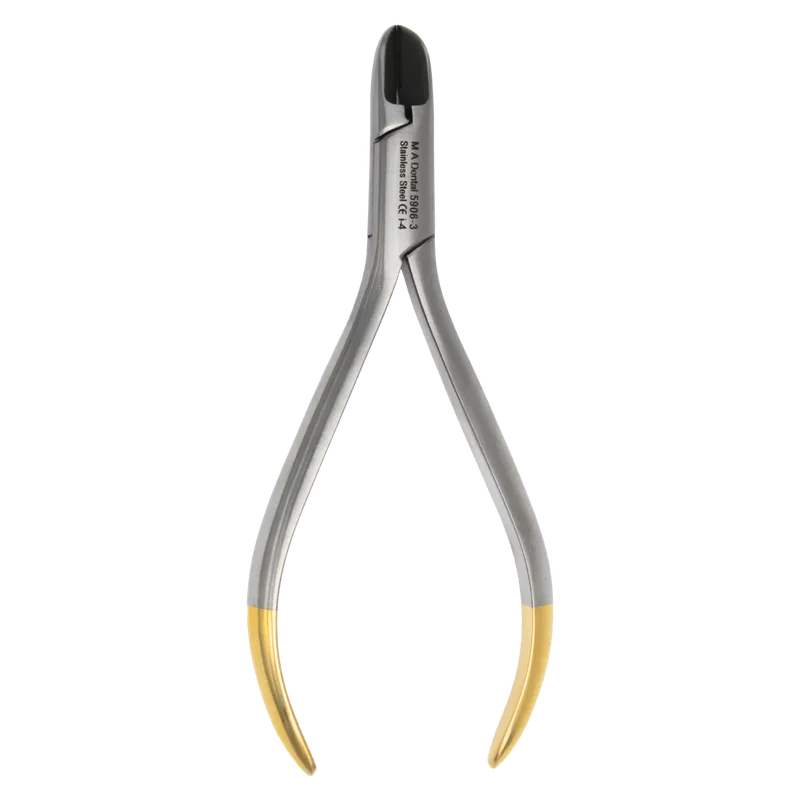
Wire Cutter - Max 0.6 mm, 12 cm
EI-0799
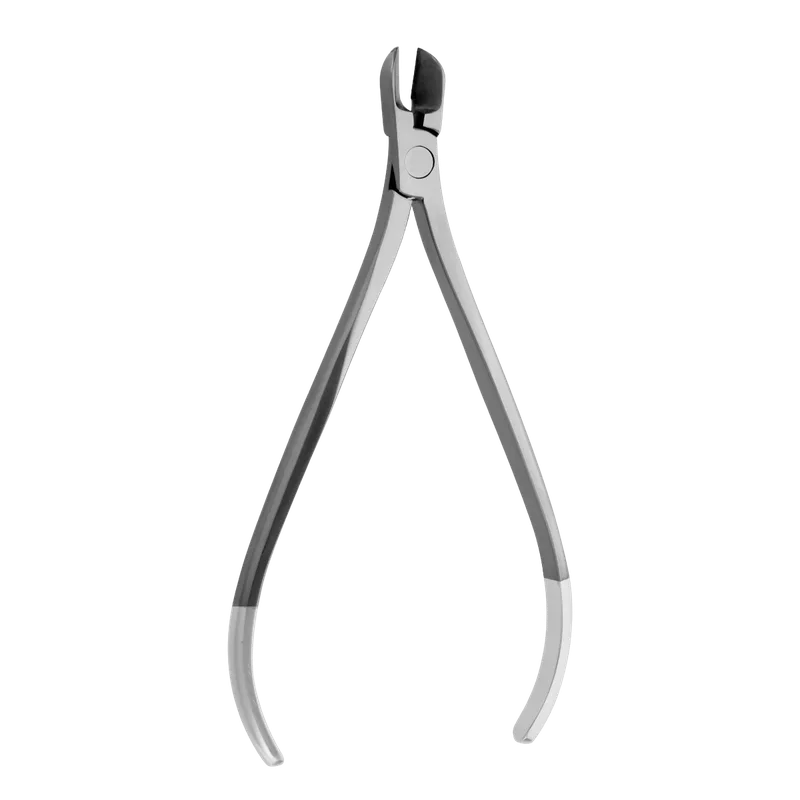
Wire Cutter 15°, Tungsten Carbide, Long-Handle Plier - Wire up to 0.30 mm (.012")
EI-0800
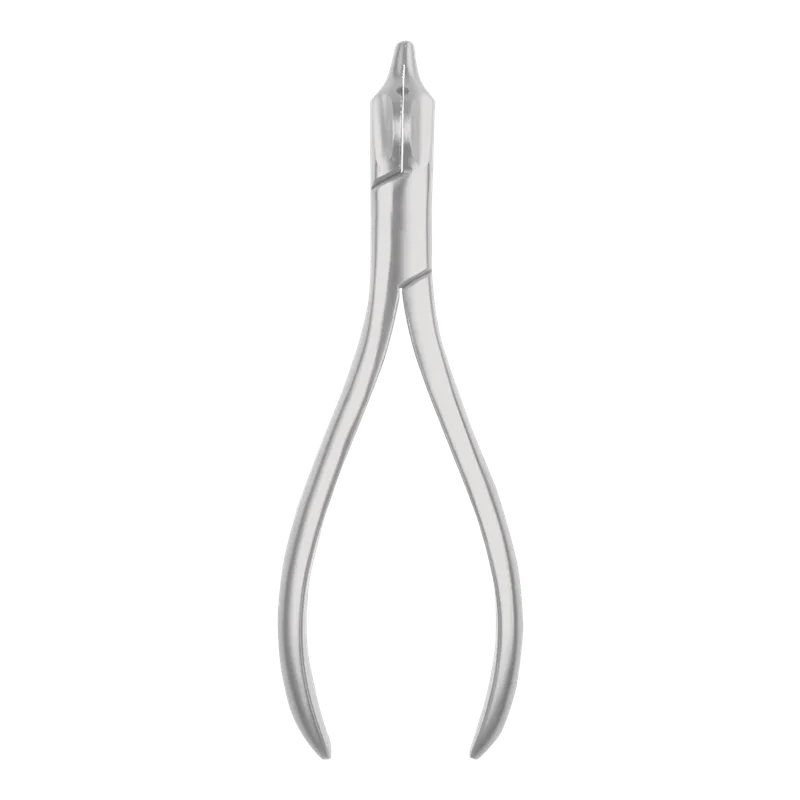
Dolphin Universal Pliers - Bend to 0.9 mm, Cut to 0.7 mm
EI-2622
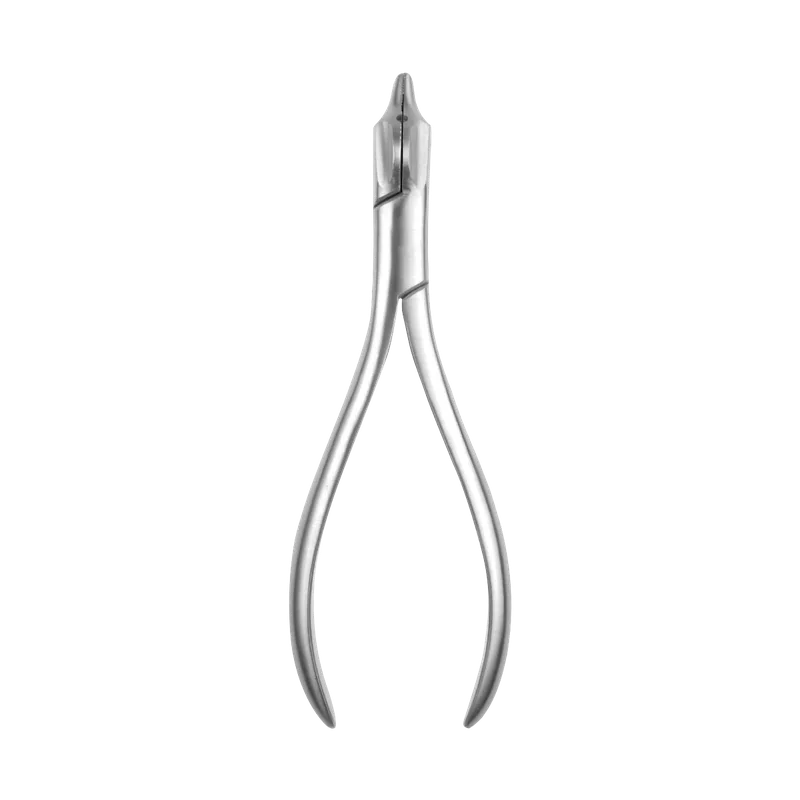
Universal Pliers - Bend to 0.9 mm, Cut to 0.7 mm
EI-2623
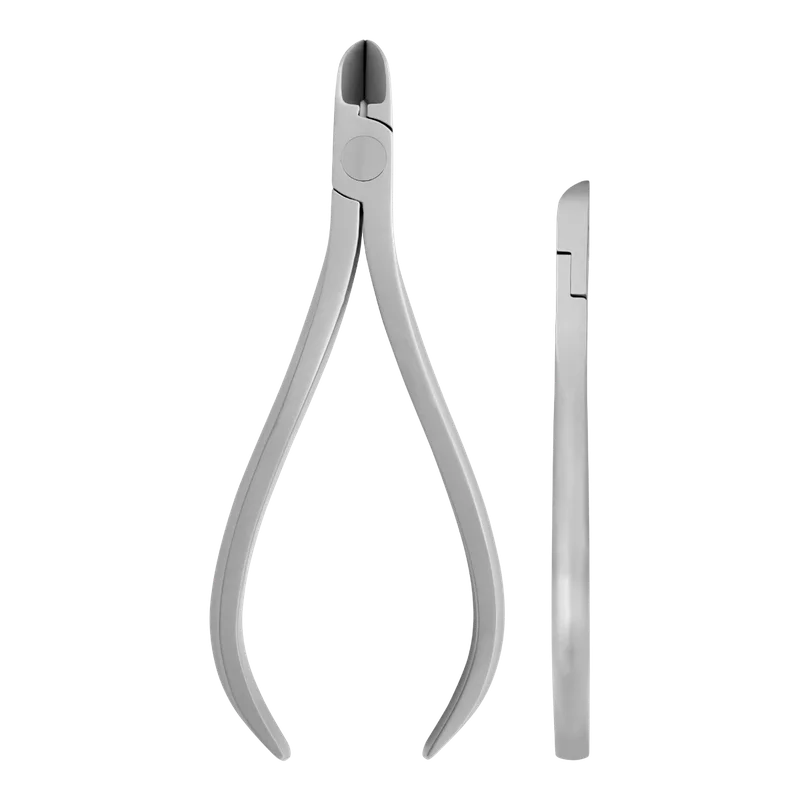
Soft Wire Cutter Pliers - 0.30 mm (.012 in) Wire
EI-2626
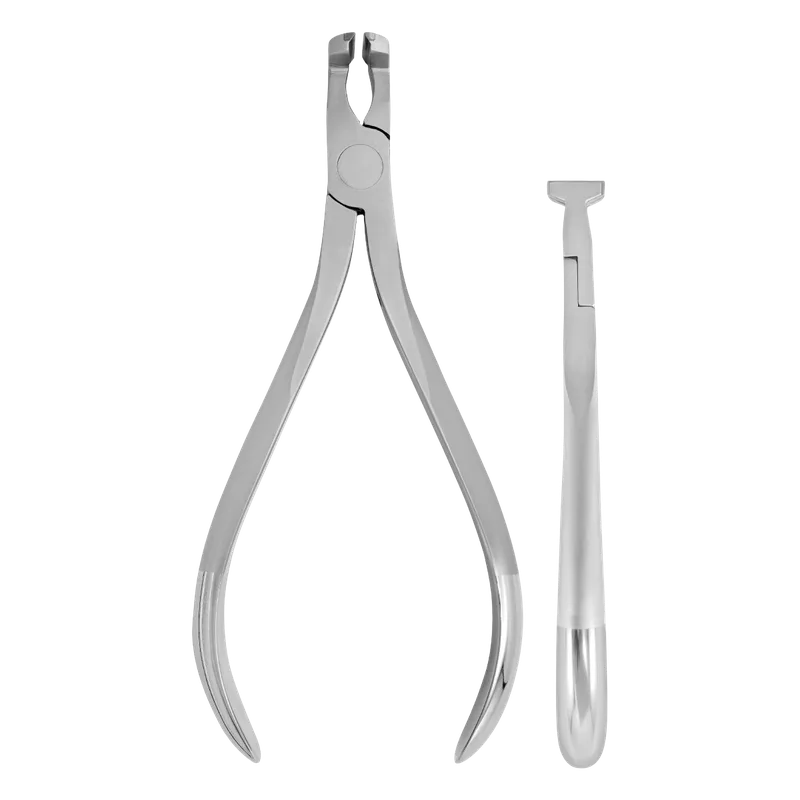
Heavy Duty Hard Wire Cutter with TC Inserts - 1.0 mm (.040 in) Wire
EI-2630
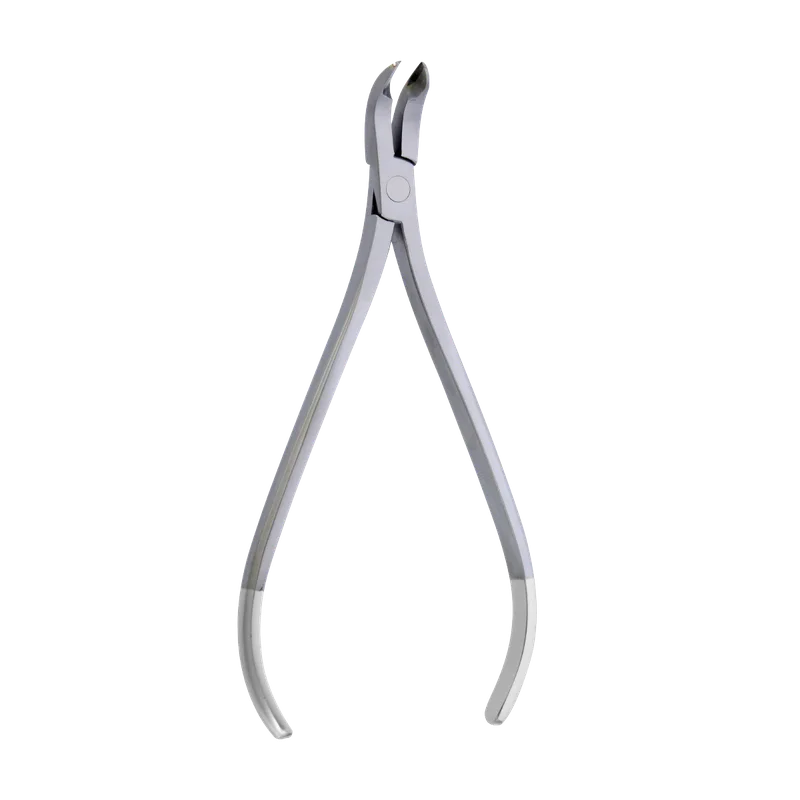
Wire Cutter 60°, Tungsten Carbide, Long-Handle Plier - Wire up to 0.30 mm (.012")
EI-2649
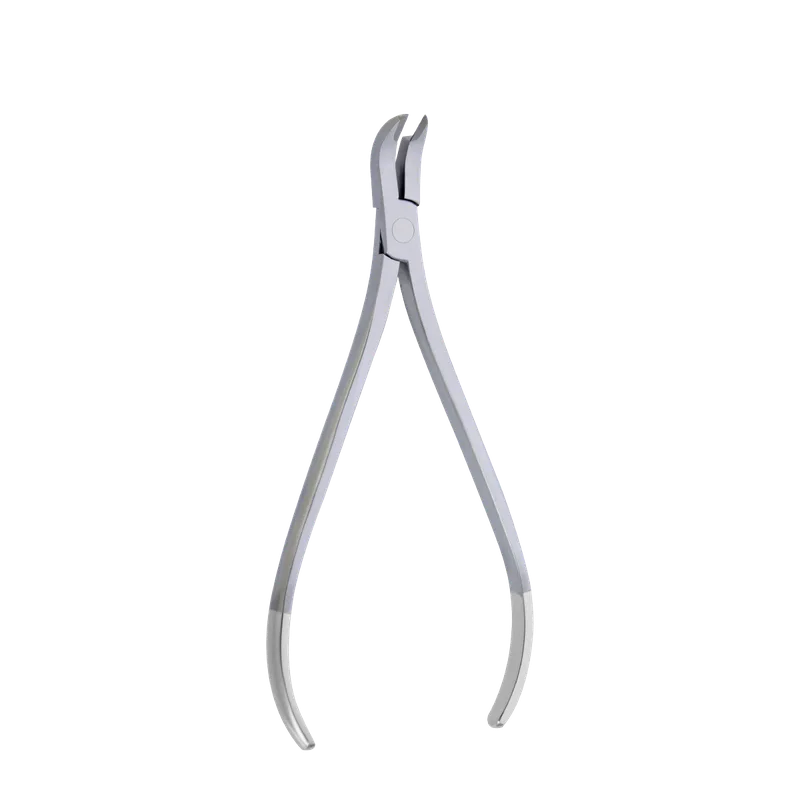
Wire Cutter 60°, Tungsten Carbide, Long-Handle Plier - Wire up to 0.30 mm (.012")
EI-2650
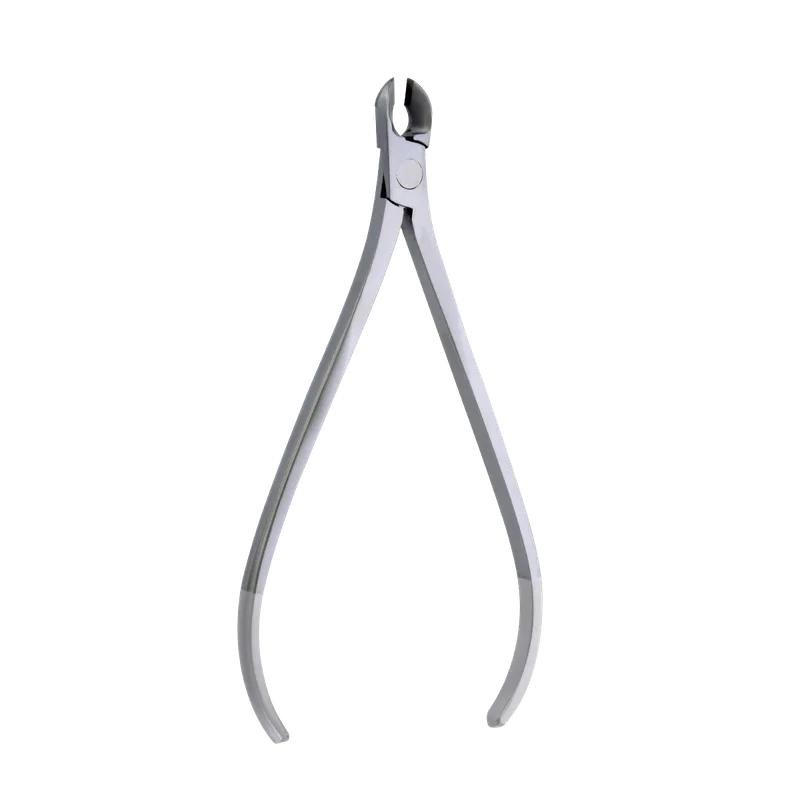
Micro Wire Cutter Tungsten Carbide Long Handle .012"
EI-2651
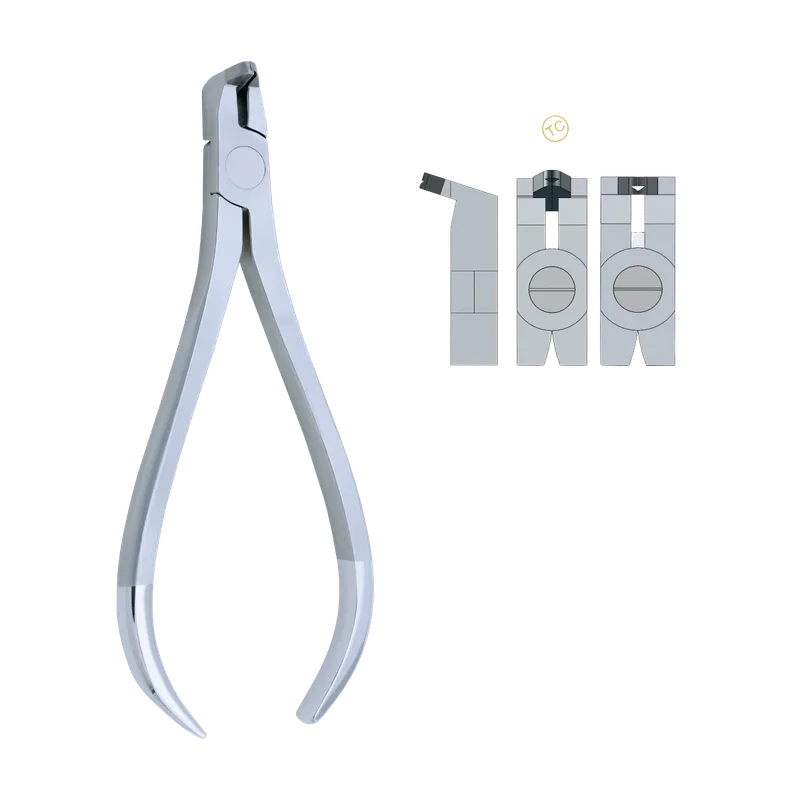
Flush Cut with Hold Plier (TC) .016" x .021"
EI-2663
Frequently asked questions
What is a hard wire cutter used for in orthodontics?
Cutting stainless steel archwires and heavier wire that would damage a light wire cutter, usually after removal or at the bench.
What is the difference between a hard wire cutter and a distal end cutter?
A distal end cutter holds the cut tail for intraoral use. A hard wire cutter is built for strength and is not designed to hold the piece. See our distal end cutter guide.
Can I cut NiTi with a hard wire cutter?
Only a cutter with carbide inserts rated for it. NiTi dulls ordinary blades and springs back after cutting.
What does a 15 degree head do?
The angle lifts the handle away from the cheek and gives a view of the cut.
How do I know the maximum wire a cutter can cut?
Read the rating printed on the instrument or the catalogue entry, such as .028 in or 0.71 mm, and stay below it.
Are tungsten carbide wire cutters better?
They hold an edge longer on hard wire but are more brittle. Read our comparison of tungsten carbide and stainless steel pliers.
How do I keep a wire cutter sharp?
Cut within capacity, keep the joint lubricated and have the blades sharpened by a service when cuts become crushed.
References
- O'Neill JRS. Distal end cutters: efficiency, safety and design. British Journal of Orthodontics, 1996
- Orthodontic wire cutting and bending supplier technical guide, Rhein Dental, 2025
- CDC, Guidelines for Infection Control in Dental Health-Care Settings, 2003 (MMWR 52 RR-17)
- ISO 13485:2016 Medical devices quality management systems
I am a…