Dental and Oral Surgery Retractors
Written by the Equate Instruments Technical Team · Reviewed by the Medical & Dental Board, Equate Instruments · Updated ·
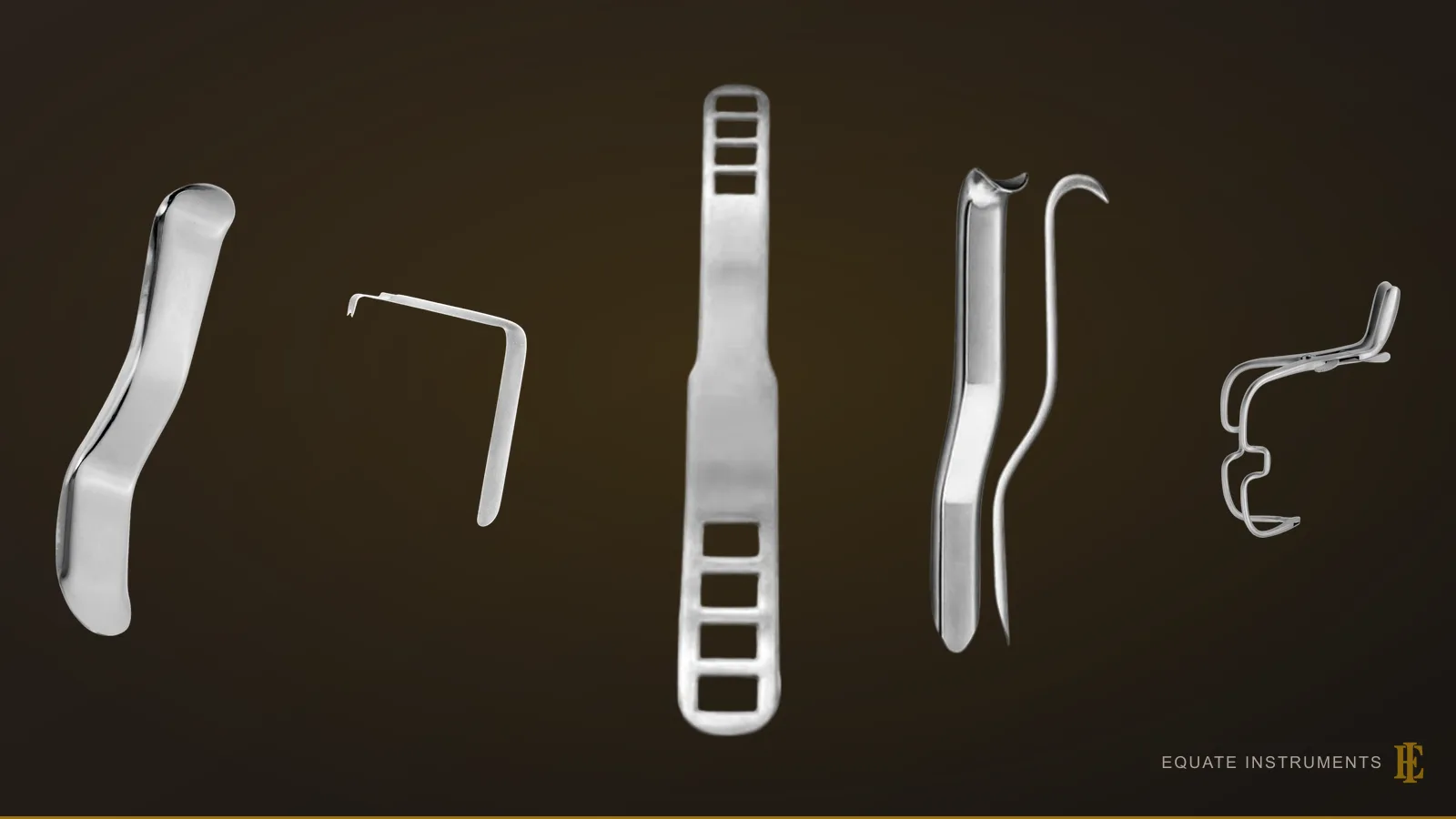
A dental retractor is a hand instrument that holds the cheek, lips, tongue or a surgical flap away from the area being treated. It gives the clinician a clear view and access, and protects soft tissue from burs and blades. Oral surgery uses flap retractors such as the Minnesota and Austin, tongue retractors, and mouth gags that hold the jaws open.
Key points
- Retractors give access and vision, and protect the cheek, tongue and flap from injury.
- The Minnesota retracts the cheek and a flap together; the Austin is a narrow, right-angled retractor for small fields.
- For bonding and intraoral photography, use an orthodontic cheek retractor instead.
What is a dental retractor used for?
Every surgical procedure in the mouth competes with soft tissue for space. Retractors hold the cheek, lips and tongue back, and hold a reflected mucoperiosteal flap away from the bone, so the surgeon can see the field, the assistant can keep it clear and the tissue isn't caught by a bur or blade. In Contemporary Oral and Maxillofacial Surgery, James Hupp, Edward Ellis and Myron Tucker include the Austin and Minnesota retractors among the basic instruments for retracting the cheek and flap, along with tongue retractors and mouth props for keeping the mouth open.
The flap is usually raised with a periosteal elevator, and the retractor then holds it with gentle, steady pressure against bone rather than on the flap itself, which limits bruising and swelling.
What types of dental retractor are there?
- Minnesota retractor: a curved, offset blade that retracts the cheek and a flap at the same time; a standard retractor for third molar surgery.
- Austin retractor: a narrow, right-angled blade on a handle, for holding a flap or the cheek in a confined area.
- Langenbeck retractor: a flat, right-angled blade on a long handle, named after the 19th-century German surgeon Bernhard von Langenbeck; used for deeper access.
- Hook and rake retractors (such as the Senn-Miller): small hooks or prongs that hold the edge of a flap or a small incision.
- Tongue retractors and depressors (such as the Brunings and Cawood-Minnesota): broad blades that hold the tongue down and away from the field.
- Lip retractors: wire-frame or bladed instruments, such as the Desmarres, that hold the lip away from anterior surgery.
- Self-retaining retractors (Weitlaner): a ratchet holds the prongs open and frees the assistant's hands.
- Mouth gags (Jennings, Denhardt, Roser-König, Molt): ratcheted or sprung frames that hold the jaws open under sedation or general anaesthesia.
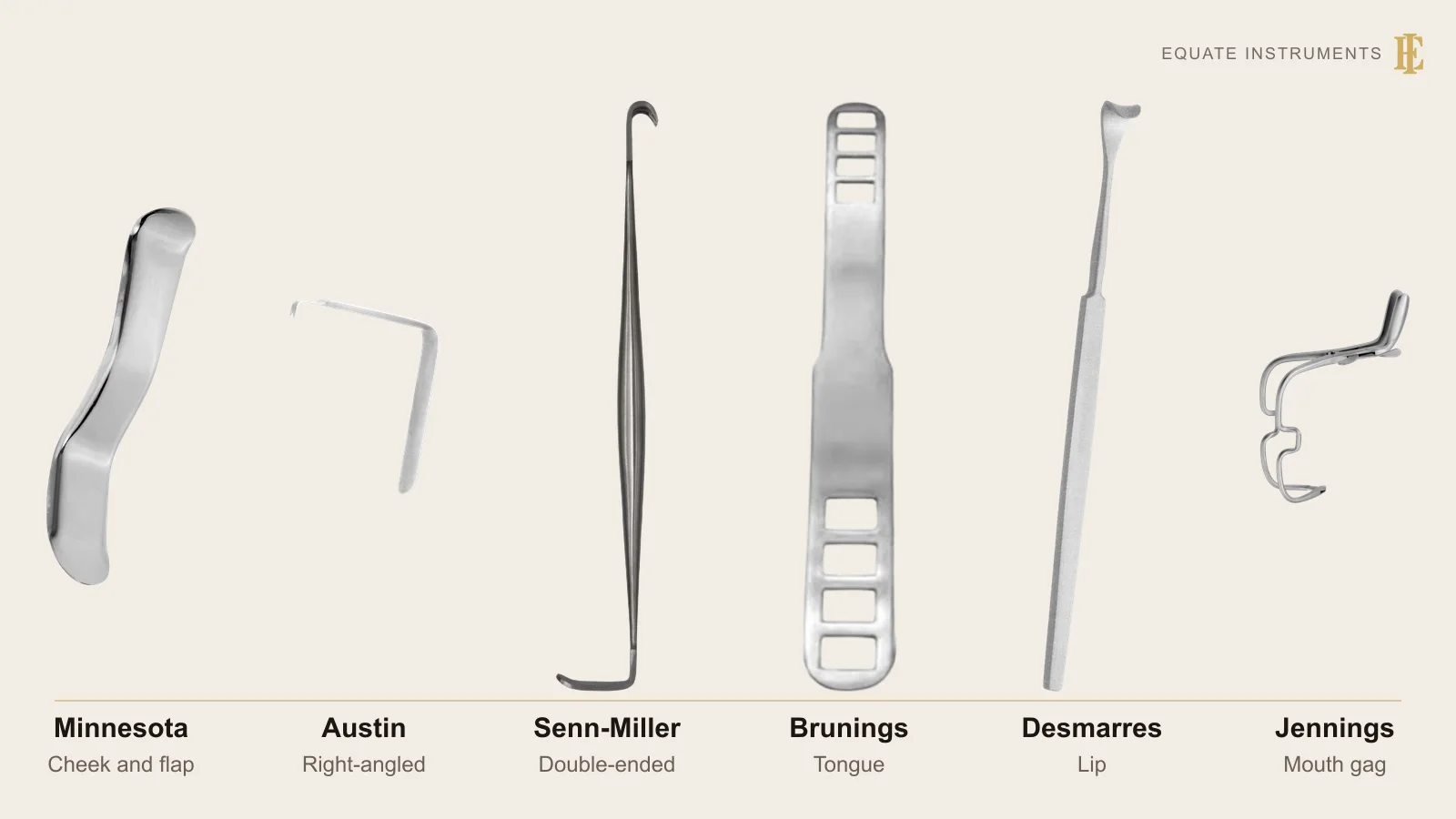
Which retractor for which procedure?
| Procedure | Usual retractor | Why |
|---|---|---|
| Third molar surgery | Minnesota or Austin | Retracts the cheek and buccal flap together and rests on bone |
| Small flaps and apicectomy | Austin, Senn-Miller or a small Langenbeck | Holds a small flap in a confined field |
| Lingual surgery | Tongue retractor | Keeps the tongue clear of the field |
| Anterior surgery and implants | Lip retractor | Holds the lip away from the incisors |
| Sedation or general anaesthesia | Mouth gag | Holds the mouth open when the patient can't |
| Bonding and intraoral photography | Cheek retractor | A clear, wide view of the labial surfaces |
How do you use a retractor safely?
Rest the retractor on bone, not on the soft flap, and use the least force that gives a clear view. Constant pressure on the flap or the corner of the mouth causes bruising, swelling and sore lips. Keep the edge away from the mental nerve when retracting in the lower premolar region, and reposition the retractor rather than pulling harder when access is poor.
Mouth gags need care around crowns, bridges and loose teeth, and should be eased periodically during long procedures to rest the jaw joints.
How do you choose and care for retractors?
A basic oral surgery set usually includes a Minnesota and an Austin retractor, with a tongue retractor and a mouth prop or gag for longer cases. Practices that place implants often add a lip retractor and a self-retaining retractor. Choose polished blades with rounded edges, and handles long enough to keep the assistant's hand out of the field.
Clean ratchets and hinges open, then sterilise in line with the CDC's Guidelines for Infection Control in Dental Health-Care Settings or, in UK practices, HTM 01-05. ISO 13402 sets out how surgical and dental hand instruments are tested for resistance to autoclaving, corrosion and heat.
The Equate difference
Equate lists 63 retractor and mouth gag references, including Minnesota, Austin and Langenbeck flap retractors, Senn-Miller, Middeldorpf and Farabeuf tissue retractors, Brunings and Cawood-Minnesota tongue retractors, Desmarres and wire-frame lip retractors, Weitlaner self-retaining retractors and Jennings, Denhardt, Roser-König and Molt mouth gags.
Equate Dental and Oral Surgery Retractors options

Middeldorpf Retractor 17x14mm - 21cm
EI-0371
Middeldorpf Retractor 20x22mm - 23cm
EI-0372
Middeldorpf Retractor 26x30mm - 23cm
EI-0373
Sharp Senn-Miller Retractor 5x20mm
EI-0380
Blunt Senn-Miller Retractor 5x20mm
EI-0381
Bowdler-Henry Retractor
EI-0382
Brunings Tongue Retractor 19cm
EI-0387
Minnesota Retractor Small
EI-0388
Tongue Depressor 14.5 cm - Double-Ended Spatula
EI-0389
Cawood-Minnesota Tongue Retractor
EI-0390
Farabeuf Retractor Set of 2
EI-0392
Langenbeck Retractor 29x10 mm
EI-0403Browse all accessories & supplies instruments Browse all oral surgery instruments
Buying in your market
Frequently asked questions
What is a Minnesota retractor used for?
A Minnesota retractor holds the cheek and a surgical flap away at the same time. Its curved, offset blade makes it a standard retractor for third molar (wisdom tooth) surgery and other posterior procedures.
What is the difference between an Austin and a Minnesota retractor?
Both retract the cheek and flap. The Austin is a narrow, right-angled blade for small, confined areas; the Minnesota is wider and curved, so it holds back more tissue and gives a larger view.
What is a mouth gag used for?
A mouth gag holds the jaws open when the patient can't, for example under sedation or general anaesthesia. Ratcheted designs such as the Jennings, Denhardt and Molt lock at the opening the clinician sets.
Is a cheek retractor the same as a surgical retractor?
No. A cheek retractor is a frame that holds both lips and cheeks back for bonding, whitening or photography. Surgical retractors are hand-held instruments that hold a flap or the cheek during surgery.
References
- Hupp JR, Ellis E, Tucker MR. Contemporary Oral and Maxillofacial Surgery. Elsevier (instrumentation for basic oral surgery; principles of routine exodontia)
- Boyd LRB. Dental Instruments: A Pocket Guide. Elsevier
- Kohn WG, et al. Guidelines for Infection Control in Dental Health-Care Settings, 2003. MMWR 52(RR-17), Centers for Disease Control and Prevention
- Department of Health and Social Care. Health Technical Memorandum 01-05: Decontamination in primary care dental practices
- ISO 13402:1995 Surgical and dental hand instruments: determination of resistance against autoclaving, corrosion and thermal exposure
I am a…