Local Anaesthetic (Anesthetic) Tray Setup and How to Load a Dental Syringe
Written by the Equate Instruments Technical Team · Reviewed by the Medical & Dental Board, Equate Instruments · Updated ·
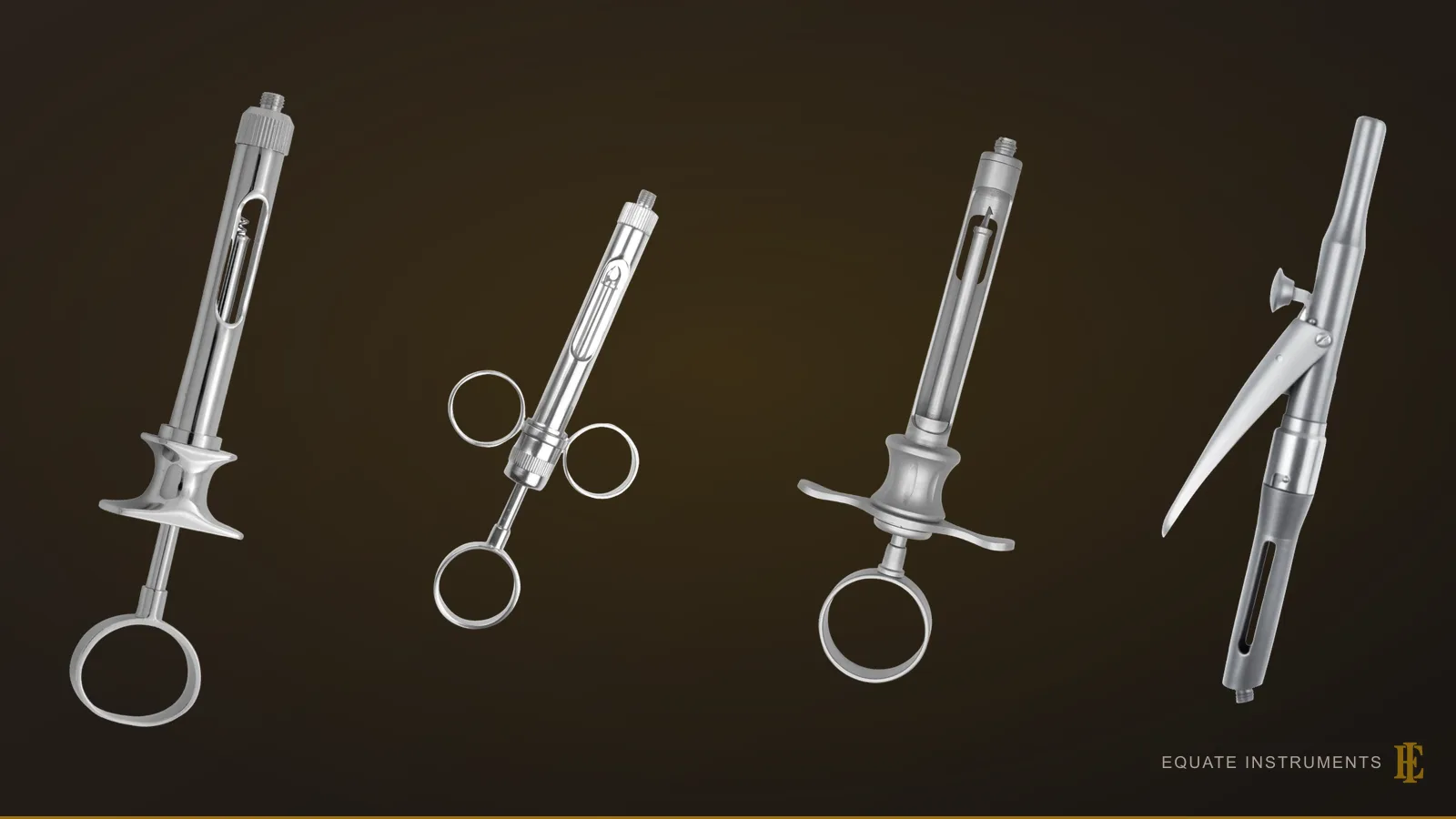
A local anaesthetic (US: local anesthetic) tray setup holds a reusable aspirating cartridge syringe, a sterile single-use needle of the right length, a cartridge of the chosen anaesthetic, topical anaesthetic on a cotton applicator, gauze and a needle recapping device. The syringe is loaded in a fixed order: cartridge in, harpoon engaged, needle on, then a test drop before the injection.
Key points
- Load the cartridge and engage the harpoon before the needle goes on, so the diaphragm is pierced once, centrally.
- Recap with one hand, using a scoop or a recapping device, and never with two hands.
- The needle and cartridge are single-use; the stainless steel syringe is cleaned and heat sterilised after every patient.
Step by step
- 1
Confirm the drug and the injection
The clinician checks the medical history and chooses the anaesthetic, vasoconstrictor and injection. The nurse reads the printed drug, concentration, vasoconstrictor and expiry date back, with the colour band as a secondary cue only, and checks that the glass is intact, the cap uncorroded and the solution clear before the cartridge leaves its blister pack for the tray.
- 2
Lay out the tray
Set out the syringe, the capped needle, the cartridge, topical anaesthetic with a cotton applicator, gauze and the recapping device, with a sharps container within reach of the chair. A common left-to-right order puts the syringe first, then the needles, cartridges, cap holder and topical.
Dental Aspirating Syringes (Dental Anaesthetic Syringes)Dental Local Anaesthetic and Nitrous Oxide Sedation Equipment: What Each Part Does
- 3
Retract the piston and insert the cartridge
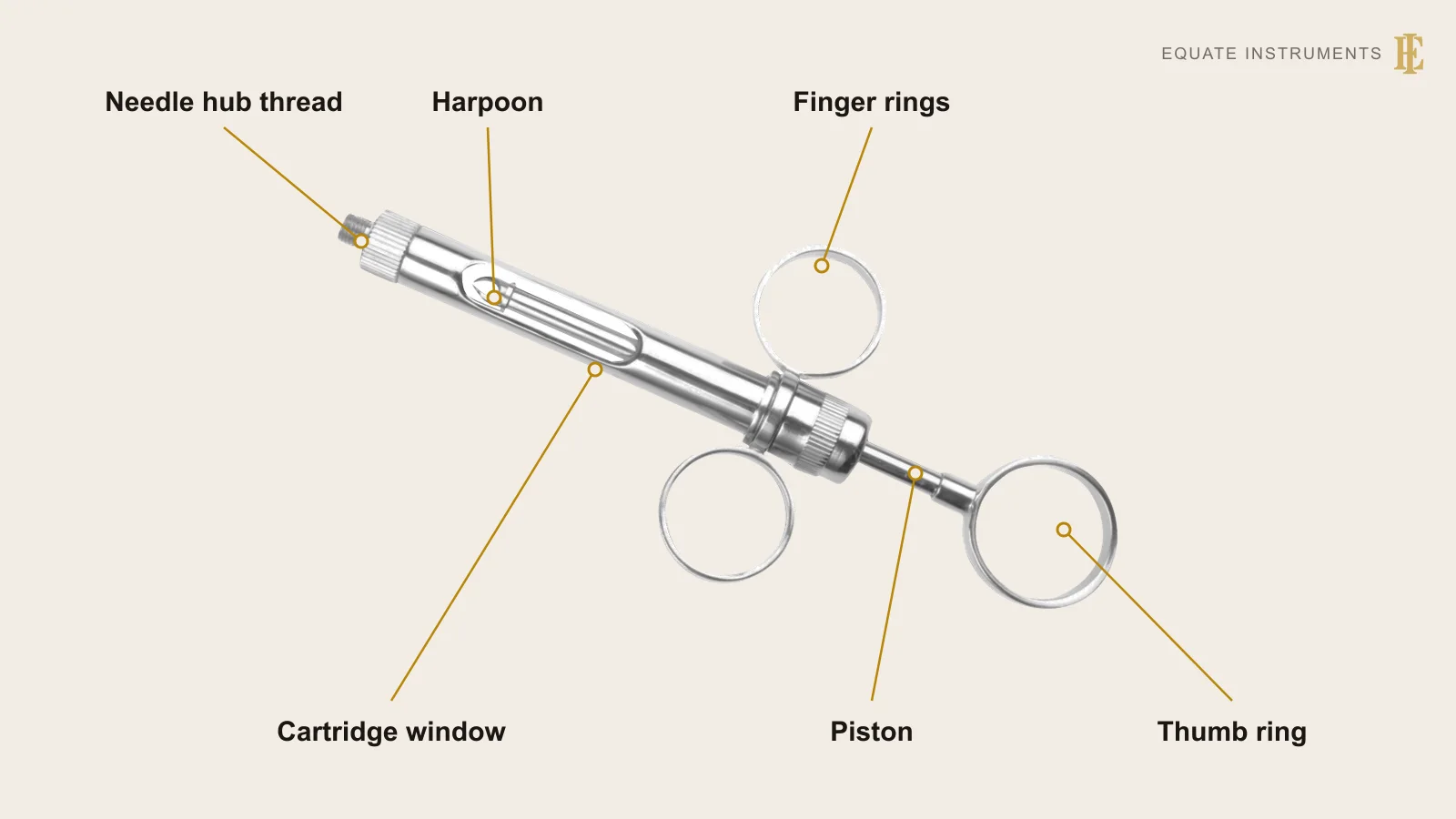
Pull the thumb ring back fully and drop the cartridge into the barrel, rubber stopper first towards the piston and metal-capped diaphragm towards the needle end.
- 4
Engage the harpoon
Release the piston and press the thumb ring gently so the harpoon bites into the stopper. Don't strike it hard, because the glass can crack; a light pull on the ring confirms it has caught.
- 5
Attach the needle
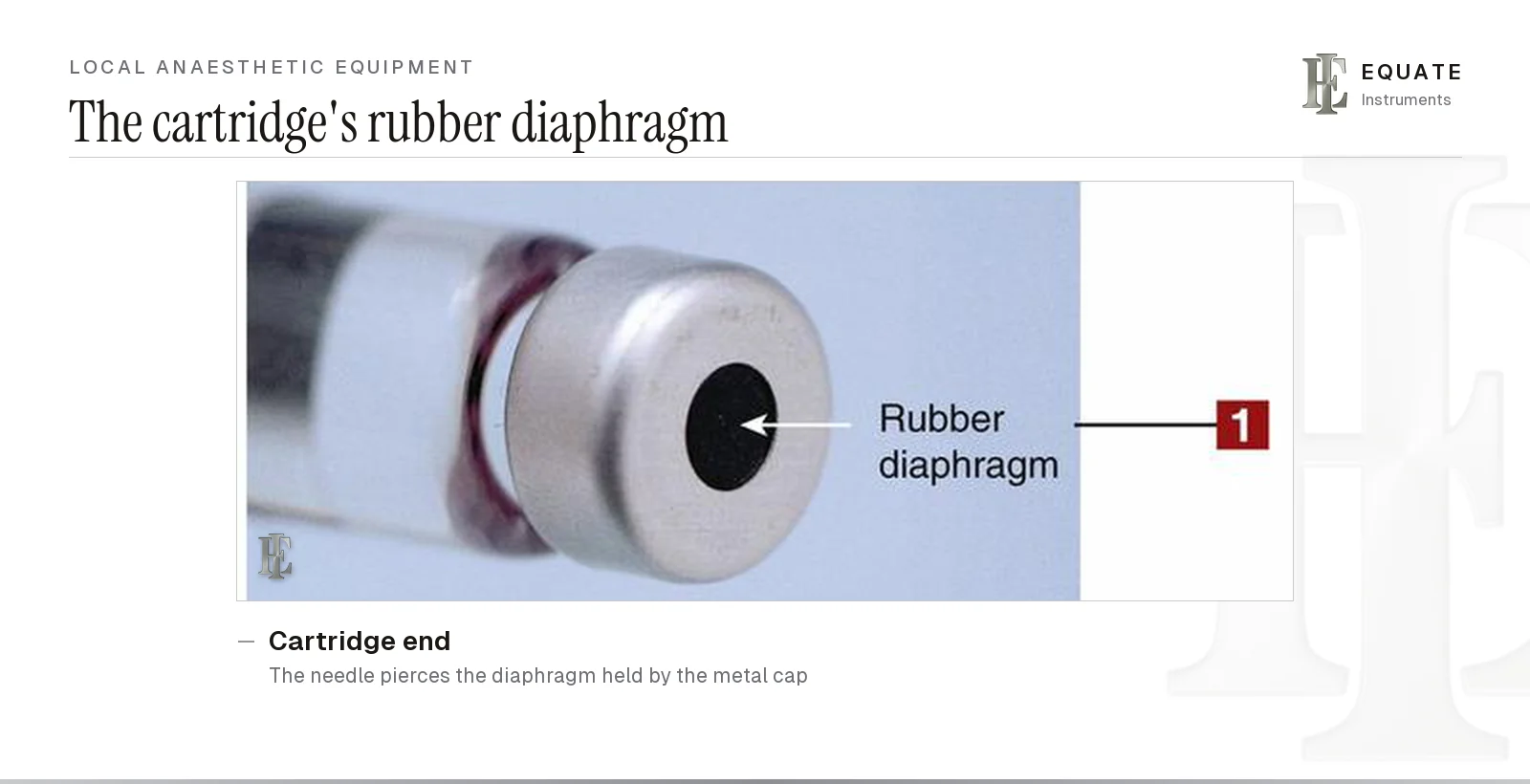
Remove the clear cap from the cartridge end of the needle and screw the hub onto the syringe tip, straight, so the short end pierces the centre of the diaphragm.
- 6
Test the syringe
Uncap the needle and expel a few drops to check flow. Then aspirate once in the air to confirm the harpoon pulls the stopper back.
- 7
Apply topical and inject
Dry the site with gauze, apply topical anaesthetic for the time the product states, and inject slowly with aspiration before depositing the solution.
- 8
Recap with one hand
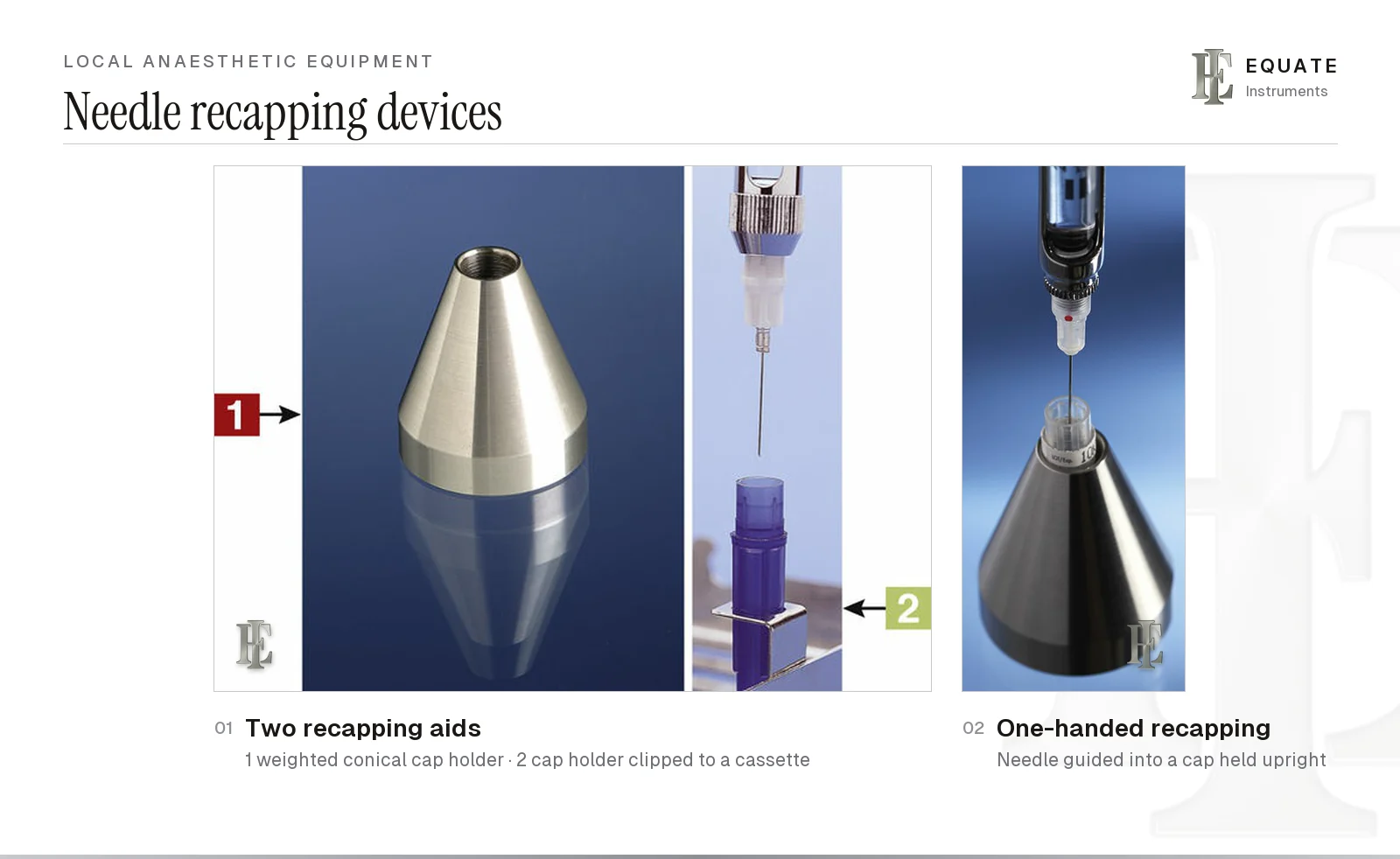
Slide the needle into its cap using a one-handed scoop or a cap held in a recapping device, never by bringing the cap to the needle with the other hand.
- 9
Unload and dispose
With the needle capped, unscrew it and drop it into the sharps container, retract the piston to free the harpoon, and discard the cartridge. Send the syringe for reprocessing.
What goes on a local anaesthetic tray?
A local anaesthetic tray holds a cartridge syringe, a needle, an anaesthetic cartridge, topical anaesthetic, gauze and a way to recap the needle safely. It's a small setup, but it sits on most other trays: the amalgam, crown and bridge and endodontic setups all start with it.
Only the syringe is a reusable instrument. The needle, cartridge, topical and applicator are single-use, and the recapping device is either single-use or a reusable holder that is sterilised with the tray. Equate makes the aspirating syringe only; needles, cartridges, topical anaesthetic and recapping devices come from pharmaceutical and disposables suppliers. What each item is and how it is made is in the local anaesthetic equipment guide.
If nitrous oxide sedation is used, the nasal hood, flowmeter and scavenging line are part of the setup too. The ADA advises inspecting the whole system, including hoses, mask and reservoir bag, before the first use each day and leak-testing the connections when the unit is switched on and whenever a cylinder is changed; the guide's nitrous oxide sections describe each part.
Tray checklist
| Instrument | What it is for | Guide |
|---|---|---|
| Aspirating cartridge syringe | Holds the cartridge and lets the operator aspirate before injecting | Aspirating syringes |
| Needle, short or long | Short for infiltration, long for nerve blocks; single-use | Disposable, not sold by Equate |
| Anaesthetic cartridge | Single-dose container of anaesthetic, with or without vasoconstrictor | Prescription item, not sold by Equate |
| Topical anaesthetic and cotton applicator | Numbs the mucosa at the insertion point | Consumable |
| Gauze | Dries the site and improves grip on the lip or cheek | Consumable |
| Recapping device or needle-cap holder | Holds the cap so the needle can be recapped with one hand | Single-use or reusable holder |
| Cotton pliers | Handles gauze and cotton without touching the field | Cotton pliers |
| Conical syringe holder (optional) | Weighted stainless steel conical holder for dental syringes, sterilised with the tray | Reusable; Equate EI-0817 |
Why does the loading order matter?
Loading the cartridge and engaging the harpoon before the needle goes on means the needle's short end pierces the diaphragm once, through the centre, after the cartridge is already seated. If the needle is fitted first, pushing the cartridge in and tapping the harpoon home can drive the diaphragm onto the needle off-centre, which causes leaks, a cracked cartridge or solution spraying back into the barrel.
The order also protects the operator: every step before the needle goes on is done with no sharp exposed, and at the end the needle is capped and removed before the harpoon is pulled free. Malamed's Handbook of Local Anesthesia describes the same sequence.
Which needle and cartridge to put on the tray
Put one needle and one cartridge size on the tray, matched to the syringe. Cartridges hold about 1.7–1.8 ml in North America and 2.2 ml in much of the UK and Europe, and a barrel only holds the size it was made for; the needle hub must also match the syringe's thread. The full gauge and length table, with extra-short needles, is on the aspirating syringe page.
| Choice | Typical option | Used for |
|---|---|---|
| Short needle | About 20 mm, often 27 or 30 gauge | Maxillary infiltrations and most single-tooth work |
| Long needle | About 32 mm, often 25 or 27 gauge | Inferior alveolar and other nerve blocks that need depth |
| Cartridge size | 1.8 ml or 2.2 ml | Must match the barrel of the syringe |
| Syringe type | Ring-handle aspirating, self-aspirating or intraligamental (lever or click-dose) | Decides how the operator aspirates and which injections the syringe suits |
How does aspiration work?
Aspirating means drawing the cartridge stopper back a little before injecting, to check that the needle tip is not sitting in a blood vessel. On a harpoon syringe the harpoon is buried in the rubber stopper, so pulling the thumb ring back lowers the pressure inside the cartridge. A self-aspirating syringe has no harpoon: the diaphragm springs back when the operator eases thumb pressure, and that rebound does the same job. ISO 9997, the international standard for dental cartridge syringes, covers non-aspirating, aspirating and self-aspirating designs.
As the operator aspirates before each deposit, watch the solution in the cartridge window: a flash or thread of red means the needle tip is in a vessel. The needle is then withdrawn slightly, repositioned and aspirated again before any solution goes in; why aspiration matters, with the incidence data, is on the aspirating syringe page.
How do you recap and dispose of the needle safely?
Recap a used needle with one hand only, either by scooping the cap onto the needle from the tray or by guiding the needle into a cap held upright in a recapping device. The CDC's 2003 infection-control guidelines for dentistry rule out two-handed recapping and any technique that points the needle towards the body, and they ask for puncture-resistant sharps containers as close as possible to where the needle is used.
Outside the US the rules are stricter. EU Directive 2010/32/EU calls for a prohibition of recapping, and the UK's 2013 sharps regulations (SI 2013/645, regulation 5) allow a used needle to be capped only where the employer's risk assessment requires it and a suitable device controls the risk. They also require secure, clearly marked sharps containers close to where sharps are used, so the container belongs beside the chair, not across the room.
Needles shouldn't be bent or broken before disposal, and an uncapped syringe shouldn't be passed between people. A cartridge is a single-dose container: whatever is left is discarded and never kept for another patient, in line with the CDC's guidance on single-dose medications.
How is the syringe cleaned and sterilised, and what goes wrong?
Treat the syringe like any other reusable instrument: dismantle it if the manufacturer's instructions (ISO 17664) say so, clean it in a washer-disinfector or ultrasonic bath, inspect it, and heat sterilise it in a pouch or instrument cassette after every patient. Check that the harpoon is sharp and straight, the piston runs freely and the needle thread is undamaged; a blunt harpoon slips out of the stopper and aspiration fails.
- Fitting the needle before the cartridge, so the diaphragm is pierced off-centre and leaks.
- Hitting the thumb ring to set the harpoon, which can crack the cartridge.
- Using a 2.2 ml syringe with 1.8 ml cartridges, or the reverse.
- Recapping with two hands, or walking around with an uncapped needle.
- Reusing a part-used cartridge on another patient.
- Bending the needle before insertion, which Pogrel's 2009 series of broken needles warns against.
- Using a 30-gauge needle for an inferior alveolar block (the commonest pattern in the series), or inserting the needle to the hub, which the series advises against.
Build this tray with Equate
Equate supplies the syringe for this tray, not the needles, cartridges or topical anaesthetic. The syringe range covers single-ring, three-ring and T-handle aspirating syringes for 1.8 ml and 2.2 ml cartridges, a self-aspirating syringe, lever-action and pistol-grip syringes and two click-action syringes, one of them for intraligamental injection, most of them threaded for European-standard needles. Of the 42 syringes, 23 take 1.8 ml and 19 take 2.2 ml cartridges, and the ring and T-handle designs split into 14 single-ring, 8 three-ring and 10 T-handle syringes. Equate also makes a weighted conical holder for dental syringes (EI-0817).
The syringes are designed in Finland in passivated stainless steel, ultrasonically cleaned, shape-, boil- and performance-tested and individually packed. Clinics can request a sample and a quote, which helps to confirm the fit with the cartridges and needles they already use.
The Equate difference
Every Equate cartridge syringe ships non-sterile, so a new syringe goes through a full cleaning and sterilisation cycle before its first tray, and 34 of the 42 are threaded for European-standard needles, the first thing to match when stocking needles for this setup.
Equate Local Anaesthetic (Anesthetic) Tray Setup and How to Load a Dental Syringe options

Dental Aspirating Syringe 2.2 ml, EU Needle
EI-0808
Offset Dental Cartridge Syringe 1.8 ml, EU Needle
EI-0809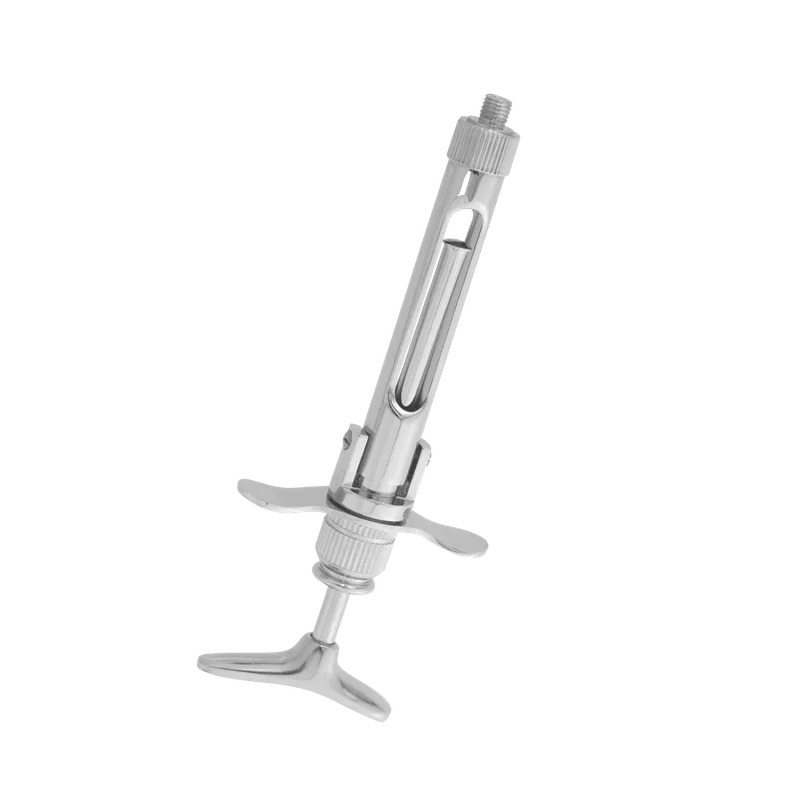
T-Handle Type Syringe 1.8ml EU Needle Brass
EI-0810
T-Handle Type Syringe 2.2ml EU Needle
EI-0811
Self-Aspirating Dental Syringe 1.8 ml
EI-0812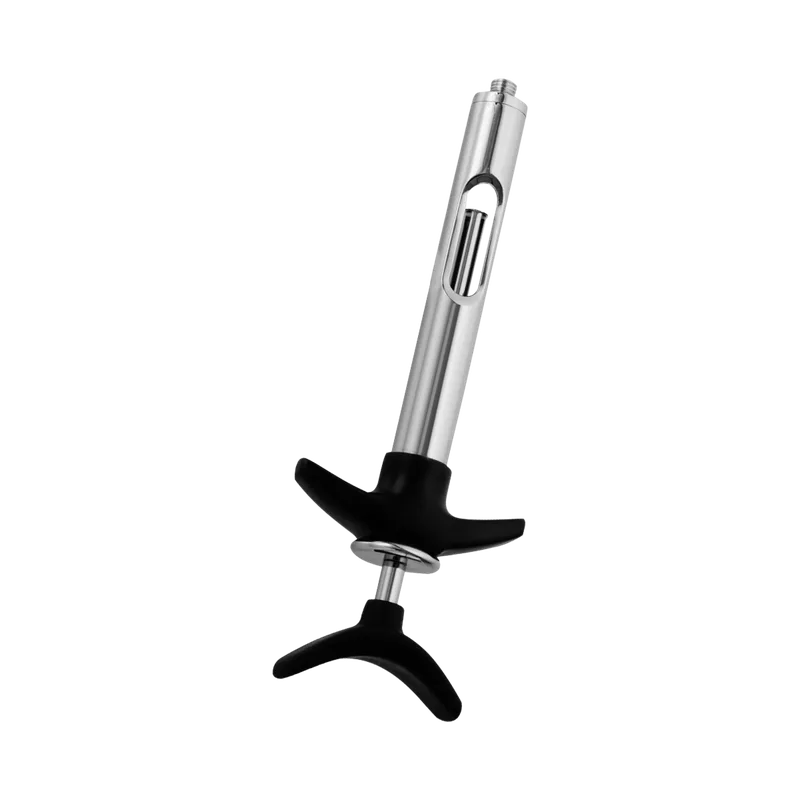
T-Handle Type Syringe 1.8ml EU Needle
EI-0813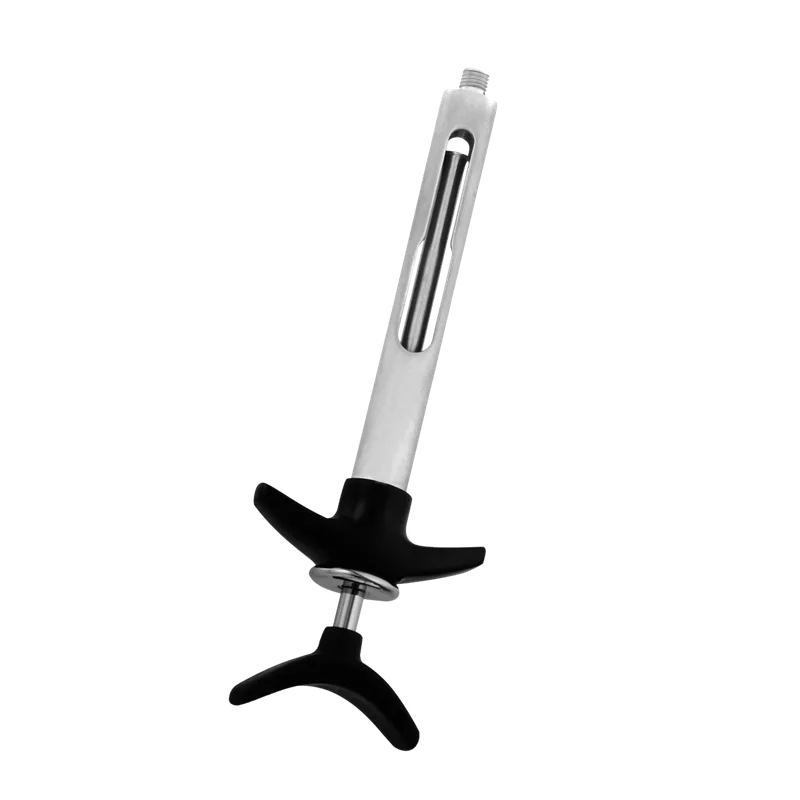
T-Handle Type Syringe 2.2ml EU Needle
EI-0814
Metric Cartridge Dental Syringe
EI-0815
Single-Ring Aspirating Dental Syringe 2.2ml EU Needle
EI-0816
Pistol-Grip Aspirating Syringe 1.8 ml - EU Needle
EI-1464
Click-Dose Intraligamental Syringe 2.2 ml (0.07 ml/click) - EU Needle
EI-1465
Single-Ring Aspirating Syringe - 1.8 ml Cartridge
EI-1466Browse all prosthodontic & laboratory instruments
Buying in your market
Frequently asked questions
How do you load a dental syringe?
Retract the piston, insert the cartridge stopper end first, engage the harpoon with gentle pressure, then screw on the needle and expel a few drops to test it. The needle always goes on last.
What is on a local anesthetic tray setup?
An aspirating syringe, a short or long needle, an anaesthetic cartridge, topical anaesthetic with an applicator, gauze and a recapping device, with a sharps container nearby.
What is the harpoon on a dental syringe for?
The harpoon hooks into the cartridge's rubber stopper so that pulling back on the thumb ring draws the stopper back. That lets the operator aspirate and check for blood before injecting.
What do you do with a part-used cartridge?
Discard it. An anaesthetic cartridge is a single-dose container, and CDC guidance says single-dose medication containers are for one patient only, so whatever is left goes into the sharps or pharmaceutical waste as local rules require, never back into stock.
Are anaesthetic cartridge colours the same everywhere?
No. The US uses a uniform colour band for each drug, adopted by the American Dental Association in 2003, but ISO 11499:2014 leaves colour coding to the manufacturer's discretion. Staff should always read the printed drug, strength, vasoconstrictor and expiry rather than go by colour.
Can a dental syringe be reused?
Yes. A stainless steel cartridge syringe is a reusable instrument: it is cleaned and heat sterilised after every patient. The needle and the cartridge are used once and then go into the sharps container.
Does Equate sell dental needles and anaesthetic cartridges?
No. Equate makes the reusable cartridge syringe and a conical syringe holder; needles, anaesthetic cartridges and topical anaesthetic are bought from other suppliers.
References
- Malamed SF. Handbook of Local Anesthesia. Elsevier (syringe loading, needles, cartridges and aspiration)
- ISO 9997:2020. Dentistry: cartridge syringes. International Organization for Standardization
- Kohn WG, Collins AS, Cleveland JL, Harte JA, Eklund KJ, Malvitz DM. Guidelines for Infection Control in Dental Health-Care Settings, 2003. MMWR 2003;52(RR-17). Centers for Disease Control and Prevention
- Department of Health (England). Health Technical Memorandum 01-05: Decontamination in primary care dental practices, 2013 edition
- Boyd LB. Dental Instruments: A Pocket Guide, 7th edition. Saunders/Elsevier, 2020. Chapter 3, Local Anesthetic Syringe/Components and Nitrous Oxide Sedation (photographs used under licence)
- Bird DL, Robinson DS. Modern Dental Assisting. Elsevier (preparing the local anaesthetic syringe)
- ISO 11499:2014 Dentistry: Single-use cartridges for local anaesthetics
- Pogrel MA. Broken local anesthetic needles: a case series of 16 patients, with recommendations. J Am Dent Assoc 2009;140(12):1517–1522
- Council Directive 2010/32/EU on the prevention of sharp injuries in the hospital and healthcare sector (EU-OSHA summary)
- The Health and Safety (Sharp Instruments in Healthcare) Regulations 2013 (SI 2013/645), regulation 5
- American Dental Association. Oral Health Topics: Nitrous Oxide (pre-use inspection and leak testing)
I am a…
Related
- Dental Local Anaesthetic and Nitrous Oxide Sedation Equipment: What Each Part Does
- Dental Aspirating Syringes (Dental Anaesthetic Syringes)
- Basic Dental Tray Setup (Dental Exam Tray)
- Amalgam Restoration Tray Setup
- Endodontic Tray Setup: Opening and Sealing a Tooth
- Oral Surgery Tray Setup
- Crown and Bridge Tray Setup: Preparation and Cementation
- Dental Sterilisation and Protective Equipment