Vital Signs and Monitoring Equipment in the Dental Practice
Written by the Equate Instruments Technical Team · Reviewed by the Medical & Dental Board, Equate Instruments · Updated ·
Vital signs equipment in dentistry is the set of devices a dental team uses to check and record a patient's pulse, blood pressure, breathing and oxygen level. It includes the stethoscope, manual and automatic blood pressure monitors and the pulse oximeter, plus the capnograph and ECG monitor used during sedation or surgery, and the automated external defibrillator (AED) kept for emergencies.
Key points
- A stethoscope with a manual cuff, or an automatic monitor, records blood pressure and pulse before treatment as part of the medical history.
- Pulse oximetry and blood pressure monitoring are the UK minimum for every sedation technique except nitrous oxide inhalation sedation, where clinical observation usually suffices; capnography and/or ECG may be added for higher-risk (ASA III/IV) patients, and the ADA's 2025 guidelines expect both for moderate sedation in the US.
- UK resuscitation standards expect every clinical dental area to have immediate access to an AED, so that a shock can be attempted within 3 minutes of collapse; the monitoring devices are noncritical items that are cleaned and disinfected, and checked on a schedule.
What vital signs equipment does a dental practice use?
Dental treatment is usually safe for medically fit patients, but medical emergencies do happen in the chair. In a 2023 survey of 400 UK dental clinicians published in the British Dental Journal (Sin, Edwards, Currie and Corbett), fainting (vasovagal syncope) was the emergency seen most often, roughly once every 1.6 years per clinician, followed by non-specific collapse and hypoglycaemia, and 69.2% of respondents wanted more training on emergency drugs and equipment. That is why Linda Bartolomucci Boyd's Dental Instruments: A Pocket Guide (Elsevier) includes a chapter on vital signs equipment: the devices that turn a patient's pulse, blood pressure, breathing and oxygenation into numbers that can be recorded and compared from visit to visit.
The equipment falls into three groups. Baseline readings are taken with a stethoscope and blood pressure cuff or an automatic monitor, and they are recorded before local anaesthetic or sedation is given, ahead of laying out the local anaesthetic tray. Continuous monitoring during sedation and surgery uses a pulse oximeter, a capnograph and an electrocardiograph, often combined in one multiparameter monitor. And the automated external defibrillator (AED) is emergency equipment: Resuscitation Council UK expects every clinical area to have immediate access to one, so that defibrillation can be attempted within 3 minutes of a collapse. Monitoring during sedation sits alongside the equipment described in the local anaesthetic and nitrous oxide guide.
| Device | What it measures or does | Typical dental use |
|---|---|---|
| Stethoscope | Amplifies pulse and blood flow sounds | Manual blood pressure readings; listening to breath sounds during sedation |
| Aneroid sphygmomanometer | Blood pressure by cuff, dial gauge and hand bulb, read with a stethoscope | Baseline readings at new-patient and recall visits |
| Automatic blood pressure monitor | Blood pressure and pulse rate, measured electronically | Quick pre-treatment readings; repeated readings during sedation |
| Pulse oximeter | Oxygen saturation of arterial blood (SpO2) and pulse rate | Continuous monitoring during sedation and surgery; emergencies |
| Capnograph | Carbon dioxide in each exhaled breath | Ventilation monitoring during moderate or deeper sedation and general anaesthesia |
| Electrocardiograph (ECG, or EKG in US usage) | The heart's electrical activity | Intravenous sedation and general anaesthesia, mostly in oral surgery |
| Automated external defibrillator (AED) | Analyses heart rhythm and delivers a shock if one is advised | Cardiac arrest in the practice |
Stethoscope: listening to the pulse and blood pressure
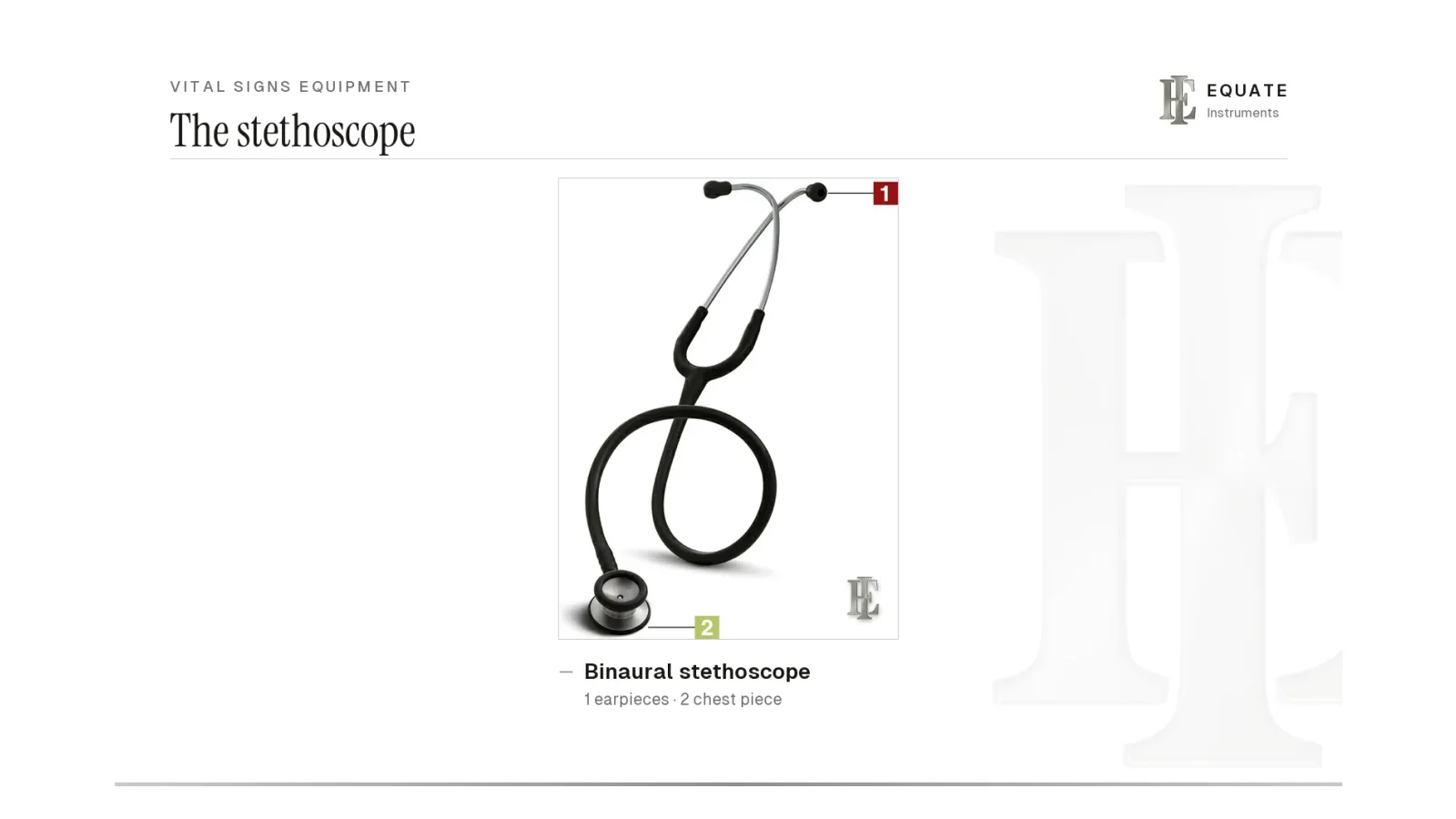
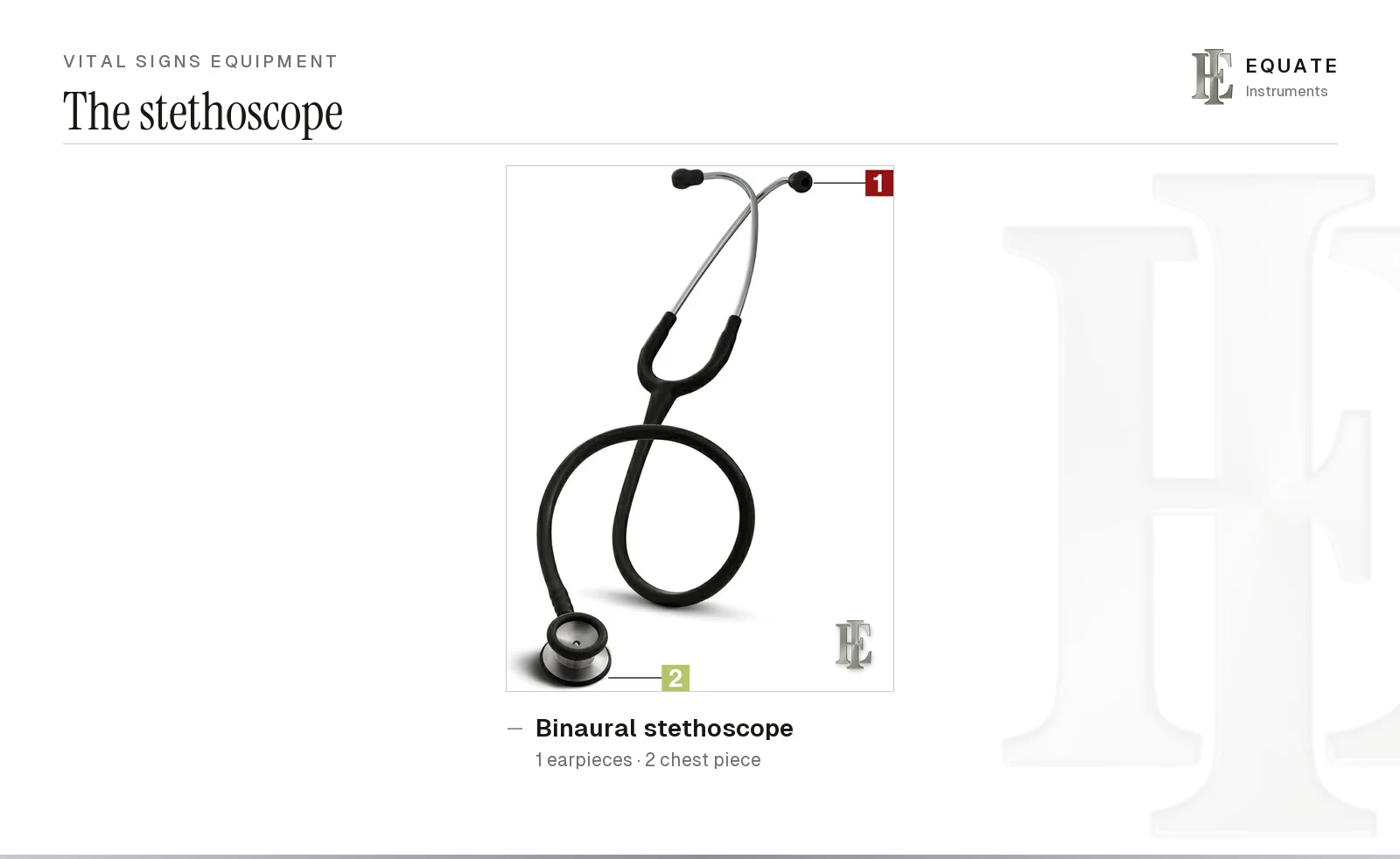
A stethoscope carries sound from the patient's body to the listener's ears. The earpieces sit at the end of two metal ear tubes joined by a spring, and flexible tubing runs down to the chest piece, the part held against the skin. Most chest pieces are two-sided: a flat diaphragm for higher-pitched sounds and a smaller bell for low-pitched sounds.
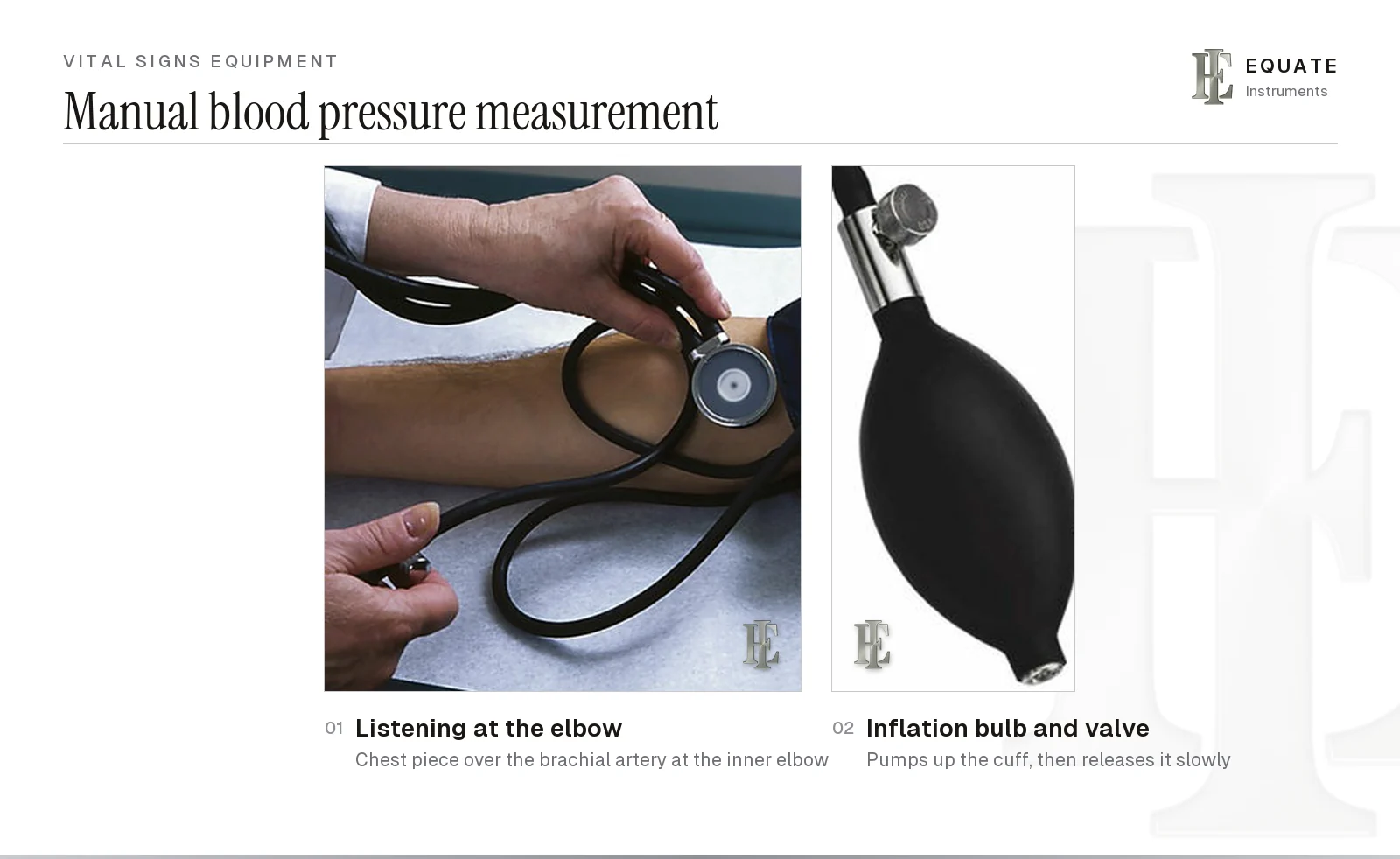
In the dental surgery the stethoscope's main job is the manual blood pressure reading. The chest piece is placed over the brachial artery at the inside of the elbow, just below the cuff, and the clinician listens for the tapping sounds that appear and disappear as the cuff is let down. During sedation it can also be used to listen to breathing.
When choosing one, the points that matter are a good seal from soft, well-fitting ear tips, tubing long enough to read the gauge comfortably, and a chest piece small enough to sit flat in the bend of a slim arm. Single-patient-use or disposable stethoscopes are an option where infection control rules call for them.
Aneroid sphygmomanometer: the manual blood pressure cuff
A sphygmomanometer measures blood pressure by squeezing the upper arm and then releasing the pressure gradually. The aneroid type has three working parts: an inflatable cuff that wraps around the arm, a dial gauge calibrated in millimetres of mercury (mmHg), and a rubber bulb with a valve that pumps air into the cuff and lets it out slowly. Aneroid means the gauge works mechanically, without a liquid column.
Cuff size is the most common source of error. A cuff that is too small for the arm tends to give falsely high readings and one that is too large tends to read low. The 2023 European Society of Hypertension guidelines (Mancia, Kreutz and colleagues) stress that the cuff has to be chosen to suit each patient's arm circumference and that office readings are taken on a bare arm. Practices therefore keep at least a standard adult cuff, a small adult or child cuff and a large adult cuff; most cuffs carry an index line and printed range marks showing whether the size fits.
Aneroid gauges can drift out of calibration if they are dropped or knocked, so the needle should rest at zero before inflation and the gauge should be checked against a reference at the interval the manufacturer gives. Record every reading, the arm used and the cuff size in the patient's notes.
Technique matters as much as the device. The American Dental Association's oral health topic on hypertension advises seating the patient quietly for 5 minutes beforehand, feet flat on the floor and the arm supported at heart level, and choosing a cuff whose inflatable bladder is about 80% of the bare upper-arm circumference in length and about 40% in width. One raised chairside reading is not a diagnosis: hypertension is diagnosed from the average of two or more raised readings taken on two or more occasions, so a high result is repeated and the patient is referred to their doctor rather than labelled in the surgery.
Automatic blood pressure monitors
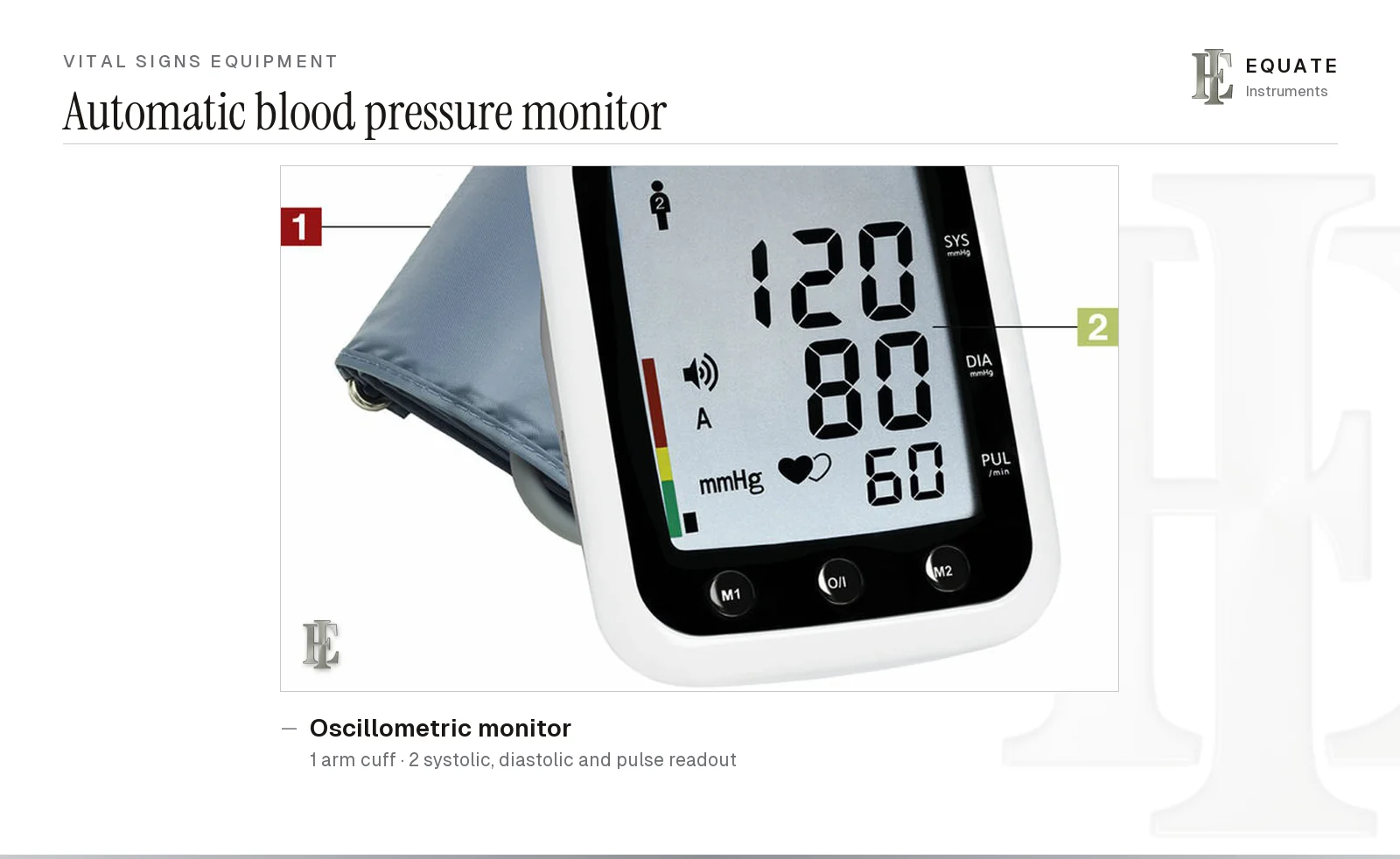
An automatic (oscillometric) monitor inflates the cuff itself, senses the pressure pulses in the artery as the cuff deflates, and calculates systolic and diastolic pressure and pulse rate, which appear on a digital display. No stethoscope is needed and the result does not depend on the operator's hearing, which makes these monitors popular for quick checks before treatment. Many store earlier readings, and the same measurement is built into the multiparameter monitors used for sedation, where readings can be repeated automatically at set intervals.
The same rules on cuff size apply: an automatic monitor is only as accurate as the cuff that fits the arm. Choose a monitor that has been clinically validated for accuracy, with upper-arm cuffs in several sizes. The 2023 ESH guidelines recommend validated cuff-based devices and advise against cuffless devices for blood pressure measurement. Movement, talking and an irregular heart rhythm can all upset an oscillometric reading, so a reading that looks wrong should be repeated, or checked manually.
Pulse oximeter: oxygen saturation and pulse rate
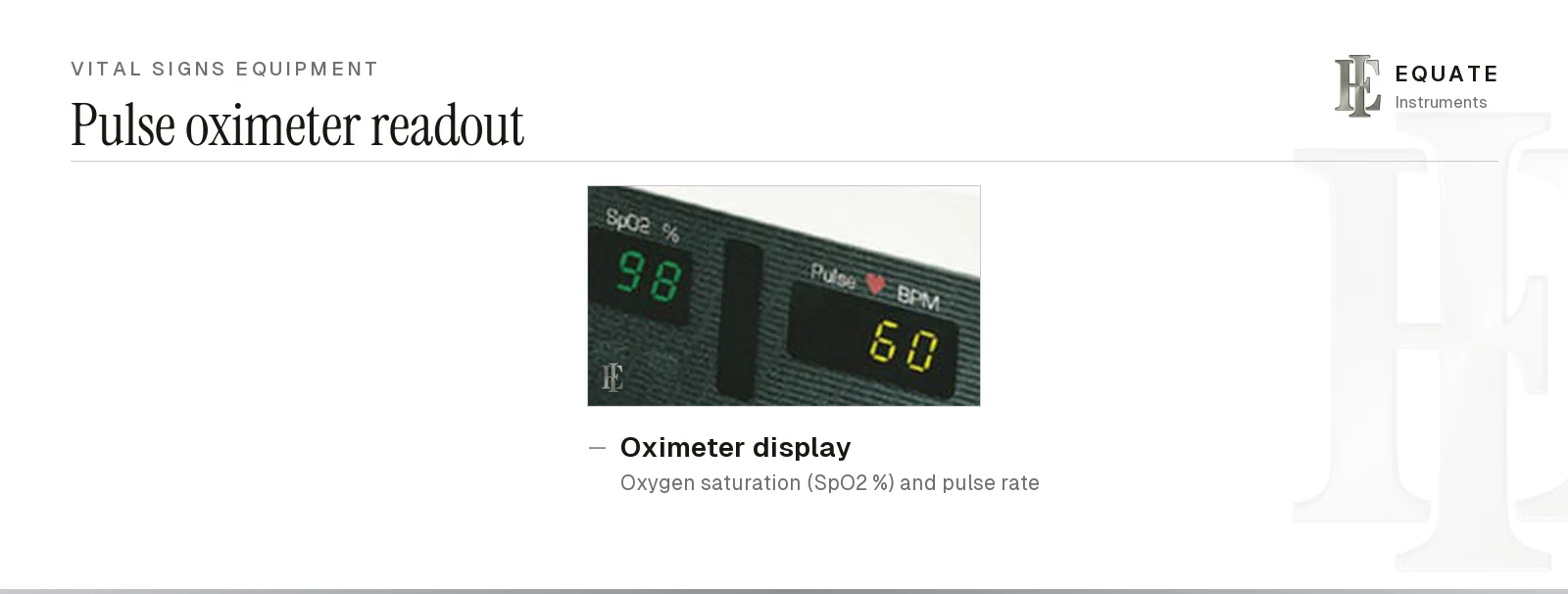
A pulse oximeter shines red and infrared light through a fingertip (or an earlobe) and measures how much is absorbed, which tells it what proportion of the haemoglobin in the arterial blood is carrying oxygen. The result is shown as SpO2, a percentage, together with the pulse rate. The probe may be a spring clip or a soft sleeve on a cable to a bedside monitor, or a small self-contained fingertip unit.
In dentistry the pulse oximeter is standard monitoring for intravenous, oral and intranasal sedation and for general anaesthesia, and it is useful in an emergency. The UK IACSD standards (2020) make one exception: for inhalation sedation with nitrous oxide and oxygen, clinical monitoring of the patient usually suffices, while every other technique needs at least pulse oximetry and non-invasive blood pressure before, at intervals during and after treatment, with audible alarms left switched on. Readings are less reliable when hands are cold or circulation is poor, when the patient moves, and with nail varnish or artificial nails; the US Food and Drug Administration has also warned that readings can overestimate oxygen saturation in people with darker skin pigmentation. Above all, a normal SpO2 does not prove a patient is breathing well, which is why capnography is expected for moderate and deeper sedation in the US and may be added for higher-risk patients in the UK.
Capnograph: monitoring breathing during sedation
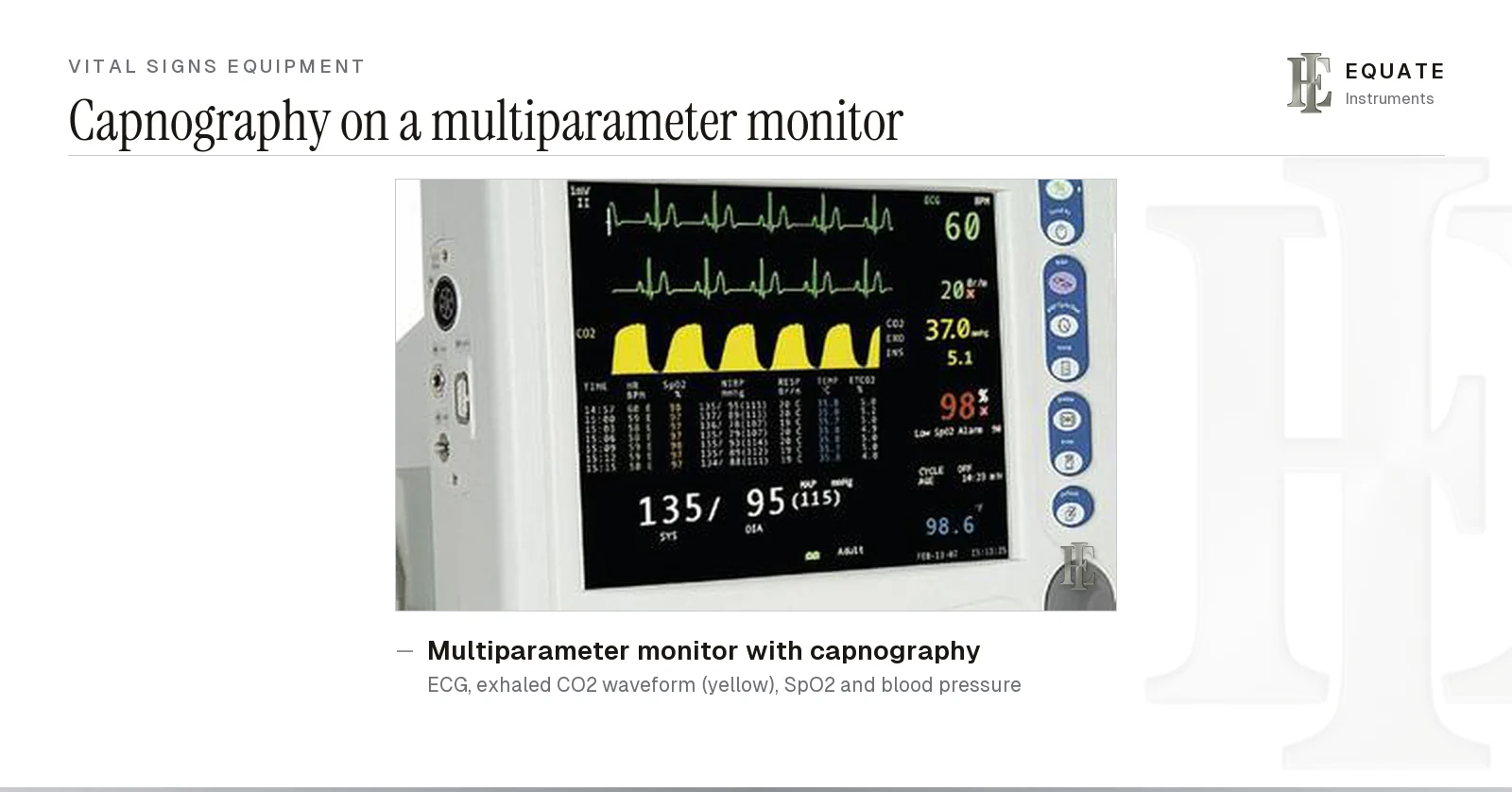
A capnograph samples the gas a patient breathes out, usually through a nasal cannula with a sampling line, and measures its carbon dioxide content breath by breath. The monitor shows the end-tidal CO2 value and a waveform, the capnogram, that rises and falls with each breath, as well as the breathing rate.
Its value lies in speed. If a sedated patient stops breathing or the airway becomes obstructed, the waveform flattens straight away. A pulse oximeter can keep showing a reassuring saturation for some time after breathing has stopped, especially if the patient is receiving supplemental oxygen, because the body still holds oxygen in reserve. Hyperventilation shows up as a fall in exhaled CO2. Slow or shallow breathing changes the rate and shape of the waveform, so the team watches the trend rather than a single number.
For this reason the American Dental Association's Guidelines for the Use of Sedation and General Anesthesia by Dentists introduced end-tidal CO2 monitoring for moderate sedation, deep sedation and general anaesthesia in their 2016 revision, and the revision adopted in October 2025 keeps it, unless the patient, procedure or equipment makes it impossible. European practice varies. In the UK, the Intercollegiate Advisory Committee for Sedation in Dentistry (IACSD) sets the UK-wide Standards for Conscious Sedation in the Provision of Dental Care (updated 2020), which treat capnography as appropriate for some higher-risk patients rather than routine for fit adults, and in Scotland the Scottish Dental Clinical Effectiveness Programme's Conscious Sedation in Dentistry adds national guidance. Follow the rules that apply in your country.
Electrocardiograph (ECG) monitoring
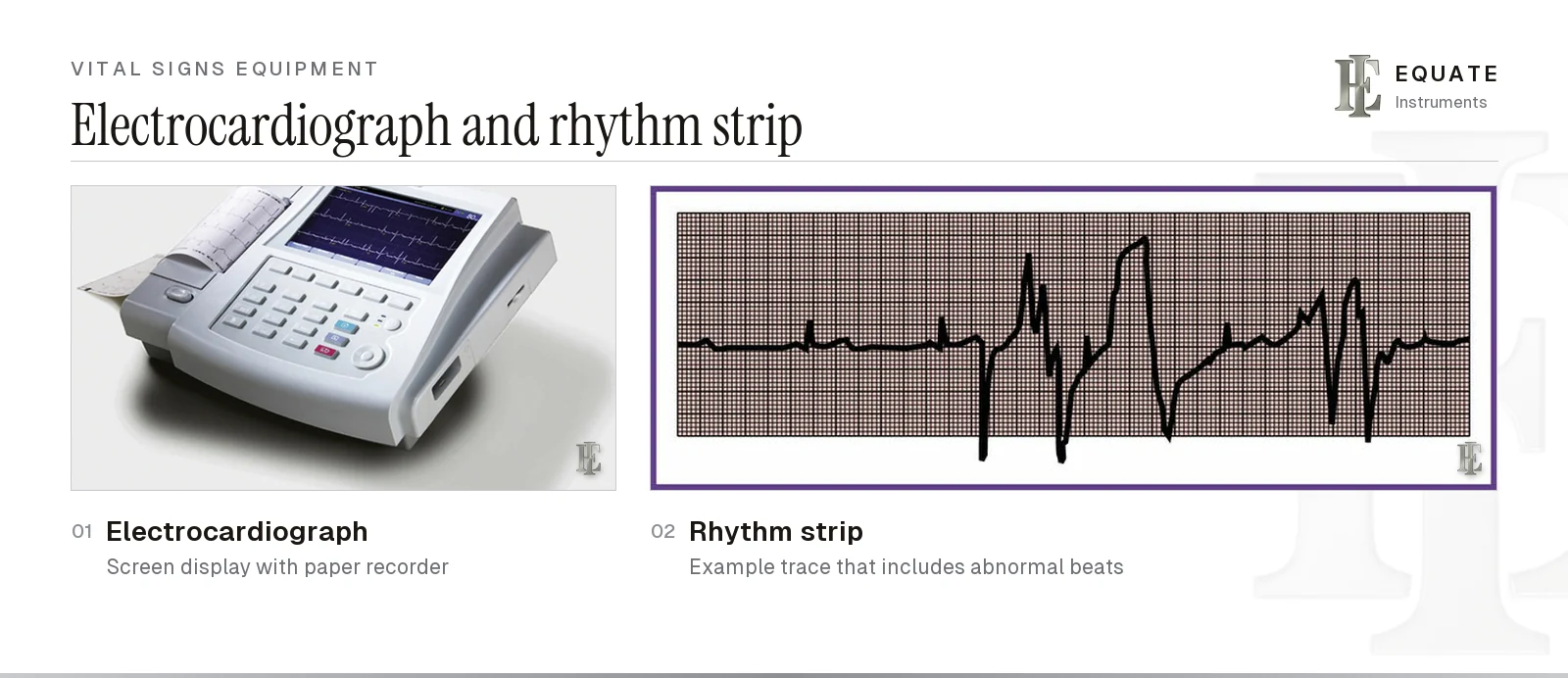
An electrocardiograph (ECG, written EKG in US usage) records the electrical activity that drives each heartbeat. Self-adhesive electrodes are placed on the chest or limbs and connected by lead wires to the monitor, which displays the rhythm as a trace and calculates the heart rate. A diagnostic ECG machine can record and print a full 12-lead trace, while sedation and anaesthesia monitors usually show a continuous three- or five-lead rhythm.
In UK dentistry ECG monitoring belongs mainly to intravenous sedation and general anaesthesia, most often in oral and maxillofacial surgery, and to patients whose medical history calls for it; the IACSD standards say it may be appropriate for ASA III/IV patients, particularly those with chronic lung disease. US practice is stricter: the ADA guidelines adopted in October 2025 expect continuous ECG monitoring during moderate sedation unless the patient, the procedure (for example a fire risk) or the equipment rules it out. Interpreting the trace is a specialist skill; the dental team's equipment role is to place the electrodes correctly, keep the leads tidy and away from the surgical field, and make sure the monitor's alarms are switched on and audible. For the instruments used on those surgical lists, see the oral surgery and extraction instruments guide, the oral surgery tray setup and the surgical extraction tray.
What monitoring does each type of sedation need?
The answer depends on the technique, the patient's fitness (ASA grade) and the country. In the UK the IACSD standards set a floor for fit ASA I/II patients and leave extra monitoring to clinical judgement; in the US the ADA guidelines tie monitoring to the depth of sedation and require it to be written up in a time-oriented record. The table below summarises both; the delivery equipment for inhalation sedation and local anaesthesia is covered in the local anaesthetic and nitrous oxide guide.
Two points apply everywhere. The record is contemporaneous, so readings are written down as they are taken rather than filled in afterwards. And a monitor is only useful if someone is watching it: the IACSD standards say audible alarms must not be silenced, and that non-invasive blood pressure monitoring is not essential in children.
| Situation | Minimum monitoring | Source |
|---|---|---|
| Inhalation sedation with nitrous oxide and oxygen (UK) | Clinical monitoring of consciousness, airway, breathing, colour and pulse usually suffices | IACSD 2020 |
| Intravenous, oral, intranasal and other techniques (UK) | Pulse oximetry and non-invasive blood pressure before, at intervals during and after treatment | IACSD 2020 |
| ASA III/IV patients, especially with chronic lung disease (UK) | Capnography and/or ECG may be added | IACSD 2020 |
| Moderate sedation (US) | Continuous pulse oximetry, end-tidal CO2, continuous ECG, continual blood pressure and heart rate, breath sounds with a precordial or pretracheal stethoscope | ADA 2025 |
| Deep sedation and general anaesthesia (US) | As for moderate sedation, plus continuous end-tidal CO2 if intubated, a body-temperature device readily available and a defibrillator immediately available | ADA 2025 |
Automated external defibrillator (AED) and emergency kit
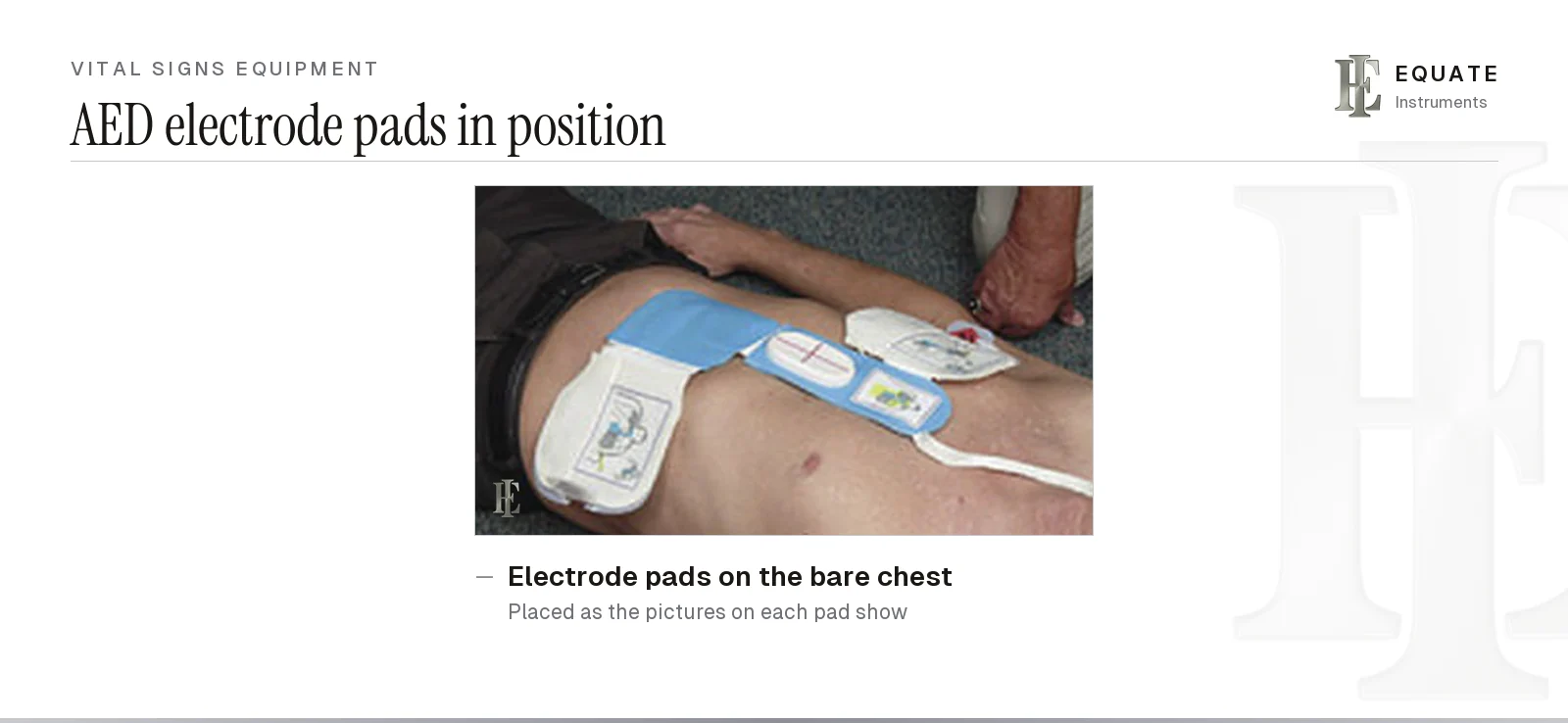
An AED is used when a person collapses, is unresponsive and is not breathing normally. Once the adhesive pads are on the bare chest, the device analyses the heart rhythm and, by spoken and on-screen prompts, tells the rescuer whether to deliver a shock and when to continue chest compressions. It is designed so that trained staff who are not doctors can use it safely, but every member of the team should still complete regular basic life support training that includes the AED. In Europe that training follows the European Resuscitation Council guidelines, last updated in 2025.
Resuscitation Council UK's quality standards for primary dental care say every clinical dental area should have immediate access to oxygen, airway equipment including suction, and an AED, with a spare set of adhesive pads and paediatric capability considered where children are treated, and that defibrillation should be attempted within 3 minutes of collapse. Their dental equipment list includes portable suction (a Yankauer-type sucker is the example given), oropharyngeal airways in sizes 0 to 4, adult and child self-inflating bags with reservoirs and an oxygen cylinder; as a guide, a full CD-size cylinder holds 460 litres, enough for about 30 minutes at 15 litres per minute. A pulse oximeter is not on that list; RCUK notes that saturation can be measured accurately with one, for example the ambulance crew's. The same standards ask practices to check emergency equipment at least weekly and to name the people responsible, to update every team member's resuscitation skills at least once a year, and to train new staff as part of their induction. AED batteries and pads have expiry dates, so the check covers the status indicator, the battery and the pad packs.
Emergency kits also hold hand instruments. Many practices keep Magill forceps, named after the anaesthetist Sir Ivan Magill, whose angled, ring-handled design lets trained staff retrieve a dropped item from the back of the mouth or pharynx under direct vision. Fluid in the airway is cleared with the practice's portable emergency suction; the wide-bore high-volume evacuation tip moves large volumes at the chair, while a surgical suction tip is much narrower (surgical tips have a bore of about 1.5 to 5 mm, and Frazier-type tubes add a finger port to control the pull) and is meant for the surgical site; neither replaces the portable emergency suction. See the dental evacuation and delivery systems guide for the suction system itself and the dental retractors page for mouth gags and tongue retractors.
Cleaning, disinfection and maintenance
Vital signs equipment touches intact skin rather than mucous membrane or broken tissue, so under the Spaulding classification it is noncritical. CDC guidance for dental settings (Kohn and colleagues, 2003) expects noncritical items to be cleaned and then disinfected between patients, using an intermediate-level disinfectant if they are visibly soiled with blood. In England, HTM 01-05 covers decontamination of the clinical environment and the equipment in it. In every case the manufacturer's instructions decide which disinfectants an item will tolerate, since many plastics, screens and cuff fabrics are damaged by harsh chemicals.
- Stethoscope: wipe the chest piece, tubing and ear tips with a compatible disinfectant wipe after each patient.
- Blood pressure cuffs: wipe the cuff and tubing after each patient, launder or replace fabric cuffs as the manufacturer allows, and consider single-patient-use cuffs for patients with known infections.
- Pulse oximeter probes: wipe reusable clips between patients; single-use adhesive sensors are discarded.
- ECG electrodes and capnography sampling lines: single use, discarded after each patient.
- Monitors and AED: wipe the casing and screen with a product the manufacturer approves; never immerse or steam sterilise them.
- Maintenance: check gauge calibration, monitor alarms, AED battery and pad expiry dates on a written schedule, and service equipment as the manufacturer specifies.
- Steel instruments in the emergency kit, such as Magill forceps and suction tips, are reprocessed like other surgical instruments; see the sterilisation and protective equipment guide.
Choosing vital signs equipment: what to check
- Blood pressure: a clinically validated automatic upper-arm monitor or a well-made aneroid gauge, with at least small, standard and large adult cuffs.
- Stethoscope: comfortable ear tips that seal well, and a chest piece that sits flat at the elbow.
- Pulse oximeter: a clear display, a pulse waveform or signal-strength indicator, adjustable alarms, and adult and paediatric probes if children are treated.
- Sedation monitoring: a monitor that combines SpO2, non-invasive blood pressure and capnography, and ECG if your sedation techniques or national rules require it.
- AED: located where it can be reached quickly from every surgery, with spare pads, paediatric pads or a paediatric mode, and a visible status indicator.
- Service: a supplier that offers calibration, spare cuffs and probes, and replacement batteries and pads for the life of the device.
- Records: a simple log for readings and equipment checks, kept as your national rules require.
The Equate difference
Equate does not make or sell stethoscopes, blood pressure monitors, pulse oximeters, capnographs, ECG machines or defibrillators. What it supplies for the sedation and surgical side of a practice is reusable hand instruments: 2 Magill airway forceps (adult 25 cm and paediatric 19 cm), 8 mouth gags in Jennings, Denhardt, Roser-König and Molt patterns, 10 surgical suction tips in stainless steel and titanium and 5 tongue retractors and depressors.
Equate Vital Signs and Monitoring Equipment in the Dental Practice options

Magill Airway Forceps Paediatric - 19 cm
EI-2259
Magill Airway Forceps Adult - 25 cm
EI-2260
Brunings Tongue Retractor 19cm
EI-0387
Tongue Depressor 14.5 cm - Double-Ended Spatula
EI-0389
Cawood-Minnesota Tongue Retractor
EI-0390
Surgical Suction Pipe 3 mm x 18 cm
EI-1488
Surgical Suction Pipe 4 mm x 18 cm
EI-1489
Surgical Suction Pipe 5 mm x 18 cm
EI-1490
Titanium Surgical Suction Tube 2 mm x 15 cm
EI-1491
Frazier Surgical Suction Tube 4 mm
EI-1492
Frazier Surgical Suction Tube 3.3 mm
EI-1493
Frazier Surgical Suction Tube 2.7 mm
EI-1494Browse all oral surgery instruments Browse all accessories & supplies instruments
Buying in your market
Frequently asked questions
Why do dentists take your blood pressure?
A blood pressure reading is part of the medical history. It can reveal undiagnosed high blood pressure, helps the dentist decide whether treatment, local anaesthetic or sedation should go ahead that day, and gives a baseline to compare against if the patient becomes unwell in the chair.
What vital signs are checked in a dental office?
Usually blood pressure and pulse, and sometimes breathing rate and temperature. MedlinePlus gives the normal resting ranges for a healthy adult as a blood pressure of 90/60 to 120/80 mmHg, a pulse of 60 to 100 beats per minute, 12 to 18 breaths per minute and a temperature of 36.5 to 37.3 °C. For sedation and general anaesthesia the team also monitors oxygen saturation with a pulse oximeter, breathing with a capnograph and, where required, heart rhythm with an ECG.
What blood pressure is too high for dental treatment?
Published reviews have found no evidence-based cut-off (Yarows et al., cited by the American Dental Association), but the ADA suggests a working rule for adults. Below 160/100 mmHg, care goes ahead as normal. Above 160/100, the reading is repeated; if it is confirmed, elective treatment is postponed and the patient is referred to their doctor. Where dental pain or symptoms are contributing to the raised reading, emergency care can go ahead at 160–180 systolic and/or 100–109 diastolic with blood pressure checked every 10 to 15 minutes, while above 180 systolic or 109 diastolic the dentist speaks to a physician first.
Is a manual or automatic blood pressure monitor better for a dental practice?
Both work if used correctly. Automatic monitors are quicker and do not depend on the operator's hearing, which suits pre-treatment checks; a manual aneroid cuff and stethoscope is useful as a check when an automatic reading looks wrong or the heart rhythm is irregular. Whichever you use, pick a validated device and the right cuff size.
What is the difference between a pulse oximeter and a capnograph?
A pulse oximeter measures how much oxygen the blood is carrying (SpO2) and the pulse rate. A capnograph measures carbon dioxide in exhaled breath and shows each breath as a waveform. The capnograph detects a stop in breathing almost at once, while oxygen saturation can stay normal for some time afterwards.
Does every dental practice need a defibrillator?
Resuscitation Council UK's quality standards say every clinical dental area should have immediate access to an AED, together with oxygen and airway equipment including suction. Requirements elsewhere are set by national rules, but an AED is widely regarded as standard emergency equipment for dental practices.
How do you clean a blood pressure cuff and pulse oximeter between patients?
They touch only intact skin, so they are noncritical items: clean and disinfect them between patients with a product the manufacturer approves. Single-use parts such as adhesive oximeter sensors, ECG electrodes and capnography sampling lines are discarded after each patient.
References
- Boyd LB. Dental Instruments: A Pocket Guide, 7th edition. Saunders/Elsevier, 2020 (photographs used under licence)
- Kohn WG, et al. Guidelines for Infection Control in Dental Health-Care Settings, 2003. MMWR 52(RR-17), Centers for Disease Control and Prevention
- Department of Health (England). HTM 01-05: Decontamination in primary care dental practices, 2013 edition (now published by NHS England)
- Resuscitation Council UK. Quality Standards: Primary dental care equipment list
- Resuscitation Council UK. Quality Standards: Primary dental care (last updated May 2020)
- Intercollegiate Advisory Committee for Sedation in Dentistry. Standards for Conscious Sedation in the Provision of Dental Care (V1.1), 2020 (PDF)
- Scottish Dental Clinical Effectiveness Programme. Conscious Sedation in Dentistry: surveillance review, December 2022
- American Dental Association. Oral Health Topics: Hypertension
- MedlinePlus Medical Encyclopedia (US National Library of Medicine). Vital signs
- Sin M, Edwards D, Currie C, Corbett I. Prevalence of medical emergency events in primary dental care within the UK. British Dental Journal 2023;235(9):721–726
- American Dental Association. Guidelines for the Use of Sedation and General Anesthesia by Dentists (adopted October 2025)
- Mancia G, Kreutz R, et al. 2023 ESH Guidelines for the management of arterial hypertension. Journal of Hypertension 2023;41(12):1874–2071, European Society of Hypertension
- Scottish Dental Clinical Effectiveness Programme (SDCEP, Scotland). Conscious Sedation in Dentistry: Dental Clinical Guidance, 3rd edition, 2017
- Intercollegiate Advisory Committee for Sedation in Dentistry (IACSD). Standards for Conscious Sedation in the Provision of Dental Care, 2015, updated 2020 (UK)
- European Resuscitation Council. ERC Guidelines 2025: Adult Basic Life Support. Resuscitation, 2025
- US Food and Drug Administration. Pulse Oximeters: accuracy and limitations
I am a…
Related
- Dental Local Anaesthetic and Nitrous Oxide Sedation Equipment: What Each Part Does
- Oral Surgery and Extraction Instruments
- Dental Hemostats (Haemostats) and Mosquito Forceps
- Surgical Suction Tips for Oral Surgery
- Dental and Oral Surgery Retractors
- Oral Surgery Tray Setup
- Local Anaesthetic (Anesthetic) Tray Setup and How to Load a Dental Syringe
- Dental Evacuation Devices, the Air/Water Syringe and the Dental Unit
- Dental Sterilisation and Protective Equipment
- Universal Surgical Instruments for Oral and Periodontal Surgery