Dental Evacuation Devices, the Air/Water Syringe and the Dental Unit
Written by the Equate Instruments Technical Team · Reviewed by the Medical & Dental Board, Equate Instruments · Updated ·
Dental evacuation devices are the suction tips that keep the mouth clear during treatment: the high-volume evacuator (HVE) tip for water, debris and aerosol, the low-volume saliva ejector for pooling saliva, and narrow surgical tips for blood and irrigant. They connect to the dental unit, which also carries the air/water syringe, handpiece tubing, light and chair controls.
Key points
- High-volume suction removes large amounts of fluid and aerosol close to the tooth; low-volume suction only clears saliva that collects in the floor of the mouth.
- Patients shouldn't close their lips around a saliva ejector, because a lip seal can make fluid in the tubing flow back into the mouth.
- Dental unit water needs treating and monitoring: CDC sets ≤500 CFU/mL for routine treatment, and HTM 01-05 sets daily and between-patient flushing routines.
What are dental evacuation and delivery systems?
Every operative, hygiene and surgical appointment depends on equipment that never touches a tooth with a cutting edge: suction to remove water, saliva, debris and aerosol, a syringe to rinse and dry, and the dental unit that powers and holds all of it. Linda Bartolomucci Boyd's Dental Instruments: A Pocket Guide (Elsevier) groups them in one chapter because they work as a single system, plumbed into the same chair.
Suction comes in two strengths. High-volume evacuation moves a large volume of air through a wide-bore tip and is used whenever a dental handpiece, ultrasonic scaler or syringe is spraying water. Low-volume suction runs through a thin tube and is meant only to keep saliva from pooling. Most tray setups, from the hygiene tray onwards, carry one tip of each, and a surgical extraction tray adds a narrow surgical tip.
| Device | Main job | Suction line | Usual form |
|---|---|---|---|
| High-volume evacuator (HVE) tip | Removes coolant water, debris and aerosol at the tooth | High-volume | Stainless steel or autoclavable plastic, or single-use plastic |
| Saliva ejector | Clears saliva pooling in the floor of the mouth | Low-volume | Single-use, bendable plastic tube with a capped tip |
| Mandibular evacuator | Low-volume suction plus tongue retraction for the lower arch | Low-volume | Single-use plastic with a padded shield and chin rest; reusable metal versions exist |
| Illuminated isolation system | Suction, tongue and cheek retraction and a bite block in one mouthpiece, with a light in the head | High-volume | Single-use mouthpiece on a reusable control head |
| Surgical suction tip | Removes blood and irrigant from a surgical site | High-volume | Narrow stainless steel or titanium tube, or single-use plastic |
| Air/water syringe tip | Rinses and dries teeth and tissues | Air and water lines | Metal reusable tip or single-use plastic tip |
High-volume evacuator (HVE) tips
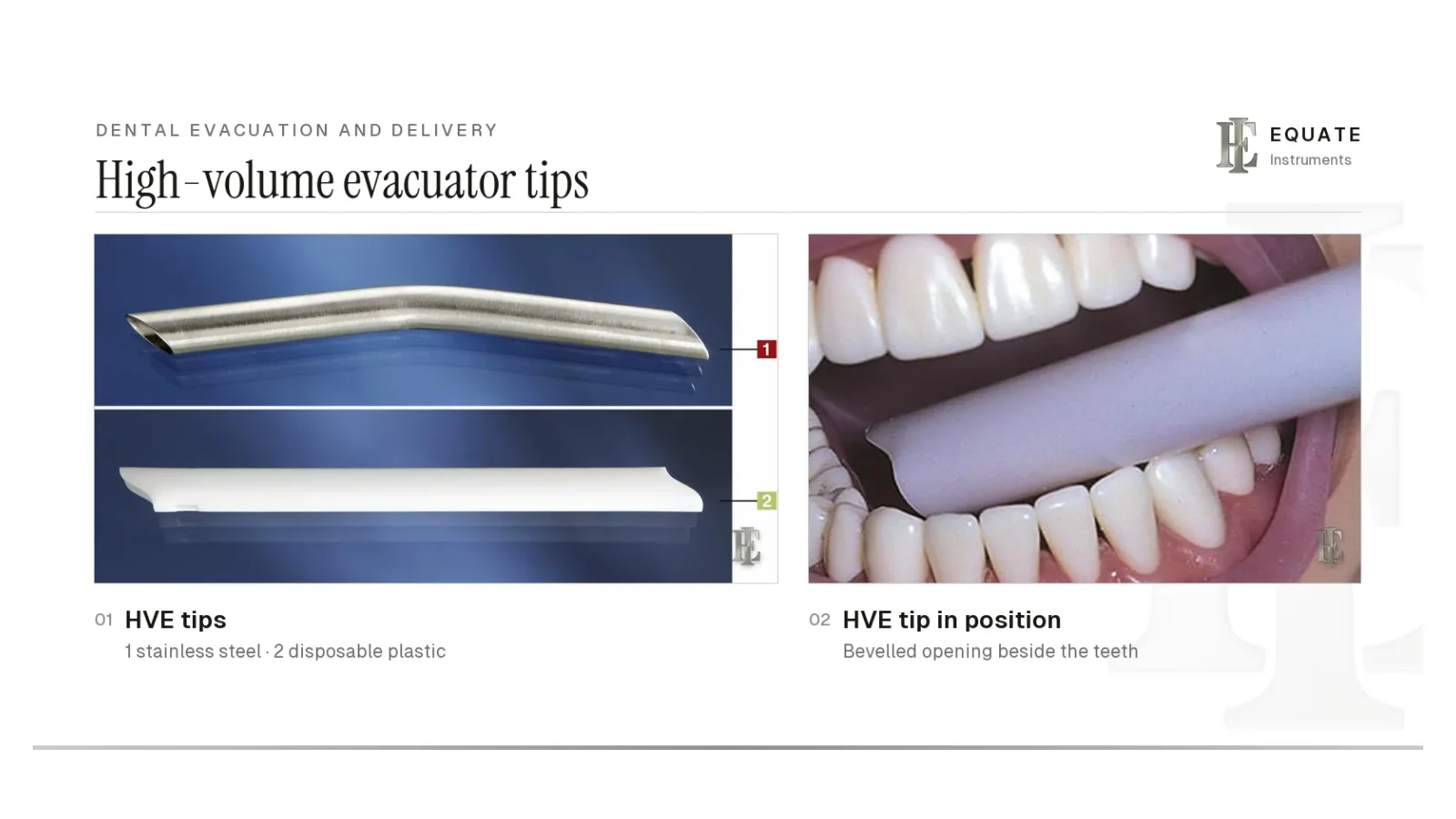
The HVE tip is a wide tube, straight or with a gentle bend, that pushes into the high-volume hose on the assistant's side of the unit. Its job is to catch the coolant spray from a handpiece or scaler, along with tooth debris from burs and old restorative material such as amalgam being removed, before it spreads around the mouth or into the room. Capturing spray at its source is also one of the most effective ways to reduce the aerosol the dental team breathes: Harrel and Molinari's 2004 review in the Journal of the American Dental Association names high-volume evacuation as a routine precaution against aerosol and splatter.
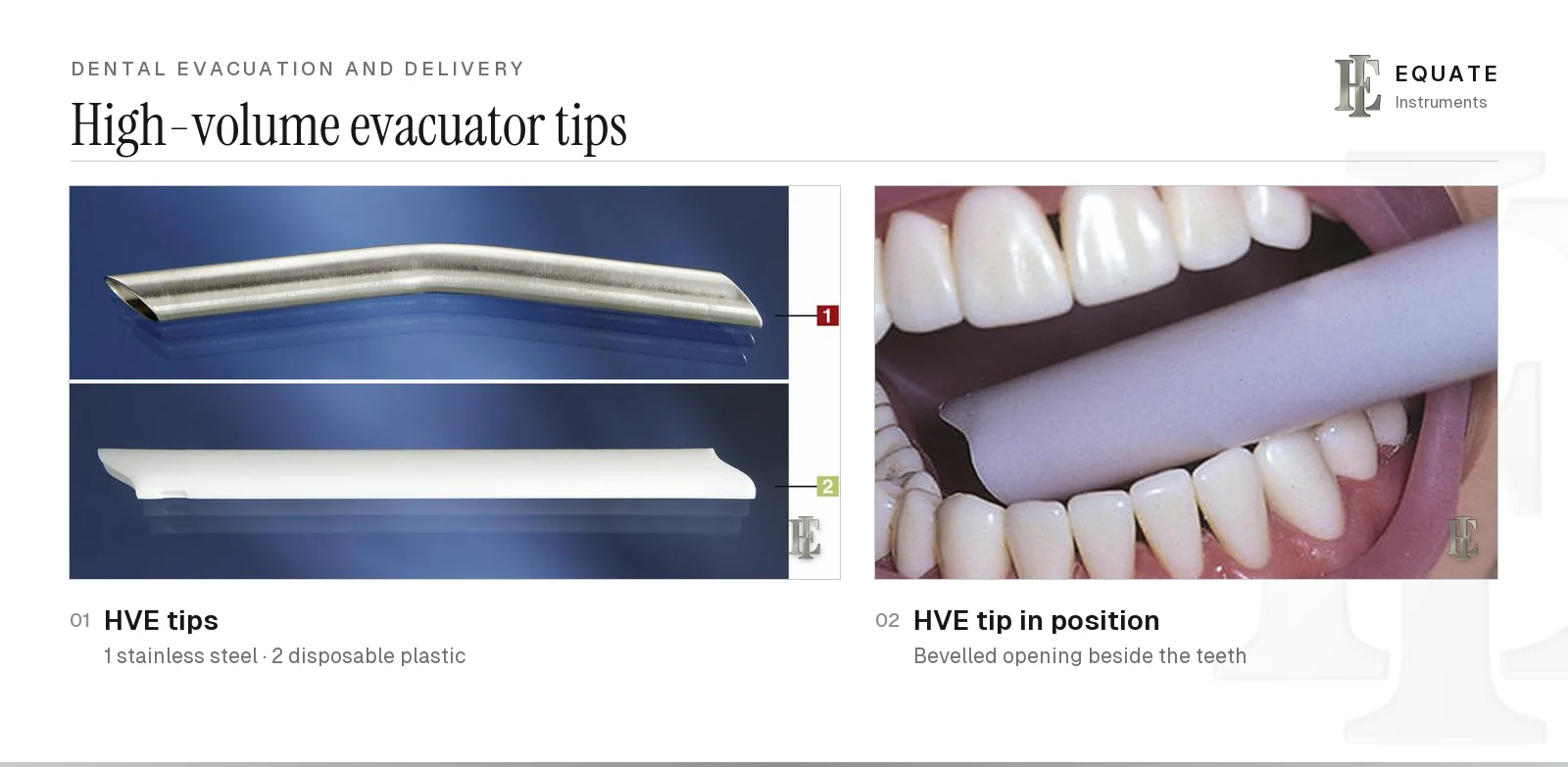
Tips are made from stainless steel, from plastic that can be steam sterilised, or from single-use plastic. Most have a bevelled end. In four-handed dentistry the assistant usually holds the bevel parallel to the buccal or lingual surface of the tooth being worked on and just behind it, so the opening sits close to the spray without hiding the operator's view. The side of the tip also doubles as a retractor for the cheek or tongue, and can work alongside a cheek retractor when more access is needed. Distance matters: in a manikin study, Koch and Graetz (PLOS ONE, 2021) counted roughly a third as many spray particles per second with the cannula about 10 mm from the tooth as at about 50 mm, and none at all once flow passed about 300 litres per minute.
Common mistakes are placing the opening against soft tissue, which grabs the mucosa and stops the airflow, and holding the tip too far from the tooth, where it removes almost nothing. A tip with a smooth, rolled edge is kinder to tissue if it does touch. In spray-heavy surgery the assistant often runs a wide HVE tip near the handpiece while a narrow surgical suction tip clears the wound.
Saliva ejectors and the backflow problem
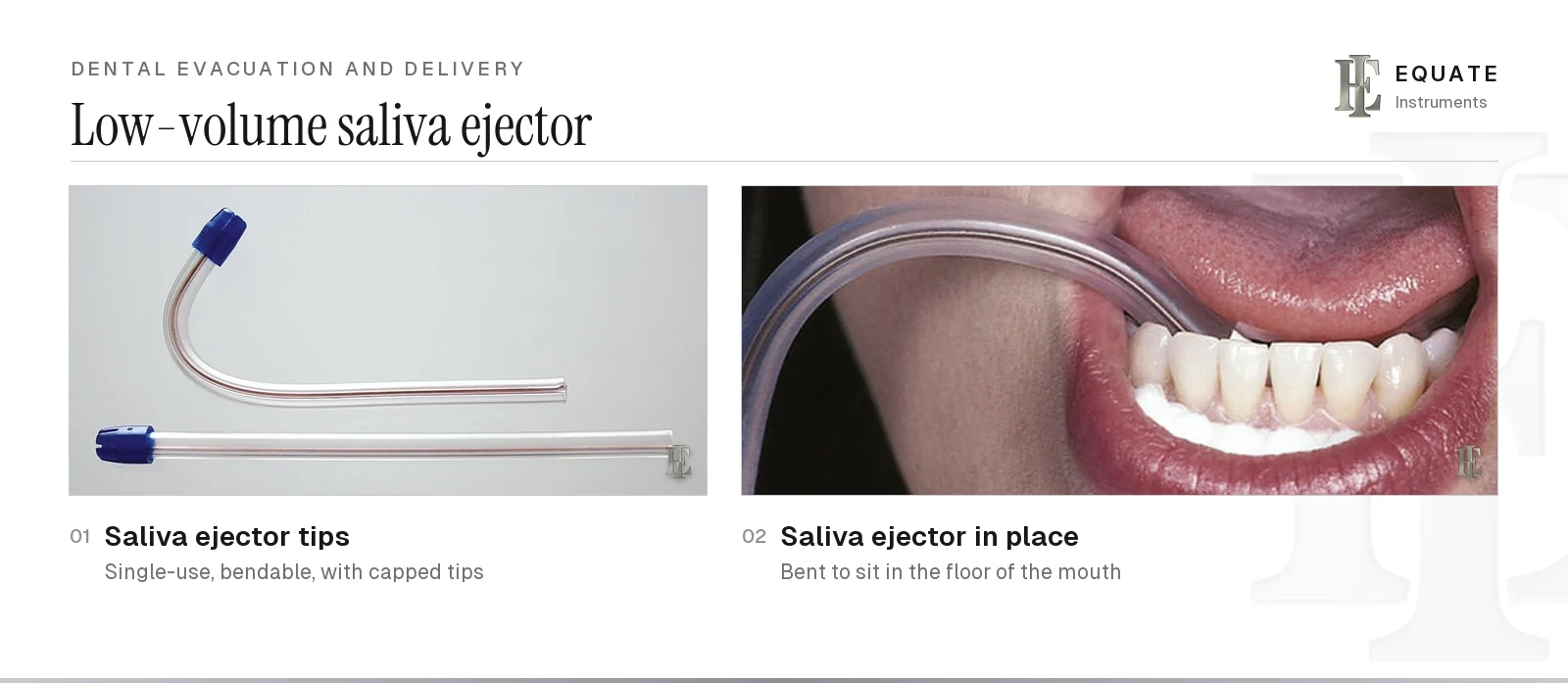
A saliva ejector is a narrow, flexible tube that runs on the low-volume line. It contains a wire so it can be bent into a hook and left resting in the floor of the mouth, under the tongue or along the lingual side of the lower teeth, while the patient keeps still. A vented cap at the end stops the tube sucking onto tissue. Saliva ejectors are single-use; discard them after each patient in line with your national healthcare-waste rules.
The low airflow that makes a saliva ejector comfortable is also its weakness. CDC guidance (Kohn and colleagues, 2003) explains that fluid already in the tubing can flow back into the mouth when the patient closes their lips tightly around the tip, when the tubing is held above the level of the mouth, or when high-volume suction is running at the same time. For that reason, patients shouldn't be told to close around the ejector, and it shouldn't be relied on to remove the heavy spray from a handpiece. The warning rests on laboratory work such as Mann, Campbell and Crawford's 1996 study in the Journal of the American Dental Association, which measured the pressure changes that drive backflow in low-volume lines and concluded that simple precautions prevent it. A saliva ejector also does little for aerosol: in Jacks' 2002 laboratory comparison during ultrasonic scaling, hands-free high-volume evacuation attachments cut airborne particles by roughly 90% compared with a standard saliva ejector.
Mandibular evacuators and illuminated isolation systems
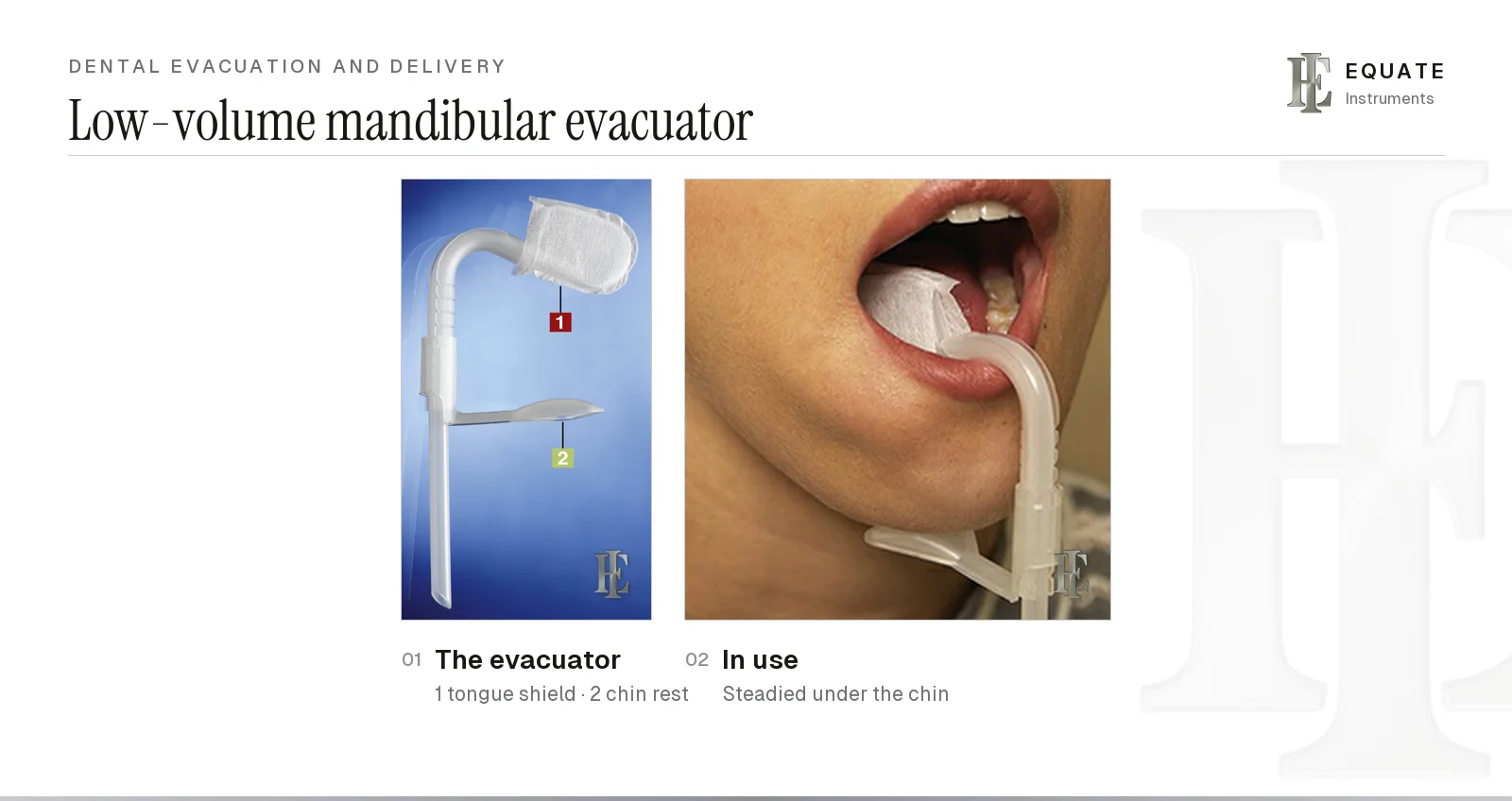
A mandibular evacuator is a low-volume device shaped for the lower arch. A padded shield sits against the tongue and holds it away from the teeth, the suction opening collects saliva behind the shield, and an adjustable rest under the chin keeps the device in place without anyone holding it. It's popular for fissure sealants and for clinicians working without an assistant, where a dry lower molar is hard to keep otherwise. The plastic versions are single-use; older metal designs are reprocessed like other instruments.
An illuminated isolation system goes a step further. A soft single-use mouthpiece connects to the high-volume line and works as a bite block, a tongue and cheek retractor and a barrier in front of the airway at once, while a small light in the control head brightens the working area. One mouthpiece isolates the upper and lower quadrants on one side together. The light usually has a setting that avoids curing light-sensitive materials early. Follow the manufacturer's reprocessing instructions for the reusable head, and use separate dental dam where a procedure demands complete isolation.
Surgical suction tips
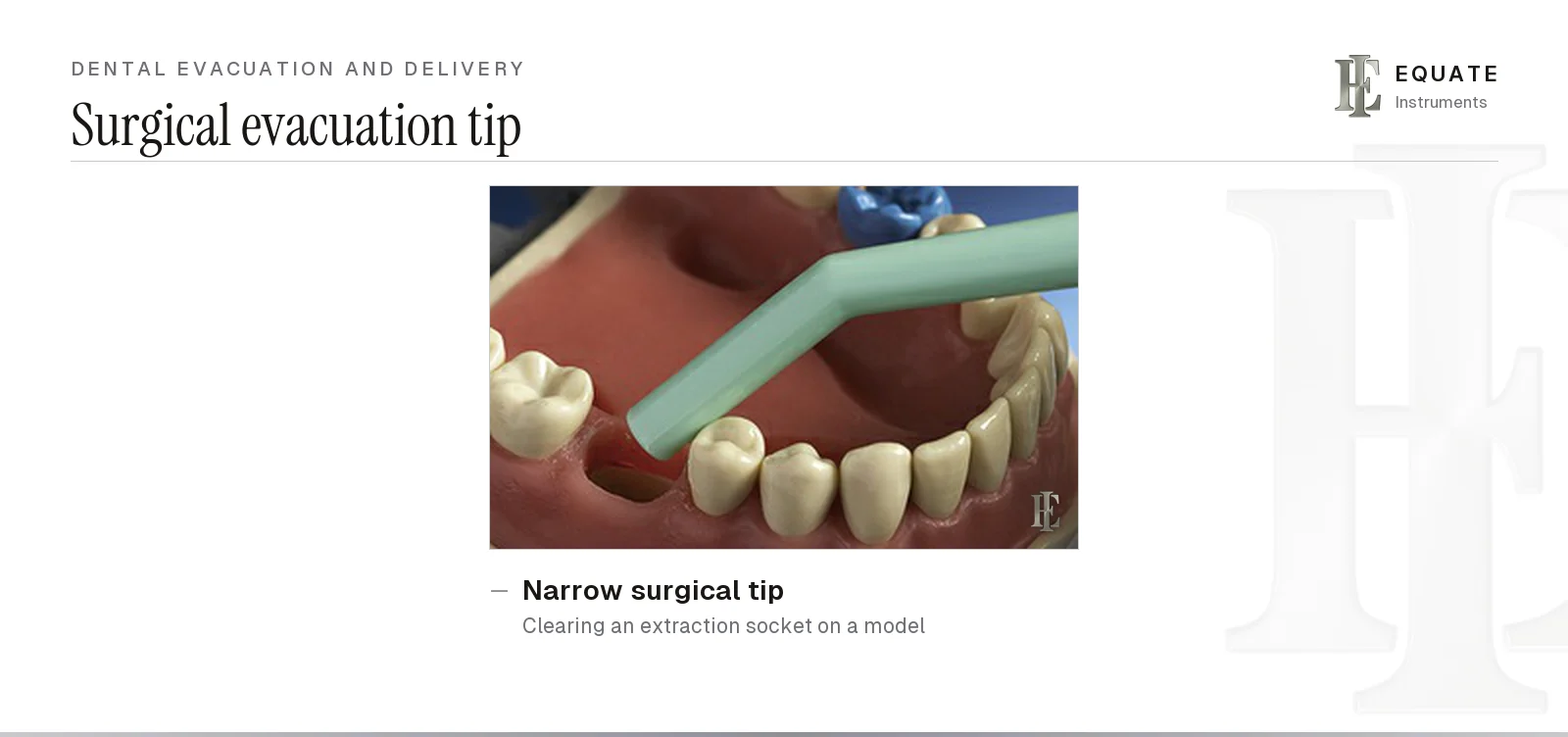
Surgery calls for a narrower tip. A surgical suction tip has a fine bore and a bent or curved shaft, so it can reach into an extraction socket, a flap or an implant osteotomy and lift blood and irrigant away without blocking the view. Boyd's pocket guide puts that narrowed end down as the feature that lets it fit the surgical site. It runs on the high-volume line but carries far less volume than an HVE tip, and some steel tips taper where the tubing pushes on, so they need an adaptor or an extra length of connecting tubing to reach the unit's hose.
Bore follows the site: roughly 1.5–2 mm for implant and microsurgical work, about 3 mm for flaps and 4–5 mm for surgical extractions. Frazier-pattern tubes add a finger port for easing suction near soft tissue, and an inline bone collector fitted between the tube and the hose can save drilling debris for grafting. See surgical suction tips for Frazier, titanium and bore-by-procedure choice, positioning and lumen care; for the rest of the surgical tray see tooth extraction instruments and dental retractors.
Narrow bores clog easily, so the lumen needs extra attention every time the tip goes for reprocessing.
The air/water syringe and its tips
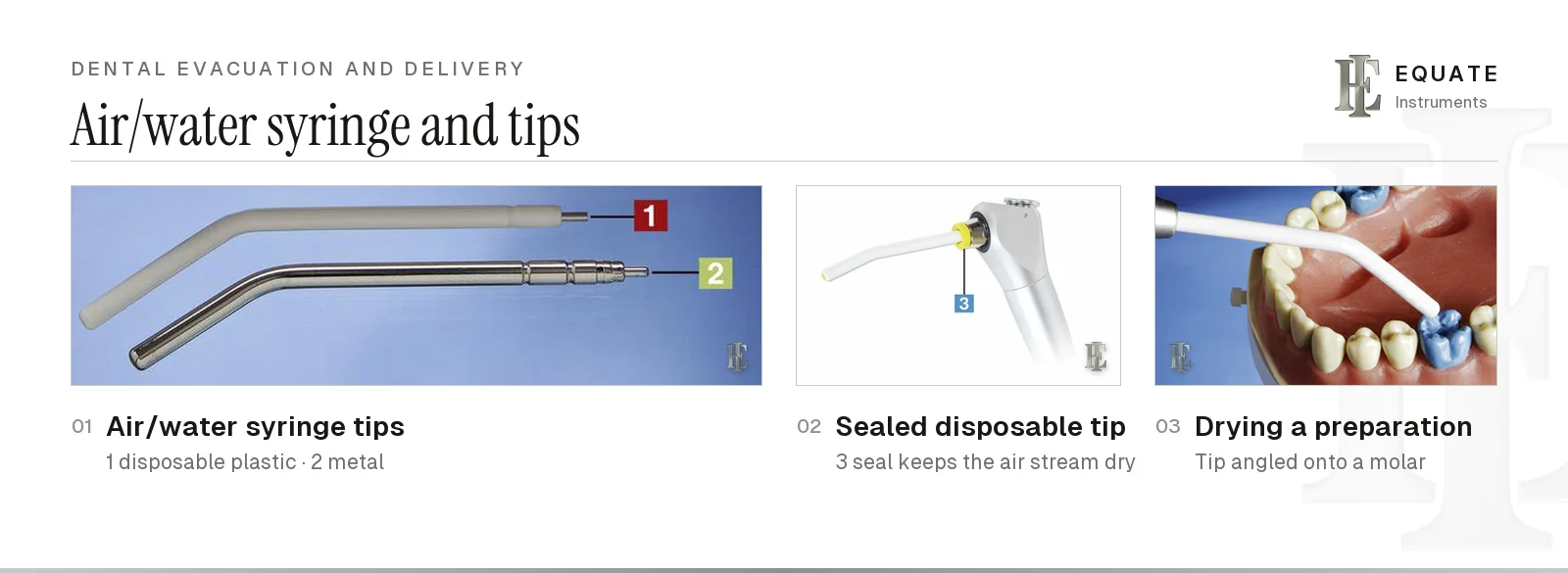
The air/water syringe, also called a three-way or triple syringe because it gives three outputs, rinses and dries individual teeth or the whole mouth. It isn't to be confused with the aspirating syringe used for local anaesthesia. On most designs one button releases water, the other air, and pressing both together gives a fine spray. Units usually have one syringe for the assistant and may have a second on the operator's side.
Tips come as reusable metal tips, which are removed and heat sterilised after each patient, and single-use plastic tips that are discarded. Some single-use tips have a seal that stops water creeping into the air channel, so the air stream comes out dry; wet air from a worn tip can compromise bonding on a freshly etched surface. The syringe body itself stays on the unit and is cleaned and disinfected or covered with a barrier between patients, as its manufacturer specifies.
Use a gentle stream from a short distance. Dry prepared dentine lightly rather than desiccating it, and never direct a strong air stream into an extraction socket, periodontal pocket or open surgical site, where it can force air into the tissues. Uehara, Okumura and Asahina (International Dental Journal, 2007) reported air spreading under the skin of the neck after an air syringe was used to dry the lower gingiva. CDC guidance asks for devices connected to the dental water system, including the syringe, to be run for at least 20–30 seconds after each patient to flush the lines.
Dental unit waterlines and self-contained water bottles
The water that cools handpieces, feeds the syringe and fills the patient's cup runs through long, narrow tubing that sits still between patients and overnight. These conditions encourage biofilm, so untreated dental unit water can carry far more bacteria than tap water. CDC recommends that water for routine non-surgical treatment meets drinking water standards, at most 500 colony-forming units of heterotrophic bacteria per millilitre (CFU/mL), and notes that a water bottle on its own isn't enough to achieve that. Water quality should be monitored as the unit or treatment product manufacturer recommends. The risk is real: in 2015 a paediatric dental practice in Georgia, USA, was linked to Mycobacterium abscessus infections in 20 children (11 confirmed, 9 probable) after pulpotomies. Water from all seven of its dental stations exceeded 500 CFU/mL, at a mean of 91,333 CFU/mL, and the practice neither monitored water quality nor bleached its waterlines at the end of each day (Peralta and colleagues, MMWR 2016).
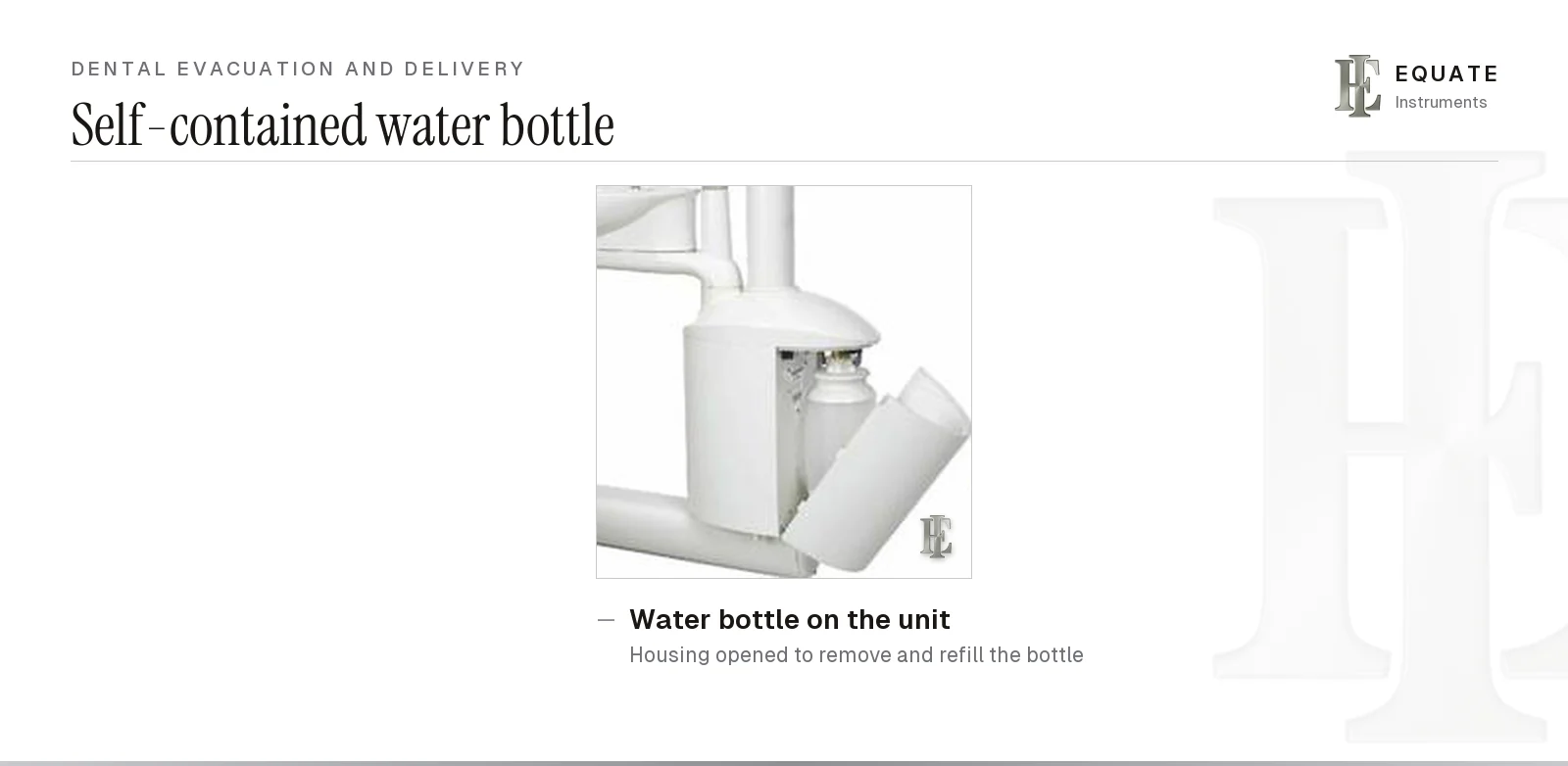
Many units take water from a self-contained bottle rather than the mains. Treatment tablets or other waterline products, added each time the bottle is filled, help keep bacterial counts down, and a periodic stronger 'shock' treatment clears established biofilm; use only the products the unit's manufacturer approves and follow their safety instructions. HTM 01-05, the decontamination guidance for dental practices in England, adds a practical routine: fill bottles with distilled or reverse-osmosis water, remove and flush them at the end of the day and leave them open and inverted to dry, flush waterlines for at least two minutes at the start and end of the day and 20–30 seconds between patients, and disinfect the lines periodically as the manufacturer directs. The ADA sets no fixed testing interval: it says testing the output water is the only way to know a treatment regimen is working, points to the schedules some unit manufacturers publish, and notes that some US states have brought in, or are drafting, rules that make testing mandatory. It adds that a self-contained bottle keeps a practice running through a boil-water notice, and that anti-retraction valves limit what enters the lines but don't remove biofilm.
Dental unit water isn't suitable for surgery. For surgical procedures both CDC and HTM 01-05 expect sterile water or sterile saline, delivered by a sterile device such as a sterile syringe, sterile tubing that bypasses the unit's waterlines or a single-use sterile device.
The dental unit and the assistant's delivery system
The dental unit, or delivery system, brings together the patient chair, its height and recline controls, an operating light with adjustable intensity, tubing for high-speed and slow-speed handpieces, the air/water syringes, the high- and low-volume suction hoses, a foot control (rheostat) for the handpieces with a water on/off option, an instrument tray and, on many units, a screen for records and radiographs. EN ISO 7494-2 covers the air, water, suction and wastewater systems of stationary dental units and patient chairs.
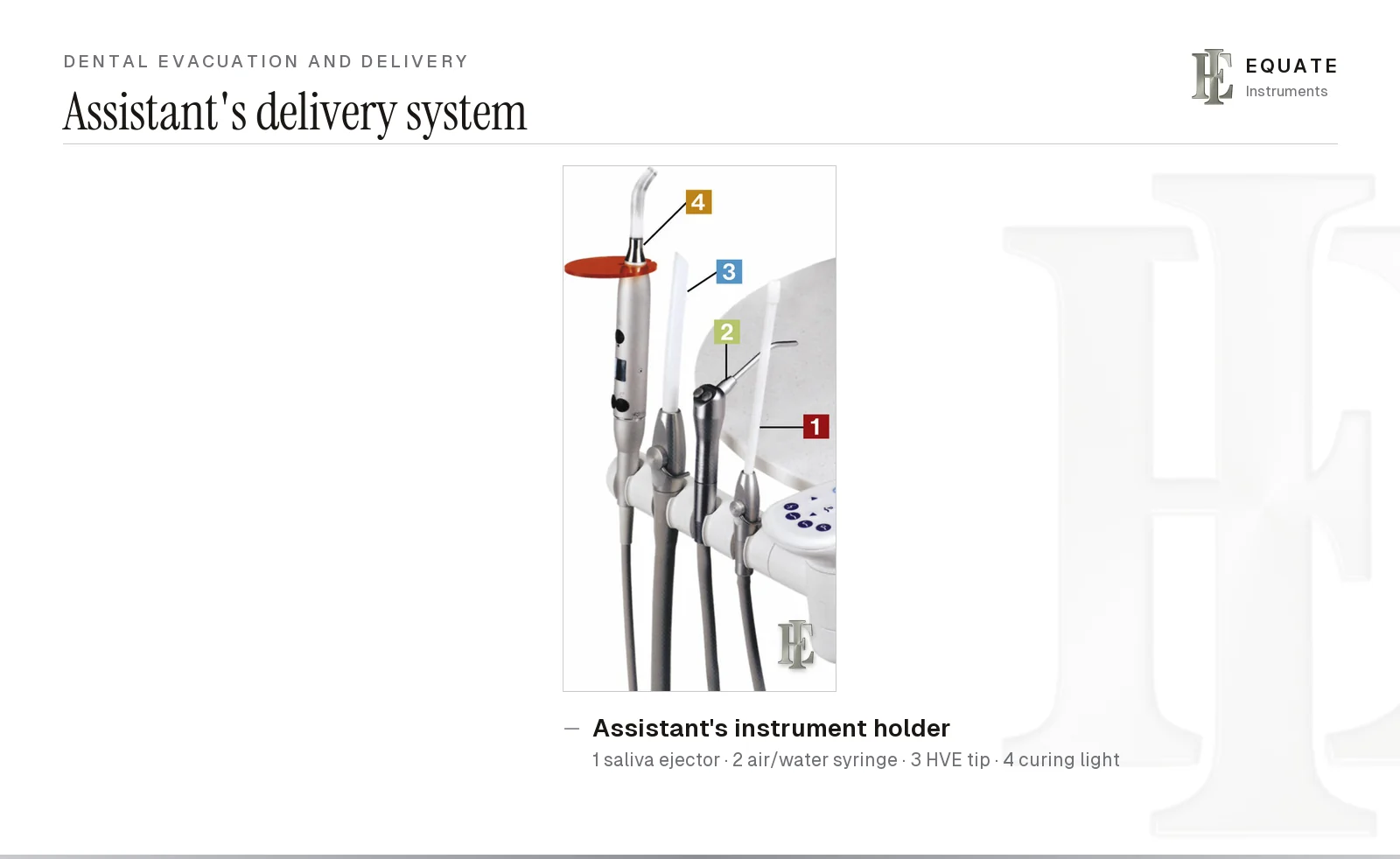
Layouts vary, but suction usually sits on the assistant's side, and handpiece tubing can be mounted for the operator, the assistant or both. The assistant's delivery system typically holds the saliva ejector, an air/water syringe, the HVE tip and often a curing light with an orange protective shield, next to a bracket table for the tray setup. Setting the unit up the same way in every surgery means the team can reach each item without looking.
Two safety parts of the suction and water side are easy to forget. In the EU, Regulation (EU) 2017/852 on mercury requires dental facilities that use amalgam or remove amalgam fillings to have an amalgam separator in the waste line that retains at least 95% of amalgam particles, maintained as its manufacturer instructs; see amalgam restorative instruments. HTM 01-05 also expects anti-retraction (backflow) valves on handpieces, scalers and waterlines, with spittoons, three-in-one syringes and wet-line suction among the equipment that needs this protection.
- Check suction strength at the start of each session and clean the suction lines and filters as the manufacturer directs.
- Service or empty the amalgam separator as its manufacturer directs, and check that anti-retraction valves are monitored and maintained.
- Treat in-line waterline filters with a suitable cleaning solution at least at the end of each session, and replace disposable filters daily.
- Flush waterlines, handpiece lines and syringes before the first patient and between patients.
- Clean and disinfect, or barrier-protect, the chair, controls, light handles and delivery heads after every patient.
- Wash spittoons and aspirating units through at the end of each session.
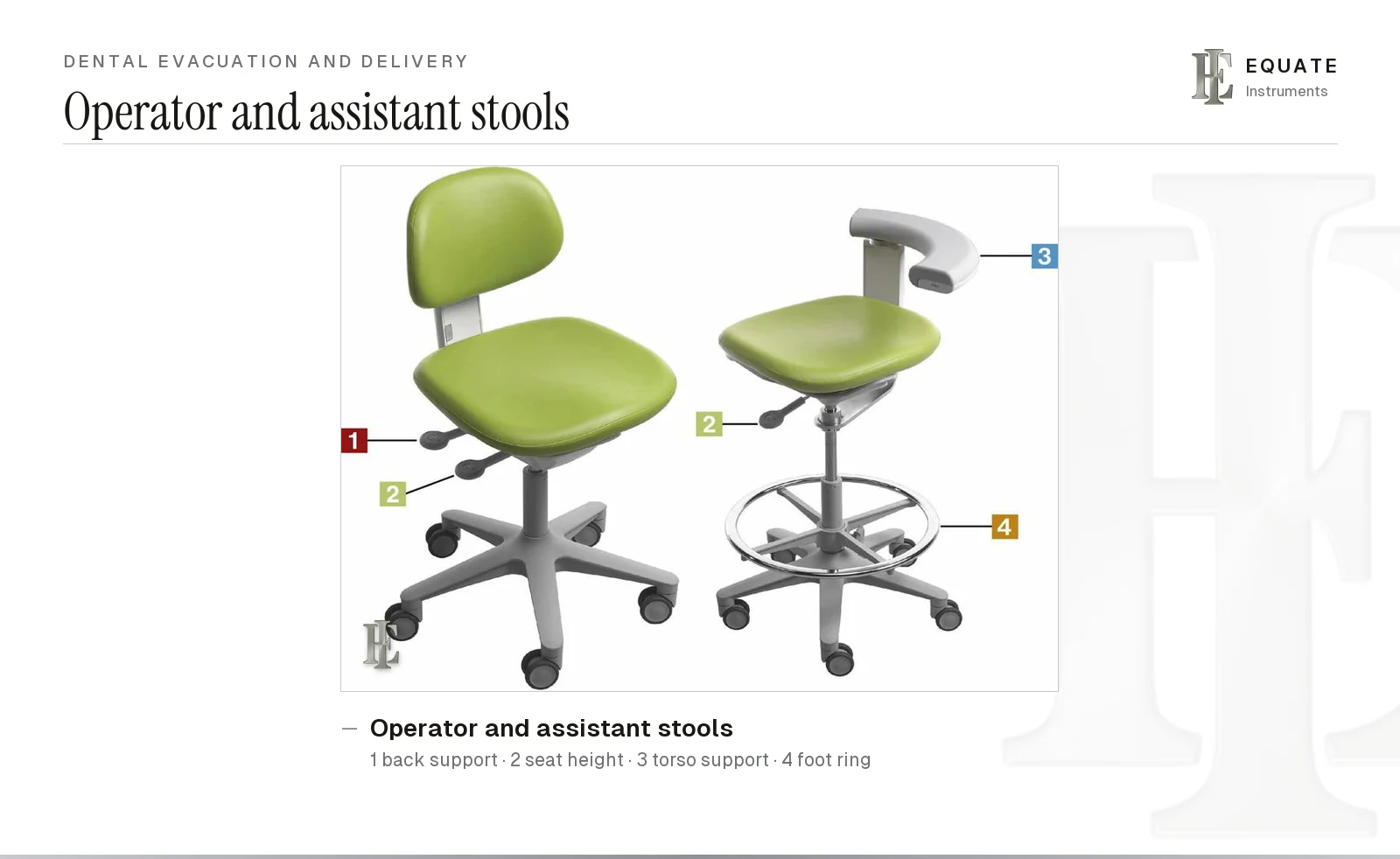
Operator and assistant stools
Good posture at the chair depends on the stools as much as the unit. An operator stool has an adjustable seat height and a back support that moves forwards and backwards to support the lower back; the operator normally sits with thighs roughly level and feet flat on the floor. An assistant stool also adjusts in height but adds a foot ring, so the assistant can sit higher than the operator with feet supported, and a torso support or arm that the assistant leans against to work on the patient's side.
The assistant usually sits about 10–15 cm higher than the operator so they can see into the mouth past the operator's hands. Stools are noncritical items: the seat, back and height levers are cleaned and disinfected after each patient using a product the manufacturer approves for the upholstery.
Cleaning, reprocessing and choosing evacuation equipment
Under the Spaulding classification, HVE tips, surgical suction tips and metal syringe tips touch mucous membranes or enter tissue, so reusable versions are cleaned and heat sterilised between patients, while chairs, stools and the unit's surfaces are noncritical and are cleaned and disinfected. CDC's 2003 guidance and HTM 01-05 both apply. HTM 01-05 goes further for hard-to-clean items, suggesting single-use saliva ejectors, aspirator tips and three-in-one syringe tips where possible. Follow the reprocessing instructions each manufacturer supplies and your national rules. For steriliser cycles, packaging and protective equipment, see the sterilisation and protective equipment guide.
- Bore: wide HVE tips for operative and hygiene work; narrow surgical tips for sockets and flaps (bore guide on the surgical suction tips page).
- Material: passivated stainless steel for everyday surgical tips; titanium where lighter weight matters.
- Fit: check the tip's connector against the unit's high-volume hose, or order the adaptor.
- Reprocessing: a straight, open bore and a supplied cleaning stylet make narrow tubes much easier to clean.
- Cassette space: reusable tips should fit the instrument cassettes or trays they'll be sterilised in.
| Item | Reusable or single-use | Between patients |
|---|---|---|
| Metal or autoclavable HVE tip | Reusable | Clean the lumen, pack with an internal process indicator, steam sterilise |
| Plastic HVE tip, saliva ejector, mandibular evacuator | Single-use | Discard after each patient under national healthcare-waste rules |
| Surgical suction tip (steel or titanium) | Reusable | Brush or stylet the bore, clean ultrasonically or in a washer-disinfector, pack and steam sterilise |
| Metal air/water syringe tip | Reusable | Remove, clean, pack and steam sterilise; flush the syringe 20–30 seconds |
| Syringe body, hoses, chair, stools | Reusable | Clean and disinfect, or replace barrier covers |
| Suction lines and filters | Reusable | Run water or line cleaner through and empty filters as the manufacturer directs |
The Equate difference
Equate doesn't make HVE tips, saliva ejectors, air/water (three-way) syringes or dental units; the dental syringes it lists are for local anaesthesia. Its catalogue lists 10 reusable surgical suction tips: three 18 cm stainless steel suction pipes with 3, 4 and 5 mm bores, three Frazier suction tubes (2.7, 3.3 and 4 mm), three titanium suction tubes (1.5, 2 and 3 mm) and one curved stainless steel tube, plus four bone collectors (one with a suction tube adapter), 22 cheek retractors in accessories and supplies, and 5 tongue retractors and depressors for keeping the field open.
Equate Dental Evacuation Devices, the Air/Water Syringe and the Dental Unit options

Bone Collector with Suction Tube Adapter
EI-2727
Bone Collector 15.5 cm
EI-2775
Bone Collector with Filter 12 mm
EI-3080
Bone Collector with Filter 7 mm
EI-3081
Orthodontic Double-Sided Cheek Retractor
EI-3266
Wassmund Retractor 20x30mm
EI-0374
Wassmund Retractor 35x11mm
EI-0375
Obwegeser Internal Retractor 14x70mm
EI-0376
Obwegeser External Retractor 10x31mm
EI-0377
Kocher Retractor 40x11mm - 21cm
EI-0378
Obwegeser External Retractor 14x70mm
EI-0379
Obwegeser Internal Retractor 10x42mm
EI-0383Browse all accessories & supplies instruments
Buying in your market
Frequently asked questions
What is the difference between an HVE tip and a saliva ejector?
An HVE tip runs on the high-volume line and removes large amounts of water, debris and aerosol right at the tooth, so it's used whenever a handpiece or scaler is spraying. A saliva ejector runs on the low-volume line and only clears saliva that pools in the floor of the mouth.
Why shouldn't patients close their lips around the saliva ejector?
A tight lip seal can lower the pressure in the mouth below the pressure in the tubing, so fluid already in the line can flow back into the patient's mouth. CDC guidance lists this, tubing held above the mouth and simultaneous high-volume suction as causes of backflow.
Are HVE tips and air/water syringe tips reusable?
Both come in reusable and single-use forms. Stainless steel and autoclavable plastic tips are cleaned and steam sterilised between patients; single-use plastic tips are discarded. HTM 01-05 encourages single-use aspirator and three-in-one tips where they're hard to clean.
How clean should dental unit water be?
CDC recommends that water for routine non-surgical treatment meets drinking water standards, at most 500 CFU/mL of heterotrophic bacteria. That needs a waterline treatment product and regular monitoring, not just a water bottle. Surgery needs sterile water or saline delivered separately from the unit.
How long should dental waterlines be flushed?
CDC asks for handpieces, scalers and air/water syringes to be run for at least 20–30 seconds after each patient. HTM 01-05 adds at least two minutes at the start and end of the day and after long breaks.
How close should the HVE tip be to the tooth?
Close: hold the bevelled opening just behind and parallel to the tooth being treated. Distance changes how much spray escapes a great deal: bringing the cannula in from about 50 mm to about 10 mm cut escaping particles by around two thirds in Koch and Graetz's 2021 manikin study.
Does a saliva ejector control aerosol?
Not on its own. It runs on the low-volume line and is meant for pooled saliva. In a 2002 laboratory study during ultrasonic scaling, Jacks found high-volume evacuation attachments cut airborne particles by about 90% compared with a standard saliva ejector.
Can contaminated dental waterlines make patients ill?
Yes. In 2015, 20 children treated by one Georgia paediatric practice developed Mycobacterium abscessus infections after pulpotomies. Its unit water averaged 91,333 CFU/mL against a 500 CFU/mL limit, and the practice neither monitored its water quality nor bleached the lines at the end of each day (MMWR 2016).
How often should dental unit water be tested?
There's no single interval. The ADA says testing is the only way to confirm a waterline regimen works and advises following the unit or treatment product manufacturer's schedule; some US states have brought in, or are drafting, rules that make testing mandatory.
Can the air/water syringe be used to dry an extraction socket?
No. A strong air stream directed into a socket, pocket or surgical wound can push air into the tissues, and subcutaneous emphysema of the neck has been reported after an air syringe was used on the lower gingiva. Use sterile gauze and surgical suction instead.
References
- Boyd LB. Dental Instruments: A Pocket Guide, 7th edition. Saunders/Elsevier, 2020 (photographs used under licence)
- Kohn WG, et al. Guidelines for Infection Control in Dental Health-Care Settings, 2003. MMWR 52(RR-17), Centers for Disease Control and Prevention
- Centers for Disease Control and Prevention. Dental Unit Water Quality: Dental Infection Prevention and Control
- Department of Health. Health Technical Memorandum 01-05: Decontamination in primary care dental practices, 2013 edition (NHS England)
- ISO 7494-2:2022 Dentistry: Stationary dental units and dental patient chairs, Part 2: Air, water, suction and wastewater systems
- Regulation (EU) 2017/852 of the European Parliament and of the Council of 17 May 2017 on mercury (Article 10: dental amalgam)
- Harrel SK, Molinari J. Aerosols and splatter in dentistry: a brief review of the literature and infection control implications. Journal of the American Dental Association 2004;135(4):429–437
- Koch M, Graetz C. Spray mist reduction by means of a high-volume evacuation system: results of an experimental study. PLOS ONE 2021;16(9):e0257137
- Mann GL, Campbell TL, Crawford JJ. Backflow in low-volume suction lines: the impact of pressure changes. Journal of the American Dental Association 1996;127(5):611–615
- Jacks ME. A laboratory comparison of evacuation devices on aerosol reduction. Journal of Dental Hygiene 2002;76(3):202–206
- Uehara M, Okumura T, Asahina I. Subcutaneous cervical emphysema induced by a dental air syringe: a case report. International Dental Journal 2007;57(4):286–288
- Peralta G, et al. Notes from the Field: Mycobacterium abscessus infections among patients of a pediatric dentistry practice, Georgia, 2015. MMWR 2016;65(13):355–356
- American Dental Association. Dental Unit Waterlines (Oral Health Topics, updated 31 May 2024)
I am a…
Related
- Surgical Suction Tips for Oral Surgery
- Dental Handpieces: Types, Attachments and Reprocessing
- Tooth Extraction Instruments
- Dental and Oral Surgery Retractors
- Dental Dam Instruments Explained, from Sheet to Frame
- Basic Dental Instruments: Mirror, Explorer, Cotton Forceps and Handles
- Amalgam Restorative Instruments: What Each One Does
- Dental Hygiene Instruments: Curettes, Sickle Scalers, Ultrasonic Inserts and Sharpening
- Oral Surgery and Extraction Instruments
- Bone Graft Instruments
- Orthodontic Cheek Retractor
- Surgical Extraction Tray Setup
- Dental Hygiene Tray Setup: Scaling, Root Planing and Polishing
- Dental Sterilisation and Protective Equipment